Usuba
Usuba
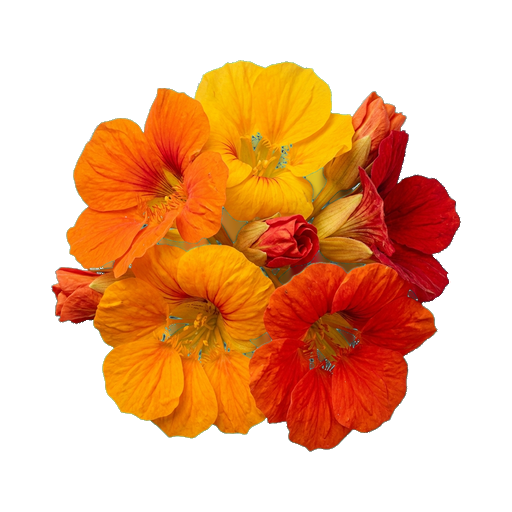
Nasturtium flowers
Bright nasturtium flowers with a piquant, slightly spicy taste and peppery aroma are often used in salads, appetizers, and as edible decoration for dishes. The petals have a delicate structure and easily bruise, so it's best to add them at the last moment before serving. When selecting, pay attention to the freshness and integrity of the petals — they should be firm and without darkening, and store them in the refrigerator on a damp paper towel for no more than a few days.
About
Nasturtium flowers are not just a beautiful plate decoration. They have a bright peppery flavor with a slight spiciness and floral notes that enliven dishes and add visual expressiveness to them. Each petal is edible and fully reveals its potential in cooking when used correctly.
Aroma and Taste
The main character of nasturtium flowers is piquant and fresh. The taste is reminiscent of radish or horseradish, but milder and with a pleasant floral sweetness. The aroma is delicate, herbaceous, and not overpowering. The intensity of the taste depends on the variety and growing conditions: in hot conditions, the flowers become more pungent and expressive.
In the kitchen, flowers of various shades are valued — from bright orange and red to yellow and cream. Each color is equally edible, but orange and red varieties are considered more fragrant. The petals are thin and delicate, so they require careful handling.
Role in dishes
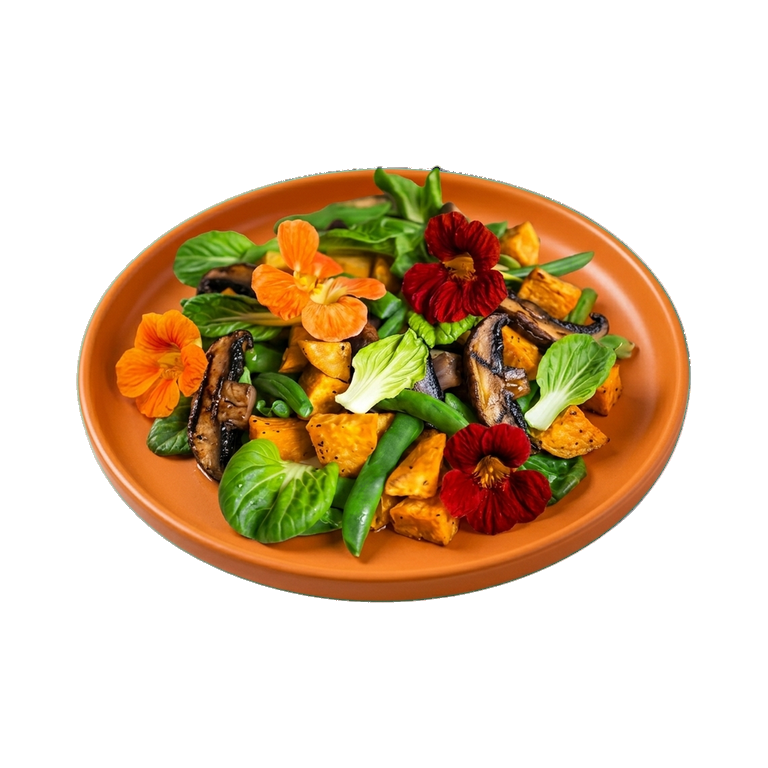
- Salad decoration — flowers add not only beauty but also piquancy, especially in light vegetable and green salads
- Garnish for first courses — a fresh flower on the surface of soup or cream soup creates contrast and intrigue
- Component of appetizers and canapes — petals look great on cream cheeses, pâtés and fish dishes
- Element of hot dishes — flowers can be added at the end of cooking to vegetables, pasta or rice for freshness
Pairings and Techniques
Nasturtium flowers work well with delicate creamy sauces, goat cheese, and soft cheeses in general. Their peppery character harmonizes with dishes based on salmon, shrimp, and white fish. They create interesting combinations with citrus notes in dressings and with herbs like basil or mint.
The main rule is to add flowers at the last moment to preserve their fragility and freshness. If you are preparing a dish in advance, keep the flowers separate and decorate immediately before serving. For salads, you can disassemble the flower into individual petals — this way they are distributed more evenly and look more elegant.
Selection and Storage
When choosing, look for flowers with firm, brightly colored petals without darkening or wilting. They should smell of fresh greenery, with no signs of mold or mustiness. If buying packaged flowers, make sure there is no moisture inside and no crushed petals.
- In the refrigerator — in a container with paper towels on the vegetable shelf, no more than 2–3 days
- On a damp towel — wrap flowers in a damp cloth so they don't dry out
- Away from fruits — ethylene released by fruits accelerates flower wilting
Nasturtium flowers are an investment in the dish's atmosphere. They work not only as decoration, but as a full-fledged flavor component that changes the perception of familiar ingredients. Use them generously, but wisely — each petal should be in its place.
Nutrition
per 100 g
- Calories
- 11 kcal
- Protein
- 0.9 g
- Fat
- 0.1 g
- Carbs
- 1.5 g
Measures and weight
- 1 tbsp
- 3 g
- 1 tsp
- 1 g
- 1 cup
- 50 g
- 1 sprig
- 5 g
Measure calculator
- Weight
- 100 g
- Calories
- 11 kcal