Usuba
Usuba
Unrefined Sugar
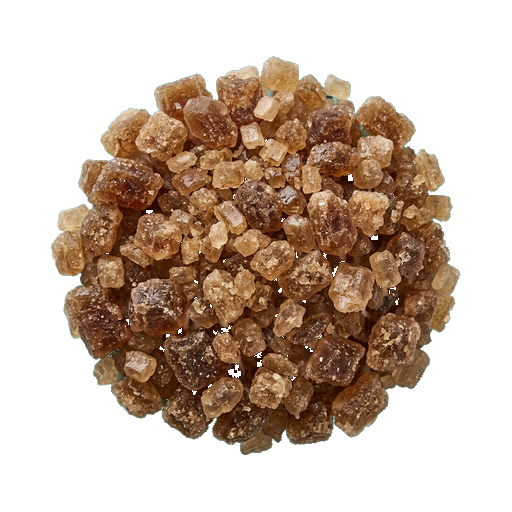
Unrefined sugar consists mostly of sucrose but retains some of the molasses from sugarcane or sugar beets, giving it a brownish tint and a subtle caramel note in taste. This sugar dissolves more slowly than white sugar and works well in baking, beverages, and sauces, where its deep flavor becomes noticeable. When substituting white sugar with unrefined sugar, keep in mind that it may slightly change the color of your dish and add extra moisture due to residual water in the crystals.
About
Unrefined sugar is crystals that have retained the natural color and mineral composition of sugarcane or beets. Unlike white sugar, it has not undergone bleaching and purification processes, so it retains organic compounds that give it a color ranging from light brown to dark amber. It is not just a sweetener, but an ingredient with its own character that changes the taste of a dish.
Taste and Aroma
Unrefined sugar has a more complex flavor profile than white sugar. It features caramel notes, a slight bitterness, and a deep sweet undertone. Some varieties bring a subtle molasses or treacle aroma to the dish. This is especially noticeable in baking and beverages, where sugar is a key ingredient rather than just a background element.
Where to use it
- Cookies and gingerbread — sugar adds depth and softness to the texture
- Coffee and tea — crystals dissolve more slowly than white sugar, but provide a more interesting flavor
- Caramel and glazes — natural color is already present in the sugar, which simplifies the process
- Marinades and sauces — brings not only sweetness, but also light meaty, smoky notes
- Fruit compotes and jams — enhances the natural flavor of berries and fruits
Pairings with other ingredients
Unrefined sugar works well with spices: cinnamon, ginger, cardamom, and black pepper. It harmonizes with vanilla, cocoa, nuts, and dried fruits. Combined with acidity — lemon, vinegar, or fermented dairy products — it reveals new dimensions. Its caramel notes support rich flavors: dark chocolate, strong coffee, roasted seeds.
Selection and Storage
When purchasing, pay attention to the moisture content: crystals should be crumbly, without lumps. The color varies depending on the degree of processing, and this is normal. Light unrefined sugar has a milder taste, while dark sugar has a richer flavor.
Store in an airtight container in a dry place at room temperature. Unrefined sugar is hygroscopic — it absorbs moisture from the air, so it can become caked. If this happens, break up the lumps with a fork or place bread in the container for a couple of hours — it will draw out the moisture. The shelf life is practically unlimited if you follow these conditions.
When substituting unrefined sugar for white sugar in recipes, no adjustment to the quantity is required. Just remember that the dish's flavor will become more vibrant and complex — this may require revisiting the proportions of spices or acid to avoid overwhelming the taste.
Nutrition
per 100 g
- Calories
- 396 kcal
- Protein
- 0.1 g
- Fat
- 0 g
- Carbs
- 99 g
Measures and weight
- 1 tbsp
- 12.8 g
- 1 tsp
- 4.3 g
- 1 cup
- 212.5 g
Measure calculator
- Weight
- 100 g
- Calories
- 396 kcal