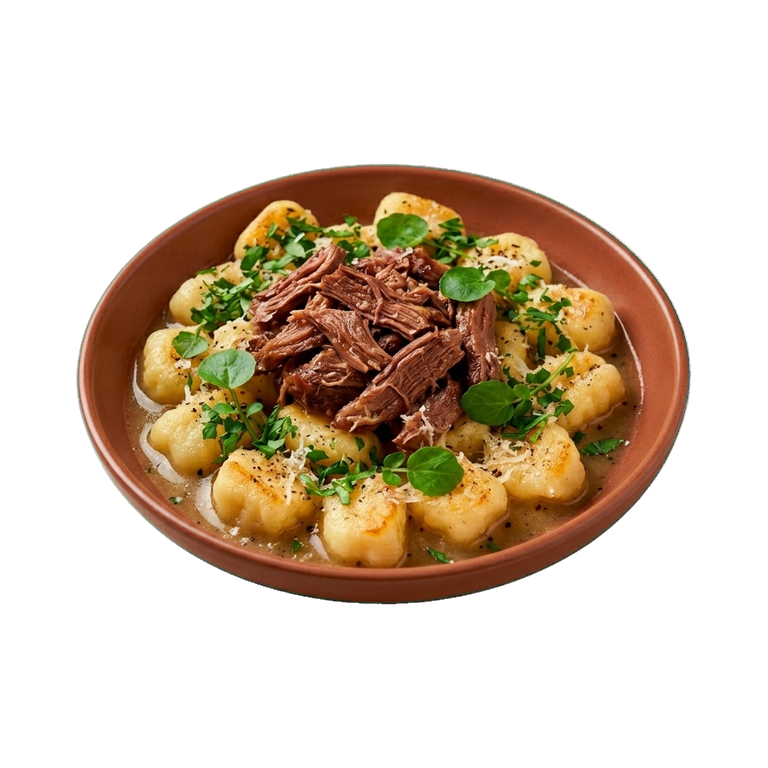
Usuba
Usuba
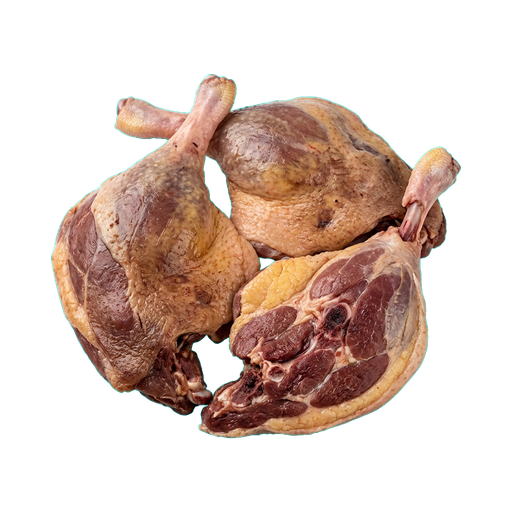
Duck legs
Duck legs are the hind part of the carcass with thigh and drumstick, containing more fat than chicken meat. The meat is dark, dense and juicy, with a pronounced duck flavor and aroma. They are suitable for braising, roasting and making broths, maintain their shape well during prolonged heat treatment, and become softer and more tender with slow cooking.
About
Duck legs are a type of meat that differs dramatically from the chicken we're used to. Dark, rich, with a pronounced aroma and dense texture, they require completely different cooking approaches. If you haven't cooked duck before, legs are the perfect entry point: they're cheaper than a whole bird, easier to process, and more forgiving of mistakes during cooking.
Taste and texture
Duck leg meat is denser and darker than chicken — it contains more myoglobin, which gives it a deep flavor with a subtle bitterness. Duck leg has plenty of fat, and this is not a drawback but an advantage: when cooked properly, it melts, making the meat juicy and tender inside, while the skin becomes crispy on the outside. The aroma is pronounced and gamey, but not harsh — rather noble.
The meat fibers are coarser than chicken, so drumsticks require either sufficiently long cooking (stewing, boiling) or marinating before frying. Cartilage and tendons are edible after proper processing and give the dish character.
How to Cook Chicken Drumsticks
A universal method is low-temperature frying followed by braising. First, the chicken legs are placed skin-side down on a skillet without oil so that the fat renders out. When the skin becomes golden and crispy, the meat is flipped, vegetables and liquid (broth, wine, juice) are added, the pan is covered with a lid, and it is braised over low heat for 45–60 minutes. The result is meat that easily comes off the bone but remains moist.
- Confit — stewing in its own fat at low temperature (65–75°C) for several hours. The meat becomes tender and almost melts in your mouth.
- Braising with acid (vinegar, wine, citrus) — acid softens the fibers and balances the richness of the fat.
- Marinating before frying — spices, herbs, and acidic components prepare the meat for quick cooking over high heat.
- Boiling in broth — for soups and stews, when you need tenderness and rich broth flavor.
What pairs with
Duck meat pairs well with acidity and bitterness. Orange, lemon, pomegranate — classic companions. Sharp spices (pepper, ginger, garlic) highlight its character without overpowering it. Herbs like thyme, rosemary, sage work perfectly. Vegetables — carrots, onions, celery, tomatoes — create a base for braising.
In Asian cuisine, chicken legs pair well with soy sauce, fish sauce, lemongrass, and coconut milk. In European cuisine — with red wine, mustard, honey, and berries. Grains and pasta products — rice, polenta, pasta — absorb sauces well, in which the meat was cooked.
Selection and Storage
When buying, pay attention to the color — the meat should be dark red or brownish, the skin should be intact without damage. If the drumstick is in vacuum packaging, there may be liquid inside — this is normal. The smell should be clean, without mustiness.
Fresh chicken legs are stored in the refrigerator for 2–3 days in the coldest part. If you plan to cook them later, freeze them in an airtight package or container — in the freezer they keep for 2–3 months without loss of quality. Thaw in the refrigerator, take your time.
Duck legs are not just a cheap alternative to a whole duck. They are an independent ingredient with their own character, which unfolds with the right approach.
Nutrition
per 100 g
- Calories
- 346 kcal
- Protein
- 16.2 g
- Fat
- 31.8 g
- Carbs
- 0 g
Measures and weight
- 1 pcs
- 200 g
Measure calculator
- Weight
- 100 g
- Calories
- 346 kcal