Usuba
Usuba
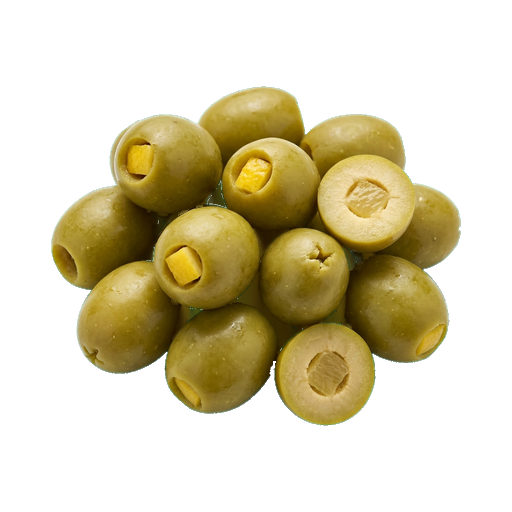
Olives, lemon-stuffed
Lemon-stuffed olives are canned pitted fruits filled with lemon pieces or lemon paste. They have a bright, tangy flavor with the characteristic bitterness of olives and a fresh citrus note, making them an interesting appetizer or cocktail ingredient. When choosing, pay attention to the quality of preservation and the balance between salt and acidity — overly acidic olives can overpower the taste of a dish, so they are sometimes rinsed or soaked in water before use.
About
Olives with lemon filling are a ready-to-eat product where the fruit pulp is replaced with a piece of lemon or lemon paste. This appetizer combines the slightly bitter taste of olives with a bright citrus punch, creating an interesting contrast on the palate. It's not just an olive, but an already prepared dish that can be served at the table or used in recipes without additional preparation.
Taste and first impression
Lemon filling adds acidity and freshness that cuts through the density of olives. If you don't enjoy the pure oily taste of canned olives, this option might be a revelation: the tartness refreshes, and lemon gives the appetizer lightness. The flavor becomes more complex and interesting than a regular olive, but not aggressive — the lemon here is dosed to complement rather than overpower the main ingredient.
Where to use in the kitchen
- In appetizer assortments and on antipasto — they attract attention and add variety
- In salads, especially with seafood or white fish — lemon will enhance freshness
- On bread with butter or in sandwiches — acidity will enliven simple combinations
- In cocktails instead of regular olives — will add an interesting flavor layer
- In pasta or risotto — for a final touch of freshness
Combinations and Harmonies
Lemon olives work well with light white wines, with sea fish and seafood, with soft cheeses. They don't overpower delicate flavors; instead, they emphasize their freshness. They pair excellently with herbs — rosemary, thyme, oregano. If you're preparing a Mediterranean dish, such olives are a natural choice, but they also work in more contemporary interpretations where acidity and contrast are needed.
Selection and Storage
When selecting, pay attention to the integrity of the olives — they should not be bruised or cracked. Check the packaging date and expiration date. Good olives float in brine rather than lying in a dry heap. The taste can vary depending on the olive variety (green ones are usually firmer, black ones are softer) and the intensity of the lemon filling.
- Keep the closed jar in a cool place, away from direct sunlight
- After opening, transfer the remaining olives to a glass container, cover with brine, and refrigerate
- An opened package keeps for 1–2 weeks if the olives are completely covered with liquid
- If the brine becomes cloudy or an unpleasant smell appears — the olives have spoiled and should be discarded
If you find lemon olives too acidic, you can rinse them under cold water before serving — some of the brine will wash off, and the taste will become milder. But in most cases, they are perfect just as they are.
Nutrition
per 100 g
- Calories
- 145 kcal
- Protein
- 1 g
- Fat
- 15 g
- Carbs
- 3 g
Measures and weight
- 1 tbsp
- 15 g
- 1 tsp
- 5 g
- 1 cup
- 250 g
- 1 can
- 300 g
Measure calculator
- Weight
- 100 g
- Calories
- 145 kcal