Usuba
Usuba
Kalamata olives
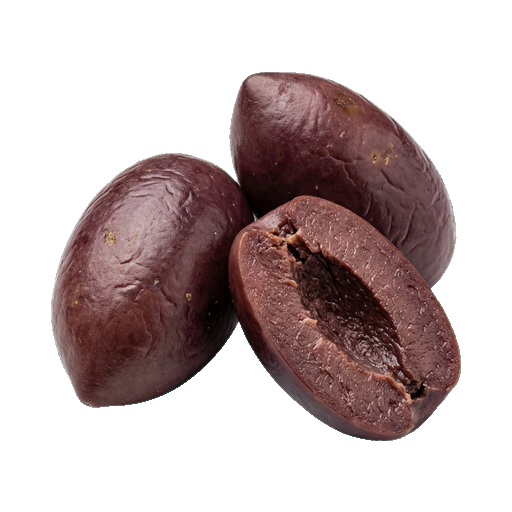
Large dark purple olives with firm flesh and a characteristic rich, slightly winey flavor with earthy notes. They have a pronounced aroma and meaty texture, which allows them to hold their shape well when sliced and prevents them from falling apart in dishes. Used in Greek salads, pastas, tapenades, and as a wine pairing appetizer. When substituting with other varieties, keep in mind that Kalamata olives have a more intense flavor than green olives and may dominate delicate dishes.
About
Kalamata olives are dark, almost black fruits with smooth skin and a characteristic almond aroma. They are noticeably larger than most other varieties and have an elongated shape. Their main distinction is not only in appearance but also in taste: they are significantly softer and more delicate than green olives, with a slight bitterness and fruity notes.
Aroma and Taste
The taste of Kalamata olives is more complex than it might seem at first glance. Freshly harvested olives of this variety are slightly astringent, but after proper processing and preservation, they reveal softness and depth. You can sense a light sweetness, herbal and nutty notes, and sometimes a subtle hint of smokiness. The aroma reminds one of ripe prunes mixed with olive oil and spices.
Role in Dishes
Kalamata is a versatile olive that works in both simple and complex compositions. It doesn't overpower other ingredients but complements them. As an appetizer, they are served whole or sliced, often with cheese and bread. In salads, kalamata adds depth and elegance, especially in Greek and Mediterranean variations. Its soft flesh is easy to slice, making it convenient to add to pastas, risottos, and stewed dishes with meat or fish.
Pairings with other ingredients
- Feta, goat cheese — a classic duo for appetizers and salads
- Tomatoes, cucumbers, red onion — the foundation of Mediterranean salads
- Extra virgin olive oil, lemon — the base for dressings and marinades
- Anchovies, capers — for intense, vibrant dishes
- Rosemary, oregano, savory — herbs that emphasize its depth
- Red wine, black pepper — for marinades and stewing
Selection and Storage
When choosing kalamata olives, pay attention to color uniformity — the olives should be dark, without light spots. The skin should not be wrinkled or soft. If you are buying canned olives in a glass jar, make sure the brine is clear and not cloudy. Try one olive before buying a package — the taste can vary depending on the producer and processing method.
Canned olives in a sealed jar can be stored in a cool, dark place for up to a year. After opening, transfer them to a glass container, cover with olive oil or brine, and keep in the refrigerator — they will stay fresh for two to three weeks. If the olives start to lose flavor, refresh the brine or marinate them again with lemon and herbs.
Kalamata olives are great because they require no preparation — simply take them out of the jar and they're ready to serve. But if you have time, marinate them with garlic, red pepper, and olive oil for a couple of hours before serving — the flavor will become even more pronounced.
Nutrition
per 100 g
- Calories
- 146 kcal
- Protein
- 1.1 g
- Fat
- 15.3 g
- Carbs
- 3.2 g
Measures and weight
- 1 pcs
- 4 g
Measure calculator
- Weight
- 100 g
- Calories
- 146 kcal