Usuba
Usuba
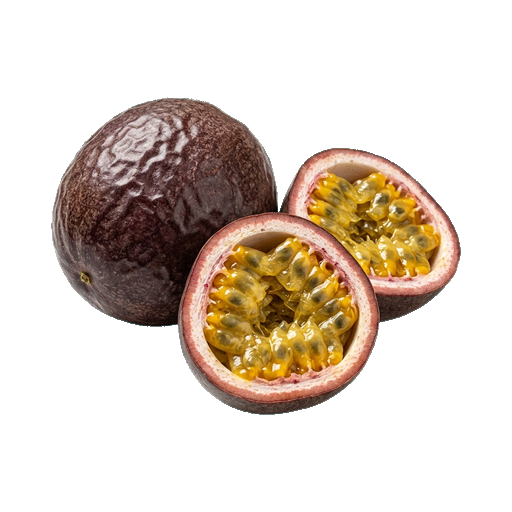
Passion fruit
Passion fruit is a tropical fruit with wrinkled skin and aromatic pulp filled with tiny seeds. It has a pronounced, sweet-tart flavor with floral notes, and an intense, exotic aroma. Used in desserts, beverages, sauces, and as a dish garnish; when selecting, prefer fruits that are heavy and have wrinkled skin — these are signs of ripeness and juiciness.
About
Passion fruit is an exotic fruit with a dense wrinkled skin and aromatic pulp inside. Beneath the thin shell lies juice with numerous small black seeds, which are completely edible. The fruit captivates chefs with its versatility: it works equally well in desserts, beverages, sauces, and even main courses.
Aroma and Taste
The taste of passion fruit is a complex interplay of acidity and sweetness. It is simultaneously tart and aromatic, with a bright fruity note that reminds you of banana, pineapple, and floral undertones all at once. The intensity of the flavor depends on ripeness: underripe fruit is more acidic, overripe becomes sweeter and honeyed. The aroma is very expressive — it's enough to break open the fruit to feel its captivating scent.
Role in dishes
In cooking, passion fruit works as a natural acid accent and flavoring. Its juice is ideal for marinades for seafood and poultry — the acidity tenderizes the tissue, and the aroma adds an exotic touch. In desserts, the fruit creates a bright contrast with neutral bases like panna cotta, mousse, or cheesecake.
- Fruit purees and sauces for meat, fish and ice cream
- Base for cocktails, lemonades and fruit drinks
- Filling for tarts, pies and pastries
- Component in marinades and salad dressings
- Decoration and flavoring for dessert plates
Selection and Storage
A ripe passion fruit is easy to recognize by its wrinkled skin — this is not a sign of spoilage, but evidence of maturity. The fruit should be heavy for its size, which indicates juicy flesh. If the skin is smooth and shiny, the passion fruit is still green and sour. At room temperature, the fruit ripens over several days, becoming sweeter and more aromatic.
Ripe passion fruit can be stored in the refrigerator for up to two weeks. If you need to preserve the juice, it's best to freeze it in ice cube trays or containers — this way it won't lose its flavor and aroma. The seeds can be dried and used as a decorative element or added to granola.
Practical tip
Break the passion fruit in half with a spoon — all the pulp with its juice will remain in the shell half. If you need only juice without seeds, strain the pulp through a sieve. For sauces, you can leave the seeds in — they give a pleasant texture and visual contrast. When working with passion fruit, remember that its juice can stain your hands, so wash your hands thoroughly after cutting.
Nutrition
per 100 g
- Calories
- 68 kcal
- Protein
- 2.2 g
- Fat
- 0.7 g
- Carbs
- 11.2 g
Measures and weight
- 1 pcs
- 50 g
Measure calculator
- Weight
- 100 g
- Calories
- 68 kcal