Usuba
Usuba
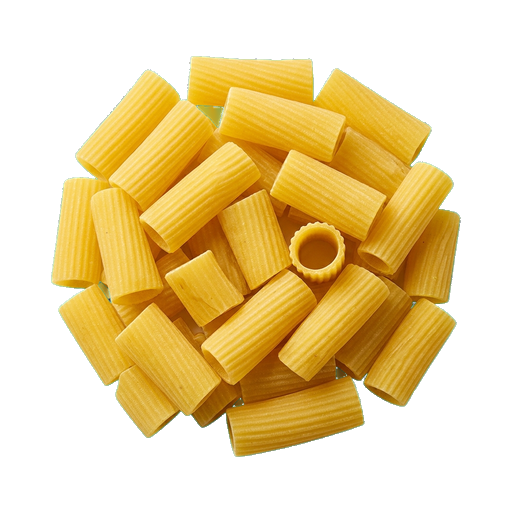
Rigatoni pasta
Large tubular pasta with diagonal ridges on the surface that help sauce adhere better to the pasta. Thanks to its thick walls and internal volume, rigatoni holds its shape well during cooking and is ideal for thick, meat-based, and creamy sauces. When choosing, pay attention to the color — quality pasta made from durum wheat has a yellow hue, not white, and doesn't crumble when broken.
About
What is rigatoni and why it's not just tubes
Rigatoni is a large hollow pasta with diagonal ridges that run along the entire length of the tube. These ridges are not just decoration: they help sauce cling to the pasta and distribute evenly. The size of rigatoni allows it to remain firm even when cooked, without falling apart or becoming mushy. This is why it is so beloved in home cooking and professional restaurants.
Texture and Cooking Behavior
Thanks to its thick walls, rigatoni takes longer to cook than thin pasta — usually 12–14 minutes to al dente. This gives you more time to prepare the sauce and ingredients. The hollow tube structure creates an interesting contrast of textures: the pasta is dense and elastic on the outside, while a small air pocket may remain inside. This pasta holds its shape well in baked dishes and doesn't turn into mush when stirred.
What sauces go well with rigatoni
Rigatoni is versatile, but truly shines with thick, meaty sauces. The ridges on the surface seem designed for tomato sauces with vegetable or meat pieces, creamy sauces with bacon or mushrooms. Pasta works well in casseroles — layer after layer, it maintains the structure of the dish and doesn't break down into mush.
- Bolognese and ragù — a classic choice, meat sauce completely fills the tube cavity
- Arrabbiata or puttanesca — spicy tomato sauces adhere perfectly to the ridges
- Creamy sauces with bacon, mushrooms, or seafood — pasta doesn't sink in creaminess, stays structured
- Baked pasta with cheese and béchamel sauce — rigatoni holds the layer shape and doesn't fall apart when sliced
How to choose and store
When choosing rigatoni, pay attention to the color: quality pasta made from durum wheat should have a golden hue, not a pale or too dark one. The package should indicate cooking time and ingredients — usually just flour and water. Check the integrity of the pasta: it should not be broken or cracked.
Dry pasta should be stored in an airtight container or in its original packaging in a cool, dry place — it easily absorbs moisture and can develop mold. When stored properly, rigatoni will keep for a year or two without any problems. Cooked pasta is best eaten immediately, but if you have leftovers, store them in the refrigerator in an airtight container for no more than 3–4 days.
Rigatoni is a pasta that works both for everyday family dinners and festive casseroles. Its reliability and ability to hold sauce make it one of the most practical forms of pasta.
Nutrition
per 100 g
- Calories
- 350 kcal
- Protein
- 12.5 g
- Fat
- 1.5 g
- Carbs
- 70 g
Measures and weight
- 1 tbsp
- 6.8 g
- 1 tsp
- 2.3 g
- 1 cup
- 112.5 g
Measure calculator
- Weight
- 100 g
- Calories
- 350 kcal