Usuba
Usuba
Pectin
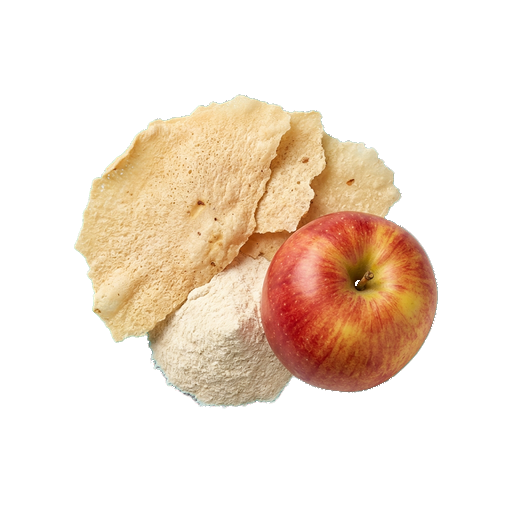
Pectin is a plant polysaccharide obtained from fruits and berries, most commonly from apples and citrus fruits. It acts as a natural thickener and gelling agent, allowing jams, marmalades, and jellies to achieve the desired consistency without prolonged cooking. When choosing pectin, it is important to pay attention to its type — quick-set pectin requires less hydration time, while high-methoxyl pectin works better with sugar and acid, whereas low-methoxyl pectin is suitable for low-sugar recipes.
About
Pectin is a natural thickener that transforms liquid into dense and elastic consistency. If you've ever made jam and it turned out to be the perfect consistency, pectin was almost certainly working there. It is contained in fruits and berries themselves, but in industry it is extracted in pure form to guarantee the result.
How pectin works in dishes
Pectin has no taste or smell — it works exclusively for results. Add it to juice, and it becomes marmalade. Use it in mousse or jelly, and you get a tender, melting texture. The key: pectin requires the right conditions. It needs acid (lemon juice, vinegar), sugar, and heat. Without this triumvirate, it simply won't gel.
There are several types of pectin, and each behaves differently. High-methoxyl pectin is the classic option, requiring sugar and acid. Low-methoxyl pectin works with calcium, allowing you to reduce sugar. Apple pectin is considered a universal helper for jams and preserves.
Where and when to use it
- Jams and preserves — a classic where pectin reaches its full potential
- Jellies and marmalades — here it creates that very elastic, spoon-cuttable texture
- Fruit sauces and glazes — pectin thickens without lumps
- Mousse and cream — adds airiness and holds shape
- Yogurts and cottage cheese desserts — stabilizes texture
How to Choose and Apply
Pectin dosage is always indicated on the package — usually 1-2 teaspoons per kilogram of fruit. But attention to detail is important here: different recipes require different proportions. If you are making jam from berries with low pectin content (strawberries, raspberries), use more. Apples and citrus fruits are already rich in pectin, so you can use a smaller amount.
Main tip: pectin must be dissolved correctly. Mix it with sugar before adding to hot liquid — this will help you avoid lumps. The cooking temperature should be high, approximately 104-105 degrees, for gelification to occur. After boiling, usually 1-2 minutes of boiling is sufficient.
Storage and shelf life
Powdered pectin should be stored in a dry, cool place in an airtight container. The shelf life is typically 1-2 years, but this is not a strict limit — old pectin may simply work less effectively. If you have opened the package and it has become damp, the pectin loses its strength. Finished jams and preserves made with pectin are stored as usual: in a cool place, in closed jars.
Nutrition
per 100 g
- Calories
- 325 kcal
- Protein
- 0.3 g
- Fat
- 0.1 g
- Carbs
- 80 g
Measures and weight
- 1 tbsp
- 9 g
- 1 tsp
- 3 g
- 1 cup
- 150 g
Measure calculator
- Weight
- 100 g
- Calories
- 325 kcal