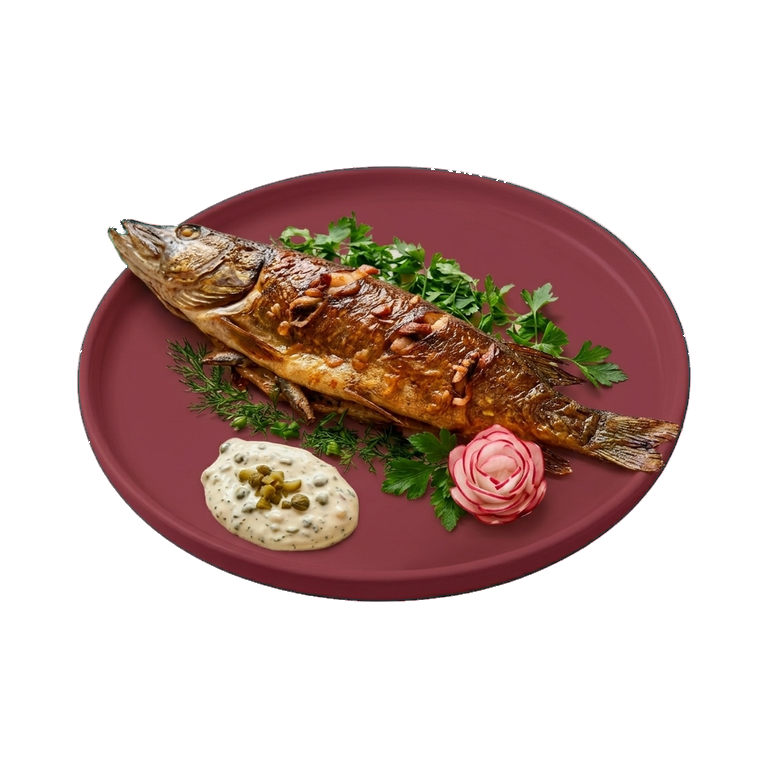
Usuba
Usuba
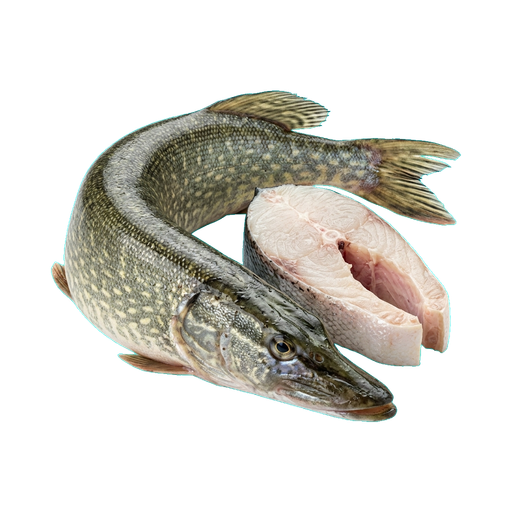
Pike
Pike is a freshwater predatory fish with white, tender meat and a characteristic slightly fishy aroma. It is well-suited for baking whole, grilling, cooking in fish soup, and stuffing thanks to its firm meat structure that doesn't fall apart during heat treatment. When choosing pike, pay attention to the freshness of the gills and eyes, and avoid fish with a strong ammonia smell — this is a sign of spoilage.
About
Pike in the kitchen: white fish with character
Pike is a freshwater fish that often remains overshadowed by more popular varieties. Unfairly so: its white, dense meat with low fat content is ideal for a variety of dishes. Pike flesh is somewhat dry, but this is easily corrected with proper cooking and suitable sauces. The fish has a pronounced, but not sharp river flavor — not everyone likes it at first, but connoisseurs appreciate this very recognizability.
Taste and Aroma
Pike meat is tender, but requires attention to detail. Fresh fish practically has no smell, or the smell is barely noticeable — this is a good sign. When boiled or stewed, pike reveals itself more fully, and the meat becomes more pronounced in taste. The specific "fishy" aroma can be softened with lemon, herbs, and spices. Pike has quite a few bones, but they are large and easily removed after cooking or during the process.
What to cook from pike
- Cutlets and meatballs — pike minced meat turns out tender and holds its shape, especially if you add semolina or bread
- Fish soup — classic use, pike gives a rich broth
- Baked whole or fillet — with lemon, butter and vegetables
- Stuffed pike — festive option with grains or vegetables inside
- Stewing in sour cream or heavy cream — softens the dryness of the meat
- Smoking — cold or hot, pike holds its shape well
Pairings and Seasonings
Pike pairs well with acidity: lemon, vinegar, or white wine help reveal the flavor and overcome excessive fishiness. Herbs — dill, parsley, tarragon — are natural companions. Butter, sour cream, and cream compensate for the dryness of the meat. Vegetables — carrots, onions, tomatoes — work both as a bed for baking and as part of sauces. Black pepper, mustard, and horseradish emphasize the character of the fish.
Selection and Storage
When purchasing, pay attention to the eyes — they should be clear and convex, gills pink or red, meat firm. The smell should be barely noticeable. Pike loses freshness quickly, so it is best to cook on the day of purchase. In the refrigerator at a temperature of 0–4 degrees, whole fish is stored for 1–2 days, fillet — no more than a day. Thaw frozen pike in the refrigerator, not at room temperature — this way the meat will remain juicier.
Pike deserves a place on your table. It's not exotic and not a delicacy, but an honest fish with its own character. The main thing is not to be afraid to experiment with spices and cooking methods. Even simple pike baked with butter and herbs can be a revelation.
Nutrition
per 100 g
- Calories
- 84 kcal
- Protein
- 18.8 g
- Fat
- 0.9 g
- Carbs
- 0 g
Measures and weight
- 1 pcs
- 1500 g
Measure calculator
- Weight
- 100 g
- Calories
- 84 kcal