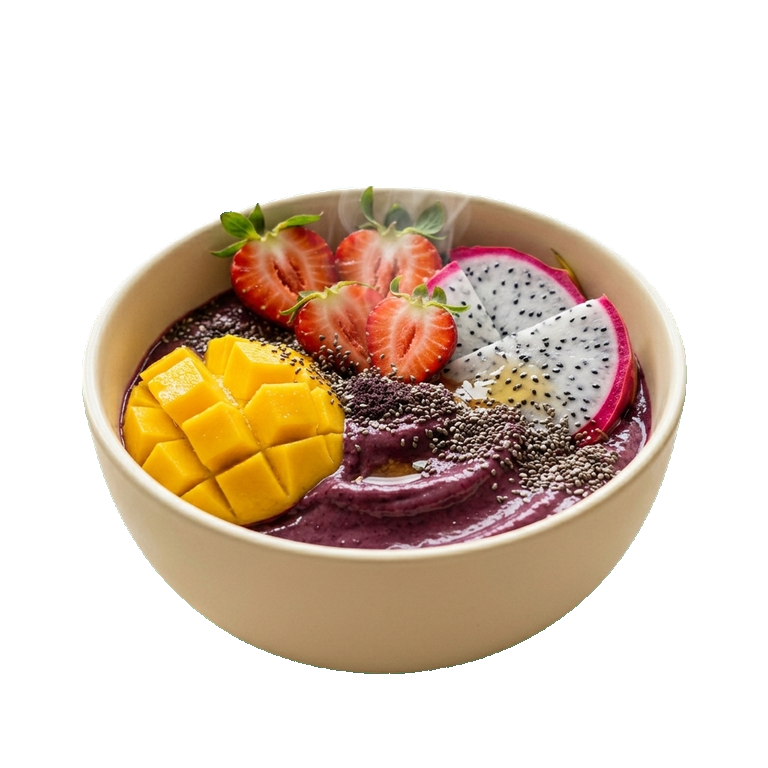
Usuba
Usuba
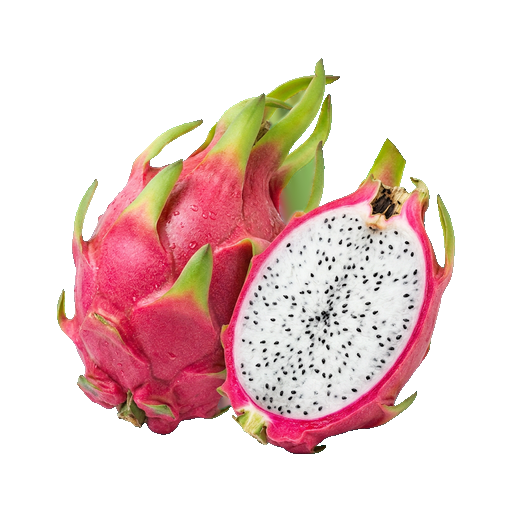
Pitaya
Pitaya is an exotic fruit with a bright pink or yellow skin and white or crimson flesh dotted with small black seeds. The flesh has a delicate, slightly sweet taste with barely noticeable acidity and resembles kiwi in texture. The fruit is well-suited for fresh consumption, adding to smoothies, desserts and fruit salads, and when selecting, you should focus on the softness of the skin and avoid fruits with dark spots.
About
Dragon fruit is one of the most striking fruits in the kitchen. It's impossible not to notice it: bright pink or yellow skin with fleshy leaf-shaped protrusions, white or crimson flesh with black seeds inside. But beauty is not the main thing here. This fruit is needed not only for Instagram, but also to add freshness, lightness, and interesting texture to a dish.
Taste and Aroma
The taste of dragon fruit is delicate and unobtrusive — something between kiwi and pear, but softer and more tender. Pink varieties (with white flesh) are more neutral and slightly sweet. Red varieties (with crimson flesh) have a more pronounced fruity character. There is almost no aroma as such, but there is a refreshing aftertaste.
Texture is what sets dragon fruit apart from other fruits. The flesh is tender, almost creamy, but with plenty of tiny black seeds that provide a subtle crunch. This creates an interesting contrast and adds dynamics to the dish.
How to use in the kitchen
Dragon fruit works in two ways: as a standalone ingredient and as a complement. In the first case, it is eaten with a spoon directly from the fruit half or cut into cubes in fruit salads and bowls. In the second case, it is used for sauces, smoothies, sorbets, and frozen desserts.
- Smoothie bowls and acai bowls — dragon fruit serves as a base or a bright accent
- Fruit salads — pairs well with mango, pineapple, coconut
- Desserts and pastries — mousses, panna cotta, tart fillings
- Cold drinks — juice, lemonade, cocktails
- Garnish for fish or seafood — freshness and lightness balance richness
Combinations with other ingredients
Pitaya pairs well with coconut, lime, and mint — this trio enhances its freshness. It works great with berries (raspberry, blueberry), mango and pineapple, yogurt and cottage cheese. For bolder experiments, try it with ginger, cardamom, or hot pepper in sauces.
Remember: dragon fruit is a delicate and subtle fruit, so it's easy to overpower. Don't complicate the sauces and gravies, let it breathe.
Selection and Storage
A ripe dragon fruit should be soft to the touch, but not mushy. The skin should be brightly colored — a dull color hints that the fruit has already begun to wither. If the fruit is too hard, let it sit for a day or two at room temperature.
- Dragon fruit keeps for 1–2 days at room temperature
- In the refrigerator — up to a week in the fruit compartment
- Sliced flesh is best used on the day of cutting, otherwise it will start to lose its juiciness
- Dragon fruit can be frozen whole or sliced — it freezes well and works great for smoothies and sauces
Preparation for use
Pitaya is simple to cut in half and scoop out the flesh with a spoon. If you need cubes, cut the fruit lengthwise, then crosswise, and carefully separate the flesh from the skin with a knife. The skin is not edible, but it's easy to remove. Leave the seeds — they are harmless and add texture.
Nutrition
per 100 g
- Calories
- 48 kcal
- Protein
- 1.1 g
- Fat
- 0.3 g
- Carbs
- 10.5 g
Measures and weight
- 1 pcs
- 350 g
Measure calculator
- Weight
- 100 g
- Calories
- 48 kcal