Usuba
Usuba
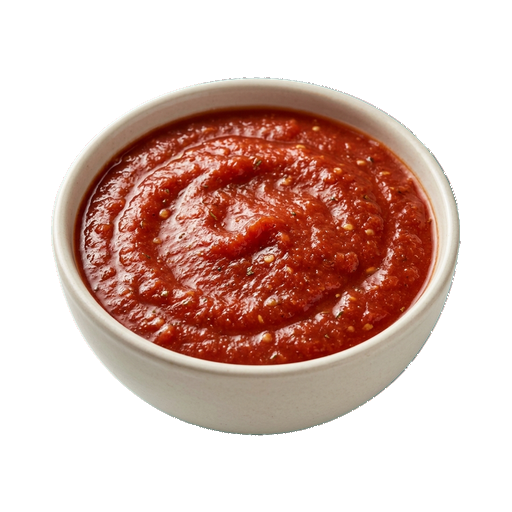
Pizza sauce
Pizza sauce base made from tomatoes, garlic, olive oil, and spices that creates a tangy and slightly sweet foundation for toppings. The sauce boasts a rich tomato flavor with herbaceous notes of oregano and basil, which are traditionally included in its composition. When selecting, pay attention to consistency — it should be thick enough not to soften the dough — and to the acidity balance, which should not be excessive, otherwise the pizza will taste overly sharp.
About
The foundation of any good pizza
Tomato sauce for pizza is not just smeared tomatoes on dough. It is a layer that brings the toppings together, adds moisture, and creates the flavor foundation for the entire dish. A good sauce should be concentrated enough to avoid soaking the dough, while maintaining a clean tomato taste without excessive acidity. This is precisely why ready-made sauce differs from ordinary ketchup or tomato paste — it is specially balanced for pizza.
Texture and Taste
A quality tomato sauce for pizza has a dense, uniform consistency — not as thin as soup, and not as thick as pasta. The taste should be balanced: soft tomato notes with barely noticeable acidity, often with the addition of garlic, oregano, and olive oil. Some versions include a light sweetness that mellows the acidity of the tomatoes. A good sauce spreads evenly over the dough in a thin layer and does not leak during baking.
How to use in cooking
Apply the sauce to the dough in a thin layer — approximately 2–3 millimeters. Too much sauce will make the pizza soggy and heavy, too little will deprive it of character. Spread it evenly, leaving a small edge of dough without sauce to form a crust. The sauce works well with any toppings: from classic mozzarella to vegetables and meat. It also works for white sauce pizza as an additional layer or even for dipping the finished pizza.
Selection and Storage
When choosing a ready-made sauce, pay attention to the ingredients: it should contain tomatoes, olive oil, salt and spices, but should not contain thickeners and preservatives in excess. Open the jar or package and check the consistency — the sauce should not be watery. If you are making the sauce yourself, use canned tomatoes in their own juice or fresh ripe tomatoes, simmer with garlic and herbs for 15–20 minutes.
An open sauce in a jar can be stored in the refrigerator for 3–5 days in a closed container. Homemade sauce can be frozen in ice cube trays or in small portions — this makes it more convenient to use the desired amount. Before use, simply thaw at room temperature or add directly in cold form to the dough before baking.
Pairs with
- Mozzarella and parmesan — a classic combination, the sauce highlights the creaminess of the cheese
- Spicy sausages and pepperoni — tomato acidity balances the richness and spiciness
- Vegetables (bell peppers, mushrooms, onions) — the sauce brings together different textures into one whole
- Olives and capers — their saltiness and piquancy contrast well with the mild tomato flavor
- Herbs (basil, oregano) — add at the end, after baking, to preserve the aroma
Nutrition
per 100 g
- Calories
- 40 kcal
- Protein
- 1.5 g
- Fat
- 0.5 g
- Carbs
- 7 g
Measures and weight
- 1 tbsp
- 15.8 g
- 1 tsp
- 5.3 g
- 1 cup
- 262.5 g
Measure calculator
- Weight
- 100 g
- Calories
- 40 kcal