Usuba
Usuba
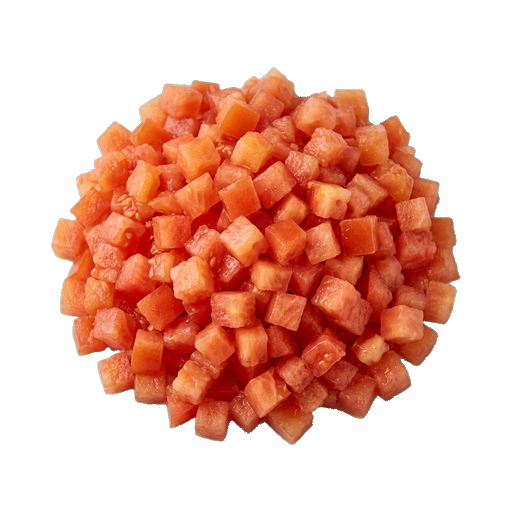
Tomatoes, concassé
Tomato concassé is tomato that has been peeled and seeded, then diced or finely chopped. This preparation yields clean pulp without fibrous parts, making the ingredient ideal for sauces, soups, and side dishes where a uniform consistency is needed. When selecting fresh tomatoes for concassé, choose firm, ripe fruits without damage, and if using canned tomatoes, ensure they are well-drained before chopping.
About
Tomatoes concassée is not a variety or a special type of tomato, but a preparation technique. The name comes from French cuisine and refers to tomatoes peeled of their skin and seeds, cut into cubes. It is a semi-finished product that saves time in the kitchen and ensures consistency of the dish.
Texture and taste
The main difference between concassé and simply chopped tomatoes is the absence of skin and seeds. The skin is removed by blanching in boiling water, and the seeds are scraped out with a spoon. What remains is the flesh with a pure tomato flavor, without the bitterness that seeds sometimes impart. The cubes hold their shape during cooking, don't break down into mush, and absorb sauces well.
Where to use
Concassé works everywhere you need a neat tomato structure. It's the foundation for sauces that should be smooth yet with visible pieces — for example, for pasta or risotto. Ideal in side dishes with meat and fish, in soups where the tomato shouldn't fall apart. Great in cold dishes: in salads, on bruschetta, in salsa.
- Tomato sauces and stews
- Pasta and risotto
- Soups and broths
- Side dishes for meat and fish
- Salads and appetizers
How to choose and cook
If you're making concassé yourself, use ripe tomatoes with firm flesh — they hold their shape better. Soft overripe tomatoes fall apart when cut. Use fresh concassé immediately or store in the refrigerator for no more than a day. If you need to preserve it for later, tomatoes can be frozen or canned in their own juice.
Time and Temperature
Blanch the tomatoes in boiling water for just 30–40 seconds — the skin should begin to peel off, but the flesh will remain firm. Don't keep them in longer, otherwise the tomato will start to fall apart. After blanching, immediately place them in ice water to stop the cooking process. Then the skin comes off easily, literally by hand.
Tomato concassée is not a luxury, but a practical tool. It saves time during cooking, improves the texture of the dish, and ensures that the tomato won't spoil the appearance of the soup or sauce. Once you master the technique, you will prepare concassée regularly.
Nutrition
per 100 g
- Calories
- 20 kcal
- Protein
- 1 g
- Fat
- 0.2 g
- Carbs
- 3.9 g
Measures and weight
- 1 tbsp
- 15 g
- 1 tsp
- 5 g
- 1 cup
- 250 g
Measure calculator
- Weight
- 100 g
- Calories
- 20 kcal