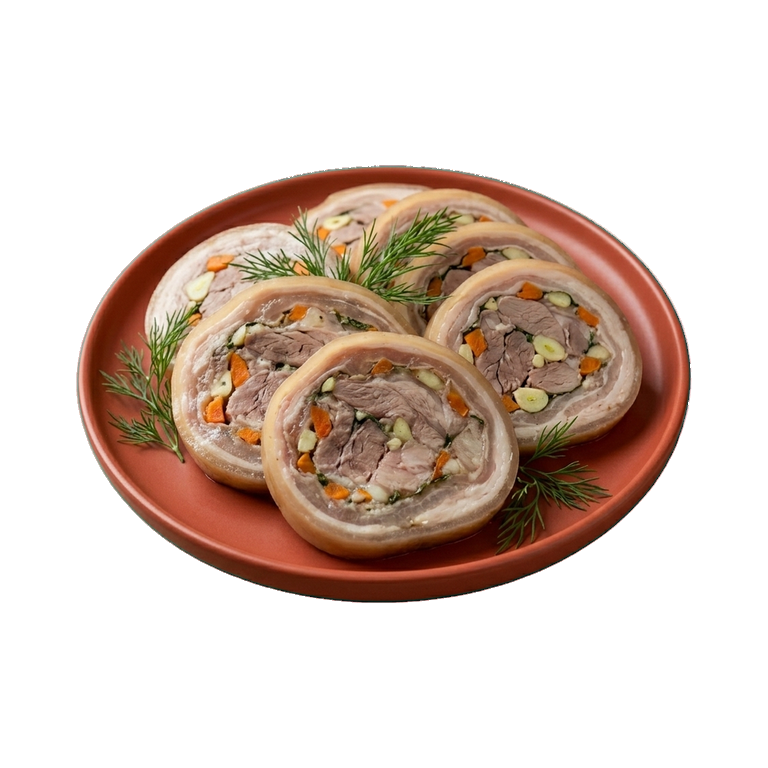
Usuba
Usuba
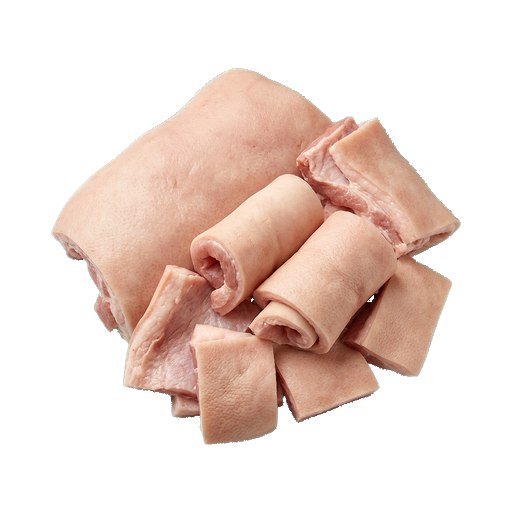
Pork skin
Pork skin is a dense layer with a fat interlayer that, when properly processed, becomes a crispy and delicious part of a dish. It is used to create a crispy crust on fried meat, added to soups and stews to impart rich flavor and gelating properties, and can also be prepared as a standalone dish — crackling or fried skin. When selecting, it is important to ensure the skin is well cleaned of bristles, and during cooking it should be simmered or fried long enough to achieve the desired texture and remove excess fat.
About
Pork skin is one of the most underestimated ingredients in the kitchen. It is not just a production byproduct, but a full-fledged product with its own character and many applications. When the skin is properly prepared and cooked, it becomes a delicacy: crispy, aromatic, and incredibly satisfying.
Texture and taste
Pork skin consists of collagen and fat, which determines its behavior when heated. During prolonged stewing, it becomes soft and gelatinous, absorbing sauces and spices. When fried at high temperature, it transforms into crispy chips with an airy structure. The taste is neutral, slightly sweet, but it easily takes on surrounding aromas.
How to cook
- For crispy skin: degrease the surface, pat dry with a towel, rub with salt and fry in a dry pan or in an oven at 200°C until golden
- For soft and tender texture: cut into strips, boil for 1.5–2 hours until soft, then fry to get a golden crust
- In soups and stews: add chopped skin at the end of cooking or boil separately and serve as a separate layer — this way it will better retain its texture
- In cold appetizers: boiled skin is cut into cubes and poured with jelly, resulting in a classic dish with a delicate flavor
Selection and Preparation
Look for skin that is white or light pink in color without dark spots or damage. If there are bristles remaining on the skin, remove them with a knife or singe them over a flame. Before cooking, be sure to rinse thoroughly with cold water and scrape the top layer to remove any dirt.
Pairings and role in dishes
Pork skin works well with sharp and sour components: mustard, vinegar, garlic, and pepper emphasize its rich flavor. It is ideal in borscht, cabbage soup, jellied meat, and as a side dish with potatoes. The skin also serves as the base for homemade broths, giving them thickness and richness.
Store fresh skin in the refrigerator for no more than 2–3 days or freeze for up to three months. Before freezing, cut into convenient pieces and wrap in plastic wrap. Boiled skin can be stored in the refrigerator for up to a week in an airtight container.
Nutrition
per 100 g
- Calories
- 349 kcal
- Protein
- 32 g
- Fat
- 25 g
- Carbs
- 0 g
Measures and weight
- 1 pcs
- 150 g
Measure calculator
- Weight
- 100 g
- Calories
- 349 kcal