Usuba
Usuba

Acai powder
Acai powder is derived from dried acai palm berries through grinding into a fine purple-black powder with a characteristic berry aroma and slightly astringent, earthy taste. In cooking, it is used to impart rich color and antioxidant properties to smoothies, yogurts, desserts, and porridge, often combined with fruits and honey. When choosing, it is important to pay attention to the absence of additives and sugar in the composition, as quality powder should contain only acai, and its intense flavor allows the use of small quantities to achieve the desired effect.
About
Acai powder is dried and ground acai berry pulp that concentrates all the flavor and beneficial properties of the fruit in a convenient form. If fresh acai berries are hard to find, powder is always on hand: it doesn't require refrigeration, is easy to portion, and stores for months. It's not just an ingredient for smoothies — it's a universal kitchen helper that works in both sweet and savory dishes.
Taste and Aroma
Acai has a rich berry flavor with a slight tartness and a barely noticeable strawberry bitterness. The aroma is deep, somewhat woody, with a hint of cocoa. In powder form, the taste becomes more concentrated and slightly astringent — this is normal, as moisture is lost during drying and tannins are intensified. One teaspoon of powder can overpower a dish if you miscalculate the proportion, so start with half a teaspoon and add to taste.
Role in dishes
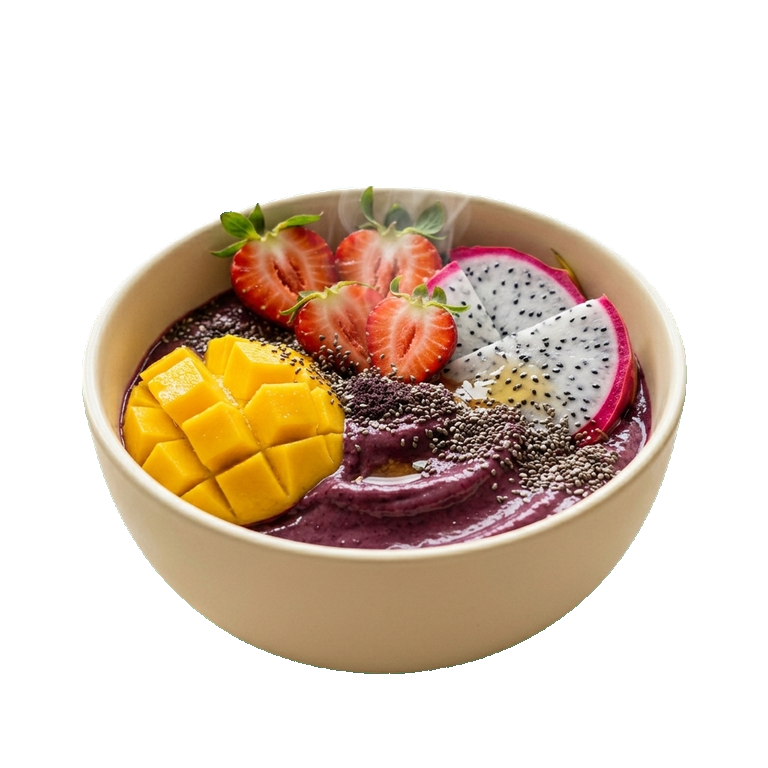
- Base for acai bowls: mix with yogurt, coconut milk or frozen banana to create a creamy breakfast base
- Colorant and flavoring in smoothies, cocktails and beverages — gives a rich purple color
- Baking additive: muffins, cookies, cupcakes get a delicate berry tint and slight tartness
- Component for meat or fish sauces — acai powder works as a natural barbecue sauce with fruity notes
- Topping for yogurts, cereals and desserts — adds texture and visual contrast
Successful Pairings
Acai pairs well with coconut, banana, and other tropical fruits. On the sweet side, it works with chocolate, vanilla, and honey. If you're experimenting with savory dishes, try acai with duck breast, red fish, or in beef marinades — its bitterness becomes an asset there. It pairs well with ginger, cinnamon, and black pepper.
Selection and Storage
When purchasing, pay attention to the color: quality acai powder has a rich purple-black shade, not brown or gray. The smell should be berry-like and clean, without mustiness. Check that it is 100% acai without added sugar and starch — some manufacturers dilute the powder with cheap ingredients.
- Store in an airtight container in a dark, cool place — acai is sensitive to light and moisture
- Shelf life under proper conditions — up to 12 months
- If the powder begins to cake, break it up with a fork or sift it through a strainer
- Do not store near strong-smelling spices — acai absorbs odors
How to measure
Start with half a teaspoon per serving of smoothie or bowl. For baking — approximately 1-2 tablespoons per standard recipe (for 12-16 servings). In sauces and marinades, you can be bolder: a quarter cup of powder per liter of base will give good color and flavor without excessive bitterness. Remember that acai enhances the acidity of the dish, so if necessary, add a little sugar or honey for balance.
Acai powder is one of the few ingredients that works simultaneously as a flavor enhancer, natural colorant, and source of antioxidants. This makes it indispensable in modern cuisine, where taste, appearance, and nutritional value are all highly valued.
Nutrition
per 100 g
- Calories
- 320 kcal
- Protein
- 5.9 g
- Fat
- 32.5 g
- Carbs
- 4.8 g
Measures and weight
- 1 tbsp
- 9 g
- 1 tsp
- 3 g
- 1 cup
- 150 g
Measure calculator
- Weight
- 100 g
- Calories
- 320 kcal