Usuba
Usuba
Psyllium
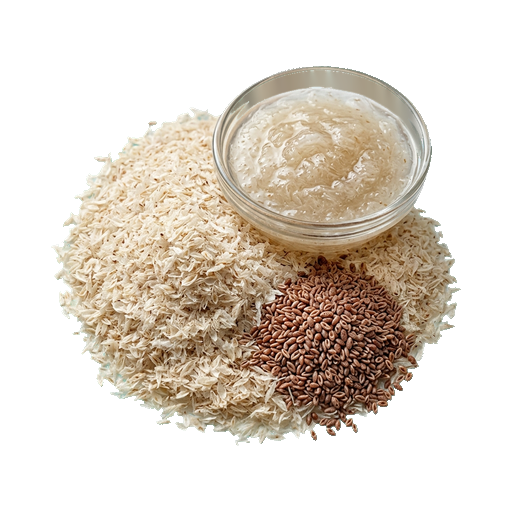
Psyllium is the husk of plantain seeds, which contains a large amount of soluble fiber and is used in cooking as a thickener and binding ingredient. Due to its ability to absorb liquid, it helps improve the consistency of gluten-free baking dough, gives elasticity to bread, and creates the necessary structure in low-carb recipes. When working with psyllium, it is important to follow proportions and add sufficient liquid, as the ingredient significantly increases the moisture of the mixture, and in excess can make the dish sticky.
About
What is psyllium and how does it work in the kitchen
Psyllium is the husk of plantain seeds turned into a fine powder or whole seeds. In cooking, it is valued not for its taste (which is almost non-existent), but for its remarkable ability to absorb liquid and create a viscous consistency. When psyllium meets water or another liquid, it swells and forms a gel-like mass — this property makes it an indispensable helper in gluten-free baking and vegan cooking.
Where psyllium saves the dish
Psyllium's main role is to bind ingredients where gluten or eggs usually do the job. Add it to gluten-free bread dough and get structure instead of a crumbly mass. In vegan pie dough, it replaces the binding function of eggs. Even in vegetable or grain patties, psyllium helps maintain shape and makes the texture more uniform.
- Gluten-free bread and rolls — provides elasticity and prevents crumbling
- Vegan baking — replaces eggs as a binding agent
- Cutlets, meatballs, pâtés — improves consistency and juiciness
- Porridges and puddings — thickens and gives a creamy texture
- Smoothies and drinks — makes them more filling and thick
How to Properly Dose Psyllium
Psyllium is an ingredient that requires great care: even a little more than needed, and the dish will become sticky and heavy. Usually, baking recipes call for 1–2 tablespoons per cup of flour. If you're making cutlets or pâté, start with one tablespoon per kilogram of mixture and add carefully, stirring. Remember: psyllium works more slowly than eggs, so let the dough rest for 10–15 minutes after mixing to allow it to fully reach its potential.
Selection and Storage
Two types of psyllium are found in stores: ground psyllium (husk in powder form) and whole seeds. For cooking, ground psyllium is more convenient — it works faster and distributes more evenly in the dough. Check the packaging: psyllium should be light in color, without lumps and mold smell. Store in an airtight container in a cool place — in humid and warm conditions it can cake or spoil.
Psyllium absorbs moisture from the air well, so container tightness is not just advice, but a necessity. If you cook with it often, buy small packages: one jar lasts a long time since the dosages are quite small.
Works best with
Psyllium is versatile, but performs especially well with alternative flours: rice, corn, and buckwheat. It compensates for their crumbly texture and helps the dough hold its shape. In vegan cooking, it works well paired with flax seeds and starch. For meat and vegetable dishes, it combines well with breadcrumbs and spices — they mask its neutral taste.
- Rice flour + psyllium — the foundation for gluten-free bread
- Flax seed + psyllium — a double binding in vegan dough
- Breadcrumbs + psyllium — the perfect combination for cutlets
- Starch + psyllium — a thickener for sauces and soups
The key to working with psyllium is not to rush and not to overcomplicate things. Start with small amounts, observe the consistency, and trust your instincts. This ingredient requires a bit of practice, but once you understand its logic, it will become a reliable helper in solving many culinary tasks.
Nutrition
per 100 g
- Calories
- 20 kcal
- Protein
- 1.5 g
- Fat
- 0.5 g
- Carbs
- 1 g
Measures and weight
- 1 tbsp
- 4.5 g
- 1 tsp
- 1.5 g
- 1 cup
- 75 g
Measure calculator
- Weight
- 100 g
- Calories
- 20 kcal