Usuba
Usuba
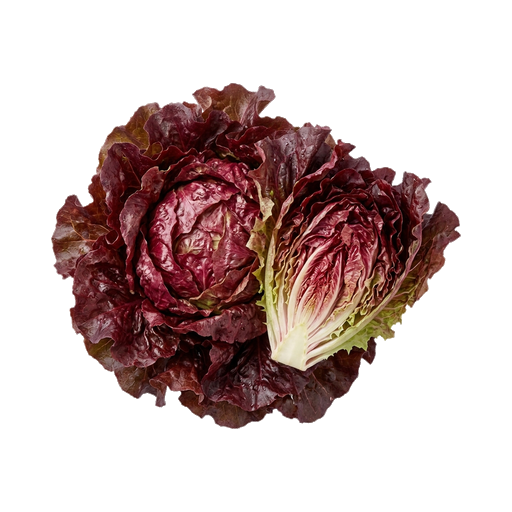
Red leaf lettuce
Red salad is a leafy green with delicate, slightly bitter leaves in a rich red or burgundy color. It features a delicate texture and mild flavor with a subtle piquancy, making it well-suited for fresh salads and appetizers. When selecting, pay attention to the firmness of the leaves and the absence of dark spots; store in the refrigerator in an airtight container to preserve the delicacy and vibrancy of the color.
About
Red lettuce is not a single specific variety, but rather a family of leafy vegetables with purple, burgundy, or wine-colored hues. In culinary terms, this name most often refers to the red variety of head lettuce or leafy lettuce with dark-red leaves. It is valued not only for its unusual color, but also for the soft texture of the leaves and delicate, slightly sweet taste.
Aroma and Taste
Red salad has a delicate, almost neutral taste with a barely noticeable bitterness and a slightly sweet aftertaste. The leaves are thin and fragile, they quickly absorb the dressing, so the salad is best eaten immediately after preparation. The aroma is fresh, herbaceous, without sharp notes.
Where to use it
Red lettuce is a versatile ingredient for fresh salads. Its beautiful color makes the dish more attractive on the plate, which is why it often becomes the base for leafy salad mixes. It works well with light vinaigrettes, olive oil, and lemon juice.
- Base for green salads and salad mixes
- Side dish for hot dishes and appetizers
- Component of sandwiches and open-faced sandwiches
- Garnish for soups and cold appetizers
Combinations and Pairs
Red salad pairs well with bright and contrasting flavors. Its delicacy requires a subtle partner, yet it doesn't get lost alongside expressive ingredients.
- With sour notes: lemon juice, red wine vinegar, balsamic vinegar
- With proteins: soft cheese, cottage cheese, boiled eggs, chicken fillet
- With fruits and berries: pear, apple, pomegranate, strawberry
- With nuts and seeds: walnut, pumpkin seeds, pine nuts
- With oils: extra virgin olive oil, nut oil
How to Choose and Store
When shopping, look for lettuce with firm leaves without darkening, slime, or wilting. Leaves should be brightly colored, without brown spots. Red head lettuce should be dense, but not hard — with gentle pressure, the leaves should yield slightly.
Red lettuce should be stored in the refrigerator in the vegetable compartment or in a plastic container with a lid. Storage time is 3–5 days. Before use, rinse the leaves with cold water and dry them thoroughly: moisture accelerates wilting and decay. If the lettuce is slightly wilted, it can be revived by soaking it in ice water for 15–20 minutes.
Nutrition
per 100 g
- Calories
- 16 kcal
- Protein
- 1.2 g
- Fat
- 0.2 g
- Carbs
- 2.2 g
Measures and weight
- 1 tbsp
- 3 g
- 1 tsp
- 1 g
- 1 cup
- 50 g
- 1 bunch
- 100 g
Measure calculator
- Weight
- 100 g
- Calories
- 16 kcal