Usuba
Usuba
Rice for paella
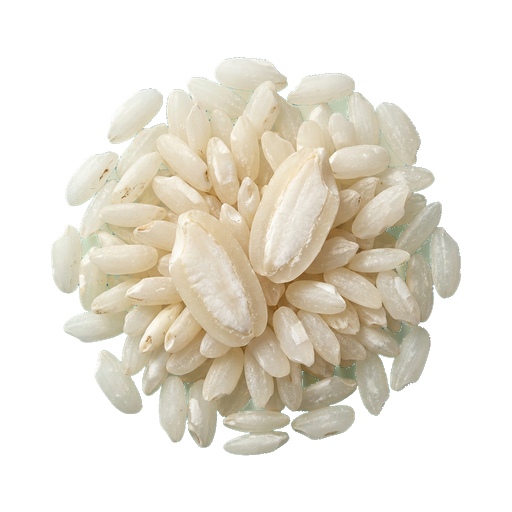
Paella rice is a medium-grain variety with rounded kernels that absorb liquid during cooking while remaining firm and not turning into porridge. This type of rice holds its shape well and allows you to create the characteristic paella texture with individual grains and a crispy crust on the bottom. When choosing, look for varieties such as arborio, carnaroli, or bomba — they are specially designed for this dish and deliver the desired result, whereas long-grain rice is not suitable for paella.
About
What makes rice ideal for paella
Paella requires not just any rice, but grains with very specific characteristics. Short-grain rice for paella is not so much a variety as a function: it must absorb liquid while remaining slightly firm, and retain the flavor of broth rather than turning into porridge. The grains hold their shape, allowing each one to absorb the aroma of saffron, seafood, and vegetables. This is exactly why chefs choose this particular category of rice, rather than universal or long-grain varieties.
Varieties that work
- Bomba — the starchiest and most absorbent, grains practically do not overcook, ideal for authentic Spanish paella
- Arborio — Italian rice, softer than bomba, but still holds its structure and absorbs liquid well
- Carnaroli — an intermediate option between arborio and bomba, with a tender center and elastic outer layer
- Sonal — Spanish variety, less well-known, but an excellent choice for home cooking, slightly softer than bomba
How rice behaves in a frying pan
The main difference between paella and risotto is that the rice is not stirred constantly. Instead, the grains are fried in oil with vegetables, then poured with hot broth and left to absorb moisture over medium heat. Short-grain rice handles this method perfectly: it absorbs liquid evenly, doesn't clump together, and doesn't overcook. A crispy layer forms at the bottom of the pan — socarrat, which is considered the best part of paella. This is possible precisely because the grains maintain their shape even under intense heat.
Selection and Storage
When buying, look for rice with "for paella" written directly on the package or a variety name — bomba, arborio, or carnaroli. The grains should be whole, without cracks or impurities. If you're choosing between varieties for the first time, start with arborio or carnaroli — they are more accessible and forgiving of small mistakes in cooking technique.
Store rice in a dry place at room temperature, in an airtight container or original packaging. Protect from moisture and direct sunlight. With proper storage, paella rice retains its properties for several years, but it is best to use it within a year of purchase — this way the grains remain more firm and elastic.
What does this rice go with
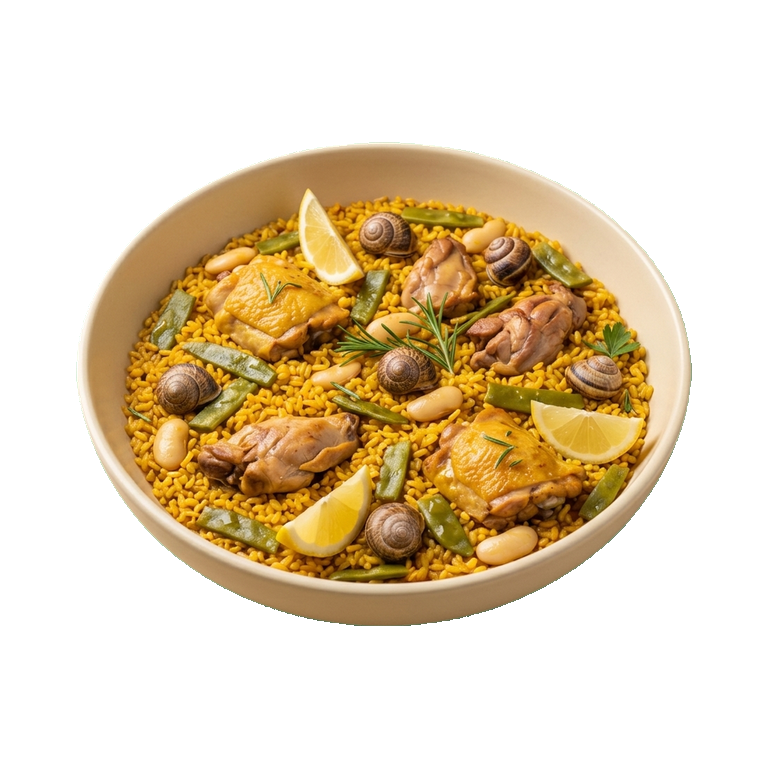
Paella rice is a universal partner for seafood, meat, and vegetables. It works equally well in paella with shrimp and squid, with chicken and sausage, with mushrooms and bell peppers. Saffron, paprika, garlic, and onion are classic companions. Rice absorbs these aromas without losing its own structure, and each grain becomes aromatic and delicious.
Main rule: do not rinse the rice before cooking paella. The starch on the surface of the grains helps them absorb liquid and maintain their shape.
Nutrition
per 100 g
- Calories
- 130 kcal
- Protein
- 2.7 g
- Fat
- 0.3 g
- Carbs
- 28 g
Measures and weight
- 1 tbsp
- 11.3 g
- 1 tsp
- 3.8 g
- 1 cup
- 187.5 g
Measure calculator
- Weight
- 100 g
- Calories
- 130 kcal