Usuba
Usuba

Sushi Rice
Short-grain rice with high starch content that becomes sticky when cooked and holds its shape well — ideal for forming sushi and rolls. The grains remain whole, don't break apart, and absorb rice vinegar well, giving them characteristic flavor and texture. When choosing, look for varieties specifically labeled as 'for sushi' or Japanese short-grain rice, as regular long-grain rice won't provide the necessary stickiness and structure.
About
Sushi rice is not just a grain, but the foundation that determines the success of the entire dish. Its grains must be sticky enough to hold the filling and seaweed together, while maintaining their shape and not turning into mush. This requires a special variety and proper processing that distinguish sushi rice from ordinary long-grain rice.
How to Choose and Cook
Look for the words "for sushi" on the package or varieties like "Japonica". The grains should be white, uniform in size, and free of cracks. Good sushi rice has a slightly matte sheen — this is a sign of proper processing. Avoid packages with a yellowish tint or visible damage.
Before cooking, rinse the rice under cold water several times until the water becomes clear — this removes excess starch and prevents clumping. Cook in a 1:1.2 ratio (rice to water) over medium heat until boiling, then on low heat for about 15 minutes. The finished rice should be soft, but the grains remain separate, not mushy.
Seasoning — the key moment
Hot rice should be immediately mixed with sushi vinegar (a mixture of rice vinegar, sugar, and salt). Do this carefully to avoid crushing the grains — use a wooden spatula and cutting motions. The rice should cool to room temperature while absorbing the seasoning but remaining moist. This will take 10–15 minutes.
When and how to use
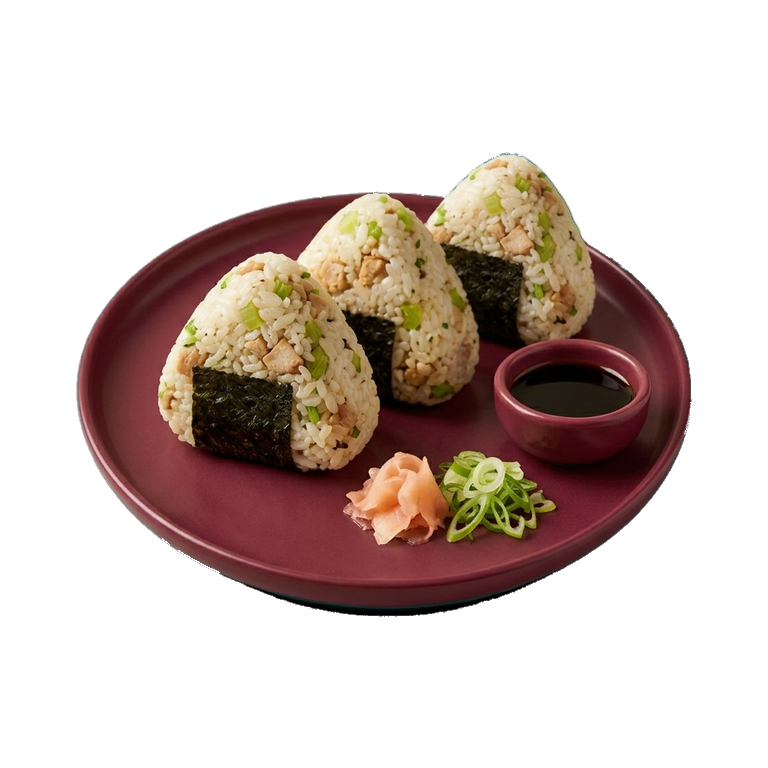
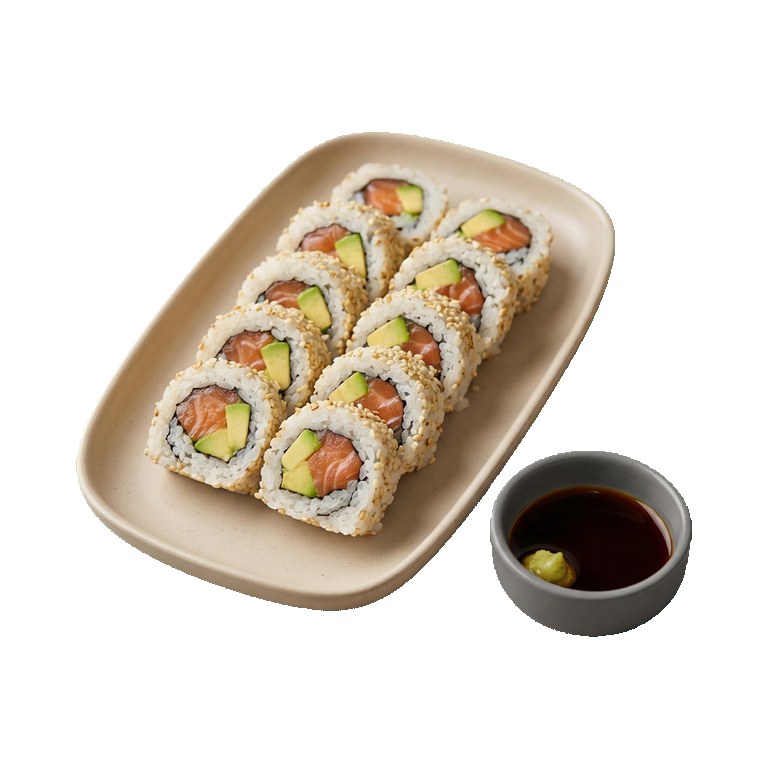
Seasoned rice is suitable for sushi for several hours if stored under a damp cloth at room temperature. Do not refrigerate — cold makes it stiff and unappetizing. Use it for rolls, nigiri, sushi bowls, and any other forms where you need a sticky base that holds its shape.
If the rice turns out too dry, sprinkle it with rice vinegar and mix gently. Overly moist rice is harder to shape — in this case, give it more time to cool down. The key is not to rush and not to try working with hot rice, otherwise it will fall apart in your hands.
Nutrition
per 100 g
- Calories
- 130 kcal
- Protein
- 2.7 g
- Fat
- 0.3 g
- Carbs
- 28 g
Measures and weight
- 1 tbsp
- 22.5 g
- 1 tsp
- 7.5 g
- 1 cup
- 375 g
Measure calculator
- Weight
- 100 g
- Calories
- 130 kcal