Usuba
Usuba
Root vegetables
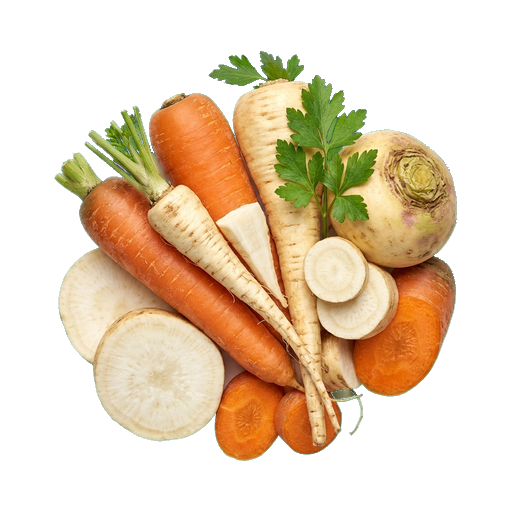
Root vegetables are edible roots and tubers used in cooking to add deep, rich flavor and aroma to dishes. In Russian cuisine, carrots, parsley, celery, and parsnip are traditionally used, forming the base for broths, soups, and braised dishes. When selecting root vegetables, it is important to choose firm specimens without soft spots, and when storing them, keep them in a cool place to preserve their sweetness and aroma.
About
Root vegetables are aromatic underground parts of plants that have become the foundation of many cuisines around the world. This name encompasses roots, tubers, and bulbs, each with its own character and purpose. In cooking, root vegetables work as the foundation of flavor: they give depth to broths, richness to stews, and sweetness to sauces. These are not just vegetables — they are a tool that transforms a dish.
Aroma and Taste
Each type of root vegetable brings its own note to the dish. Carrots add natural sweetness and a bright orange color. Parsley and celery provide herbal bitterness and freshness — they are indispensable in an aromatic base for soups. Parsnip is similar to carrot, but milder and more delicate. Ginger root brings sharp spiciness and a warming effect. Turmeric imparts an earthy tone and a golden hue.
The flavor of root vegetables unfolds differently depending on the cooking method. During prolonged stewing or boiling, they become softer and release their flavor into the liquid. When fried in oil, they develop caramelized sweetness and concentrated aroma. Raw root vegetables are crispy and retain their vibrancy, but require thin slicing.
Role in dishes
In European cuisine, root vegetables are the holy trinity: carrots, celery, and onions. Together they create an aromatic base (mirepoix) for soups, stews, and sauces. They are sautéed at the beginning of cooking to release sweetness and create a deep foundation of flavor.
- In soups and broths, root vegetables cook for a long time, releasing flavor and nutrients
- In stews and braised dishes, they become soft and absorb sauces
- In baked dishes, they caramelize and acquire sweetness
- In salads and appetizers, they serve as a crunchy texture and freshness
Pairings and Harmony
Root vegetables work well with meat — beef, chicken, pork. They soften the richness and add depth. With fish, they are used more delicately: carrots and celery, but rarely spicy spices. They pair well with herbs — thyme, bay leaf, parsley. Together they create classic aromatic bouquets.
Root vegetables enhance each other. Carrots and celery together provide a more rounded flavor than each one individually. Ginger and turmeric are a classic Eastern combination. Parsnip complements carrots well in soups and purees. Combine root vegetables depending on the result you need: for lightness — more celery, for sweetness — more carrots.
Selection and Storage
When choosing root vegetables, look at their appearance: they should be firm, without soft spots or rot. Choose carrots and parsnips of medium size — large ones are often fibrous. Celery should be fresh, without wilting. Ginger and turmeric roots should be smooth and heavy for their size.
- Carrots, parsnips, and celery are stored in the refrigerator in the vegetable compartment for up to 2–3 weeks
- Ginger and turmeric are best kept in a cool dark place, wrapped in paper to prevent drying out
- Peeled roots should be used quickly or stored in water in the refrigerator
- Frozen roots lose their crunchiness, but are good for soups and stewing
Roots are not a decoration of a dish, but its architecture. They create a flavor foundation on which everything else is built. Learn to feel their role in every recipe, and your dishes will become deeper and more aromatic.
Nutrition
per 100 g
- Calories
- 30 kcal
- Protein
- 1 g
- Fat
- 0.2 g
- Carbs
- 5 g
Measures and weight
- 1 pcs
- 100 g
Measure calculator
- Weight
- 100 g
- Calories
- 30 kcal