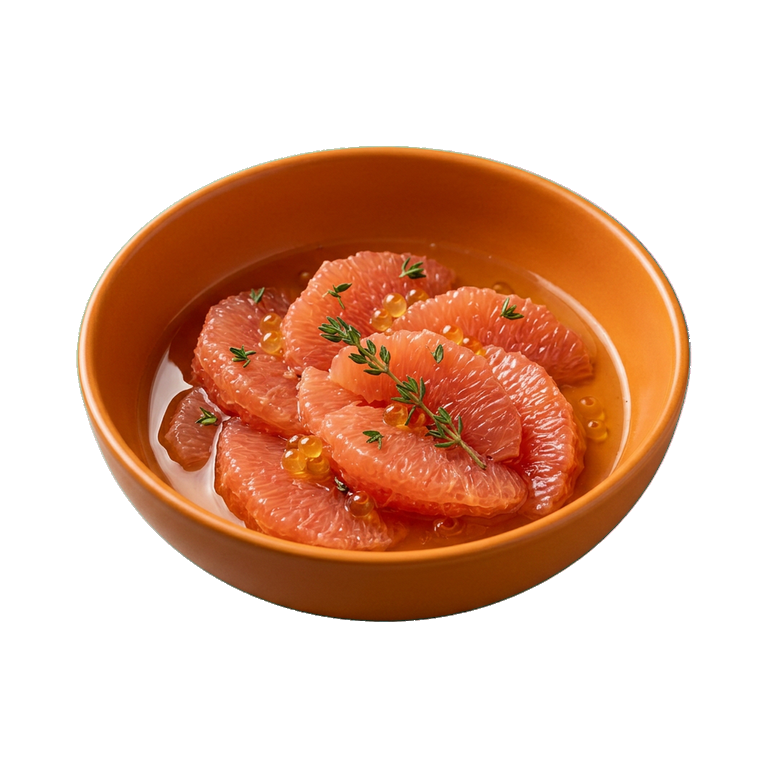
Usuba
Usuba
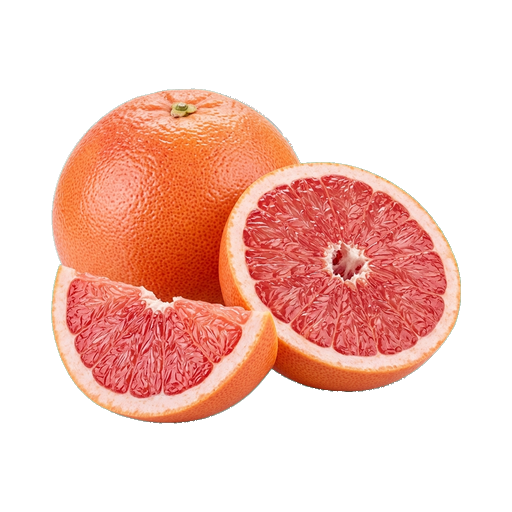
Pink Grapefruits
Pink grapefruits differ from regular ones with a more delicate taste featuring pronounced sweetness and a subtle bitterness, and their flesh contains natural anthocyanins that give them their characteristic pink hue. In cooking, they are ideal for fresh desserts, juices, cocktails, and fruit salads, where their sweetness and juiciness shine through completely. When selecting, prefer heavier fruits with thin skin and choose those that yield slightly to gentle pressure — a sign of ripeness and juiciness.
About
Pink grapefruit is not just a citrus fruit, but a whole turn in taste sensations. If the yellow variety seems too bitter and austere, pink invites you to the table with light sweetness and pleasant acidity. Its pulp varies from delicate pink to deep red, and the brighter the shade, the higher the antioxidant content and the more interesting the flavor profile.
Taste and Aroma
Pink grapefruit balances between bitterness and sweetness in a way that few fruits can achieve. At first bite, you experience a pleasant bitterness that quickly fades, leaving room for freshness and light sweetness. The aroma is floral, with notes of pepper and herbs, pronounced enough to be noticed even through the skin. This makes it an ideal choice for those who appreciate complex flavors but are not ready for the aggressive acidity of ordinary citrus.
How to use in the kitchen
Pink grapefruit is equally good as a standalone breakfast or as a component of a complex dish. Its flesh works well in fresh salads with seafood, avocado, and delicate greens. The juice easily becomes the base for marinades for fish or poultry — bitterness and acidity perfectly cut through richness and add lightness. Try adding segments to desserts: they pair well with chocolate, vanilla, and ginger.
Successful Pairings
- With shrimp, crab and white fish
- With avocado, radish and young cabbage in salads
- With ginger, black pepper and cardamom in drinks
- With dark chocolate and white chocolate in desserts
- With herbs: mint, basil, cilantro
How to Choose and Store
When choosing, focus on weight: a good grapefruit should be heavy for its size — this is a sign of juiciness. The skin can be smooth or slightly wrinkled, which does not affect quality. Avoid fruits with soft spots and dents. The skin color varies from yellow with a pink blush to almost orange — this is not an indicator of ripeness, but a characteristic of the variety.
A whole grapefruit can lie quietly in the refrigerator for two to three weeks without losing quality. At room temperature, it will last 5–7 days. A cut fruit should be used within several days, covered with plastic wrap. Juice is best consumed freshly squeezed, but in an airtight container it will keep in the refrigerator for up to three days.
If grapefruit seems too bitter, try it at room temperature instead of chilled: the sweetness becomes more noticeable and the bitterness softer.
Nutrition
per 100 g
- Calories
- 32 kcal
- Protein
- 0.7 g
- Fat
- 0.1 g
- Carbs
- 6.5 g
Measures and weight
- 1 pcs
- 250 g
Measure calculator
- Weight
- 100 g
- Calories
- 32 kcal