Usuba
Usuba
Rye groats
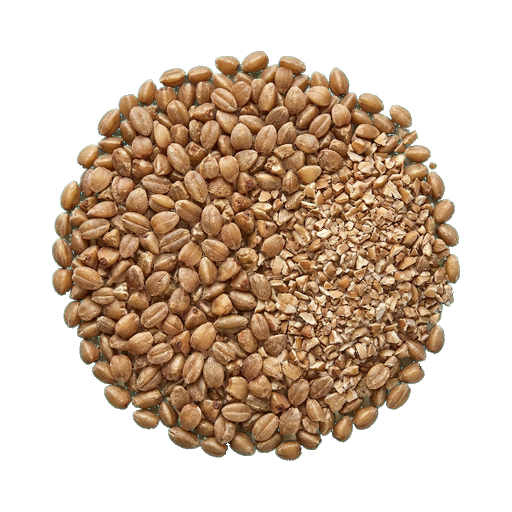
Rye groats are made from rye grains and contain more fiber and minerals than wheat. They have a characteristic slightly bitter, earthy flavor and a dense consistency after cooking. The groats are used for porridges, soups, and traditional dishes, but they require longer cooking time than wheat groats and need a greater amount of liquid.
About
Aroma and Taste
Rye groats are rye grains cleaned of husks and crushed. When ready, they have a warm, slightly nutty aroma with a barely noticeable bitterness. The taste is rich, earthy, with a pleasant density on the tongue. These groats don't require prolonged steaming, but they absorb broth well and retain the shape of the grains, without turning into mushy porridge.
Role in dishes
Rye groats are a character that is rare rather than popular. They are used in soups, especially in traditional recipes with mushrooms and vegetables, where they add body and heartiness. From them, they cook crumbly porridges that go well with fatty meat or fish — the groats seem to absorb and balance the richness of the dish. Some chefs add them to ground meat for cutlets or to dough for bread to give structure and depth of flavor.
Combinations and Proportions
Rye groats pair well with mushrooms, onions, carrots, and celery — together they create a cozy, rich foundation. It unfolds more fully on meat or fish broths than on water. For porridge, the standard proportion is one part groats to two parts liquid; during cooking it increases in volume by approximately three times. Cooking time usually takes 30–40 minutes depending on the size of the crushed grains.
Selection and Storage
When purchasing, pay attention to the color — it should be uniform, grayish-brown, without foreign inclusions and dust. Fresh groats have a light bread aroma. Rye groats are stored in airtight containers in a cool, dry place — the oils in their composition oxidize more slowly than in other groats, but it's still better not to keep them longer than six months. Before cooking, the groats can be lightly roasted in a dry skillet — this will enhance the nutty aroma and make the porridge more crumbly.
Nutrition
per 100 g
- Calories
- 325 kcal
- Protein
- 9.9 g
- Fat
- 1.1 g
- Carbs
- 69.1 g
Measures and weight
- 1 tbsp
- 10.5 g
- 1 tsp
- 3.5 g
- 1 cup
- 175 g
Measure calculator
- Weight
- 100 g
- Calories
- 325 kcal