Usuba
Usuba
Rye sourdough
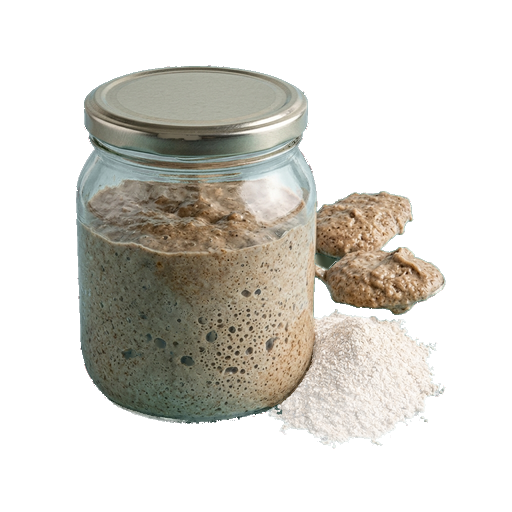
Rye sourdough starter is a living culture made from flour and water in which wild yeasts and lactic acid bacteria multiply. It gives bread a characteristic tangy flavor, dense crumb structure, and dark color, while also improving its shelf life. When choosing a starter, it's important to consider its maturity and activity: a starter ready for use should increase in volume and have a pleasant sour milk aroma rather than a sharp alcoholic smell.
About
Rye sourdough is a living culture of lactic acid bacteria and wild yeast that works in dough as a leavening agent, preservative, and flavor enhancer all at once. If you've ever baked bread with sourdough, you know: the result is completely different — with a characteristic tanginess, delicate porosity, and the ability to stay fresh for days without drying out. Rye sourdough is particularly active and stable thanks to the composition of rye itself, which contains more nutrients for microorganisms than wheat.
Aroma and taste
Rye starter has the smell of fermented dairy products with light fruity notes — this is the smell of active fermentation. In bread flavor, it creates a pleasant tanginess that doesn't sting the tongue, but rather emphasizes the depth of rye flavor. The longer the starter lives and the more regularly it is fed, the more complex and expressive flavor profile it develops. Young starter gives a mild acidity, while mature starter gives a more saturated and multifaceted one.
Role in Baking
In rye dough, sourdough starter is the main helper. It leavens dense dough, making bread airy and easy to chew. Lactic acid bacteria soften rye gluten, which makes the crumb more tender. At the same time, the starter produces organic acids that slow down staling and allow the bread to stay fresh longer than usual.
How to use it
- For black bread, starter is the foundation. Usually, 20–30% of the flour weight is used, depending on the desired acidity and fermentation time.
- For rye-wheat bread, less is added — 10–20%, so as not to overpower the wheat flavor.
- Starter can be used in wheat bread to improve taste and shelf life, but there it plays a supporting role.
- Before use, the starter needs to be activated — feed it with flour and water 4–8 hours before mixing so it wakes up and starts working.
Selection and Storage
If you are buying a ready-made starter culture, pay attention to its consistency — it should be homogeneous, without mold and strange odors. A good starter culture smells like fermented dairy and slightly alcoholic. At home, keep the starter culture in the refrigerator in a glass jar with a loose lid — microorganisms need air access. If you have been baking recently, it is enough to feed the starter culture once a week. If bread on the table is rare, switch it to long-term storage mode — store in the refrigerator and feed once a month.
Feeding a starter is simple: remove half of the jar's contents, add equal parts flour and water (for example, 50 grams of each). Mix and leave at room temperature for several hours until the starter rises and begins to bubble. Then refrigerate it. This way, the starter lives for many years, becoming increasingly flavorful and reliable.
Rye sourdough is not just an ingredient, but a living organism that requires attention and respect. However, in return, it gives bread a taste, aroma, and longevity that cannot be achieved with any chemical leavening agents.
Nutrition
per 100 g
- Calories
- 200 kcal
- Protein
- 7 g
- Fat
- 1 g
- Carbs
- 40 g
Measures and weight
- 1 tbsp
- 10.5 g
- 1 tsp
- 3.5 g
- 1 cup
- 175 g
Measure calculator
- Weight
- 100 g
- Calories
- 200 kcal