Usuba
Usuba
Muscovado sugar
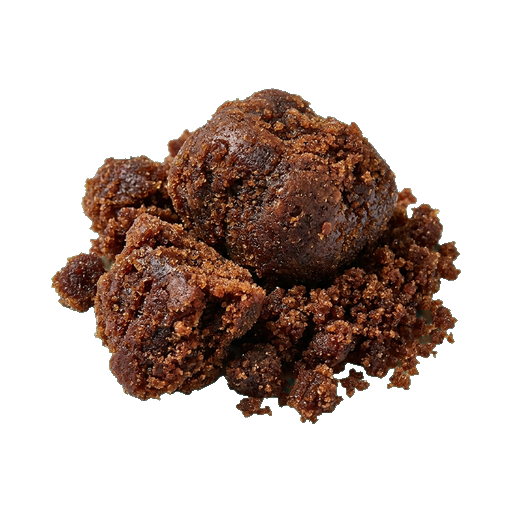
Muscovado sugar is unrefined or lightly refined cane sugar with a moist texture and rich caramel flavor. It is distinguished by its high molasses content, which gives it a deep color ranging from light brown to dark brown and a pronounced aroma with notes of molasses. In cooking, muscovado is used in baking, desserts, sauces, and marinades, where its soft consistency dissolves quickly and enriches dishes with complex flavor, though with prolonged storage the sugar may harden — in this case, it is best kept in an airtight container with a slice of bread or apple.
About
Muscovado is an unrefined cane sugar that retains moisture and natural molasses. Its crystals are larger than regular sugar, and the color ranges from light brown to almost black. The main difference is that during muscovado production, the molasses is not completely separated — it remains in the crystals, giving the sugar its moisture and deep caramel flavor.
Aroma and taste
Muscovado smells of caramel, toffee, and slightly tropical fruits — these are traces of molasses that remain in the product. The taste is not just sweetness, but complexity: first caramel, then light notes of molasses and even a hint of saltiness. This complexity makes muscovado especially valuable in baking and desserts, where depth of flavor is needed, not just sweetness.
Muscovado has a moist and slightly sticky structure — the crystals clump together due to residual moisture. This is not a drawback, but a distinctive feature: this sugar dissolves more easily, releases flavor faster, and creates a more delicate texture in finished dishes.
Role in dishes
In baking, muscovado works as a universal helper. Cookies, cakes, and cupcakes made with it turn out more moist and soft — the molasses retains moisture in the dough. Caramel notes enhance the flavor of chocolate baked goods, making them richer. If you replace regular sugar with muscovado in a cookie recipe, it will be more chewy and aromatic.
Muscovado is great in sauces, glazes, and caramel. It is added to marinades for meat and fish, in compotes and jams. Even in tea or coffee, muscovado will give more flavor than regular sugar. It is especially suitable in dishes with Eastern, Caribbean, or Latin American motifs.
Combinations and Proportions
Muscovado sounds excellent paired with cinnamon, ginger, cloves, and black pepper. Chocolate, vanilla, coconut, and bananas enhance its caramel notes. Even with salt, muscovado works interestingly — it highlights its depth and softens excessive sweetness.
If a recipe calls for regular sugar, muscovado can be used in a 1:1 ratio by weight. But remember: the dish will be moister and darker. If you need precise structure (for example, in meringue or sugar paste), it's better to stick with the original ingredient. For most baked goods and sauces, however, the substitution is safe and improves the result.
Selection and Storage
When purchasing, check that muscovado is sold in an airtight package — air will dry it out. The color should be uniform, without white spots or lumps. Quality muscovado is slightly moist to the touch and crumbles easily in your hands if you squeeze it.
- Store muscovado in an airtight container at room temperature — moisture will evaporate if left open.
- If the sugar has hardened, place a slice of bread or apple in the container for a few hours — the moisture will soften the crystals.
- Storage time is practically unlimited if you maintain an airtight seal and avoid humidity.
- Store separately from spices and seasonings — muscovado easily absorbs foreign odors.
Muscovado is somewhat more expensive than regular sugar, but it is used more economically due to its intense flavor. Often, a smaller amount is enough to achieve the desired sweetness. For home baking and sauces, it's an investment that pays off with the quality of the result.
Nutrition
per 100 g
- Calories
- 390 kcal
- Protein
- 0 g
- Fat
- 0 g
- Carbs
- 97 g
Measures and weight
- 1 tbsp
- 12.8 g
- 1 tsp
- 4.3 g
- 1 cup
- 212.5 g
Measure calculator
- Weight
- 100 g
- Calories
- 390 kcal