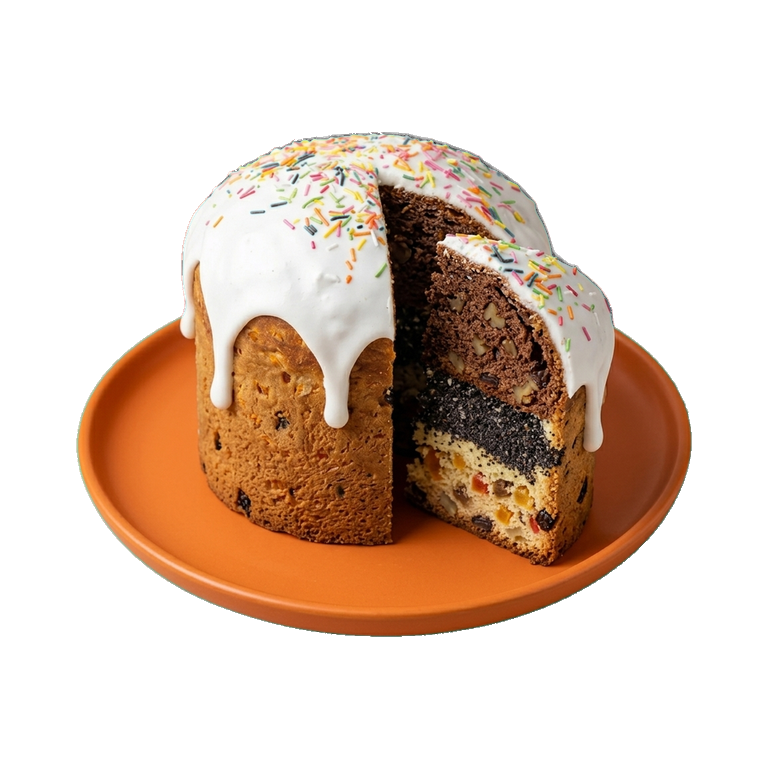
Usuba
Usuba
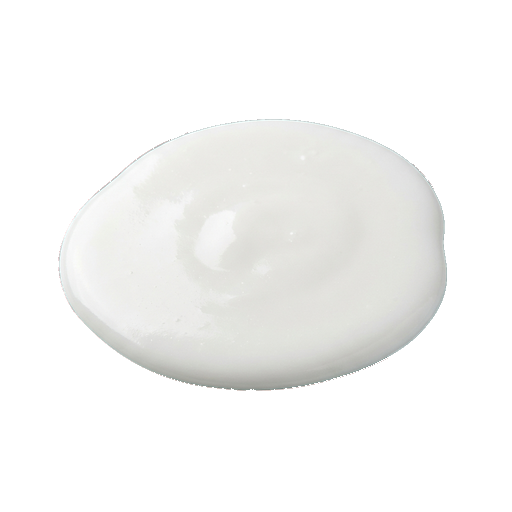
Icing sugar
Royal icing is a simple mixture of powdered sugar with liquid (water, milk, juice, or egg white) that creates a smooth, glossy coating on baked goods and desserts. It hardens quickly in air, forming a thin crust, and serves both for decoration and for bonding details of gingerbread, cookies, or cupcakes. When using it, it's important to maintain the right consistency — icing that's too thin will drip, while icing that's too thick will crack, so liquid should be added gradually until the desired texture is achieved.
About
Royal icing is a paste made from powdered sugar and liquid that becomes the perfect finish for cookies, cupcakes, and cakes. Its main advantage is that it dries quickly, forming a smooth glossy layer, and at the same time it can be easily colored in any color. It's not just decoration, but a full-fledged element of taste and texture that many people look forward to first and foremost.
Consistency and Application
The consistency of the glaze depends on the ratio of powdered sugar to liquid — this is the main control lever. A thick version holds its shape well and is suitable for decorative patterns using a piping bag. A thin version spreads and fills the surface evenly, creating a smooth coating. Between these extremes are many options for different tasks.
Water, milk, lemon juice, or egg whites are used as a liquid base. The choice affects not only the consistency but also the taste: lemon juice will add sourness, milk will add softness and creaminess, and egg whites will add density and shine after drying.
Color and Flavor Additives
Sugar glaze is a blank canvas for creativity. Food coloring (gel, liquid, or powder) mixes easily with the paste and produces bright, vibrant colors. Gel coloring is especially convenient because it doesn't dilute the glaze and doesn't require large quantities.
Flavor additives open up new possibilities. Vanilla extract, almond essence, cocoa powder, cinnamon, or citrus zest can be easily incorporated into a recipe. The key is to remember that additives change the consistency, so a slight adjustment to the liquid amount may be necessary.
Application technique and drying
You can apply the glaze in several ways: with a brush for even coverage, with a piping bag for patterns and inscriptions, or simply by dipping the product into a bowl of glaze. The last method works quickly if you need to coat many cookies at once.
Drying usually takes 20–40 minutes at room temperature, depending on the thickness of the layer. If you're in a hurry, you can briefly place the product in the refrigerator — the cold will speed up the process. Once the glaze is completely dry, it becomes hard and does not smudge when touched.
Selection and Storage
For the glaze, you need fine powdered sugar without lumps — this is the foundation of quality. If the powder is coarse or clumpy, sift it through a fine mesh strainer. Use liquid at room temperature so the sugar dissolves evenly and no crystals form.
Store the finished glaze in an airtight container at room temperature for up to three days. If it thickens, add a few drops of liquid and stir. Freezing the glaze is not recommended — it may separate when thawed.
Royal icing works everywhere you need simplicity and reliability. It requires no special equipment, doesn't spoil during storage, and always looks professional. Start with a basic recipe — powdered sugar, water, and some practice — and you'll quickly understand how to adapt it to your needs.
Nutrition
per 100 g
- Calories
- 398 kcal
- Protein
- 0.3 g
- Fat
- 0.1 g
- Carbs
- 99 g
Measures and weight
- 1 tbsp
- 21 g
- 1 tsp
- 7 g
- 1 cup
- 350 g
Measure calculator
- Weight
- 100 g
- Calories
- 398 kcal