 Usuba
Usuba
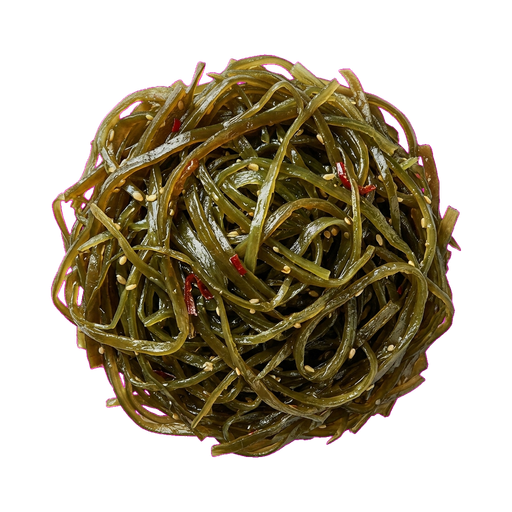
Seaweed salad
Sea kelp with a crispy, slightly slimy texture and a salty taste with an iodine note. Mainly used in Asian cuisine as a ready-made semi-finished product — sold marinated or as dried seaweed that needs to be soaked. When choosing, pay attention to the color: quality chuka has a dark green or brownish tint, not a bright green, which indicates an excess of colorants.
About
Chuka is sea lettuce that has long since ceased to be an exotic ingredient in our kitchens. Its wavy dark green leaves are sold already ready to eat: rinsed, sliced, and often lightly seasoned. Unlike other seaweeds, chuka has a delicate, crispy texture and a mild, slightly sweet flavor with a hint of the sea. It is an ideal ingredient for those who want to add something unusual to their menu while still having something ready to use.
Taste and Texture
The main advantage of chuka is its crunchiness. The leaves remain firm even after dressing with oil or vinegar, do not soften and retain their shape. The taste is delicate: oceanic, but not sharp, with a slight sweetness and barely noticeable saltiness. If chuka has been stored properly, it does not smell of mud or fish — only of freshness and iodine.
How to use
Chuka is versatile. It is added to sushi bowls, poke, salads with vegetables and seafood. It pairs well with avocado, cucumber, radish, and spicy sauces. Often used in Asian salads together with sesame, ginger, and soy sauce. You can simply dress it with oil and rice vinegar — it makes a complete side dish for fish or rice.
Successful Combinations
- Seafood: shrimp, squid, crab meat, caviar
- Vegetables: avocado, cucumber, radish, carrot, tomatoes
- Grains: sesame, black and white
- Sauces: soy sauce, rice vinegar, sesame oil, hot chili
- Carbohydrates: rice, noodles, sushi bread
Selection and Storage
When purchasing, pay attention to the color: it should be a rich dark green without brown spots or coating. The leaves should not be sticky or dry. Chuka is sold in vacuum packaging or in containers with liquid — this is normal. Store opened packaging in the refrigerator in an airtight container for no more than a week. If chuka starts to change color to brown or smells unpleasant — it's time to discard it.
Preparation
Store-bought chuka doesn't require cooking or long soaking. Simply drain it in a colander to remove excess liquid, and it's ready to use. If the chuka seems too salty, rinse it quickly with cold water. After that, you can add it directly to your dish or dress it with oil and sauce.
Kitchen Tip
Add chuka to the dish at the last moment to preserve its crunchiness. If you're preparing a salad in advance, keep the seaweed separate and mix it just before serving. Chuka works well in both cold salads and warm dishes — just don't boil it, or the texture will be lost.
Nutrition
per 100 g
- Calories
- 80 kcal
- Protein
- 2 g
- Fat
- 5 g
- Carbs
- 6 g
Measure calculator
- Weight
- 100 g
- Calories
- 80 kcal
