Usuba
Usuba
Mackerel
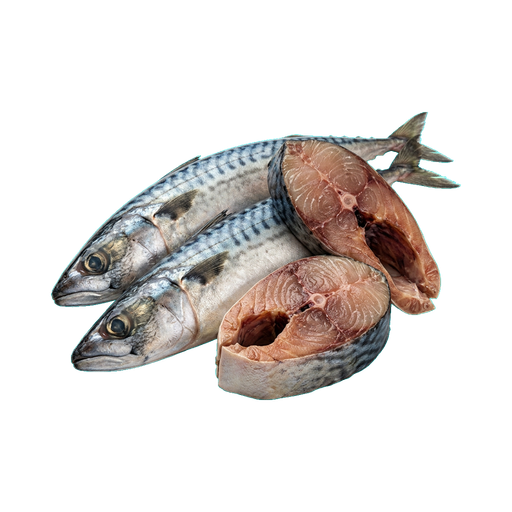
Mackerel is a fatty saltwater fish with firm meat and a pronounced fishy flavor, rich in omega-3 fatty acids. Its saturated aroma and oily texture are well-developed through smoking, baking, and frying, and it is also suitable for salting and canning. When selecting fresh mackerel, pay attention to clear eyes and firm meat, and when cooking, keep in mind that due to its high fat content, the fish oxidizes quickly and requires culinary processing on the day of purchase.
About
Mackerel is one of the most practical fish in the kitchen. It's fatty, juicy, with a pronounced character, and cooks so simply that even a beginner can handle it. The meat is dense, holds its shape well with any heat treatment, and the price remains affordable even in good fish shops.
Aroma and Taste
Mackerel smells like the sea — this is not a drawback, but its signature trait. The smell is intense, but not unpleasant if the fish is fresh. The taste is rich, meaty, with a slight saltiness. High fat content makes it incredibly juicy — the meat literally melts in your mouth. This is not a delicate white fish, this is a serious, full-bodied flavor that won't get lost in any sauce.
Role in dishes
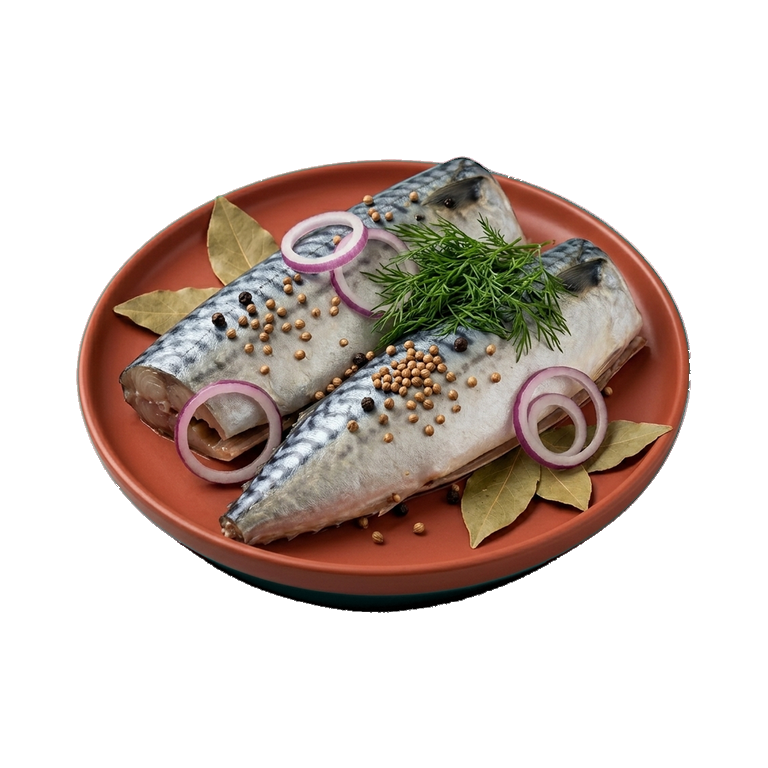
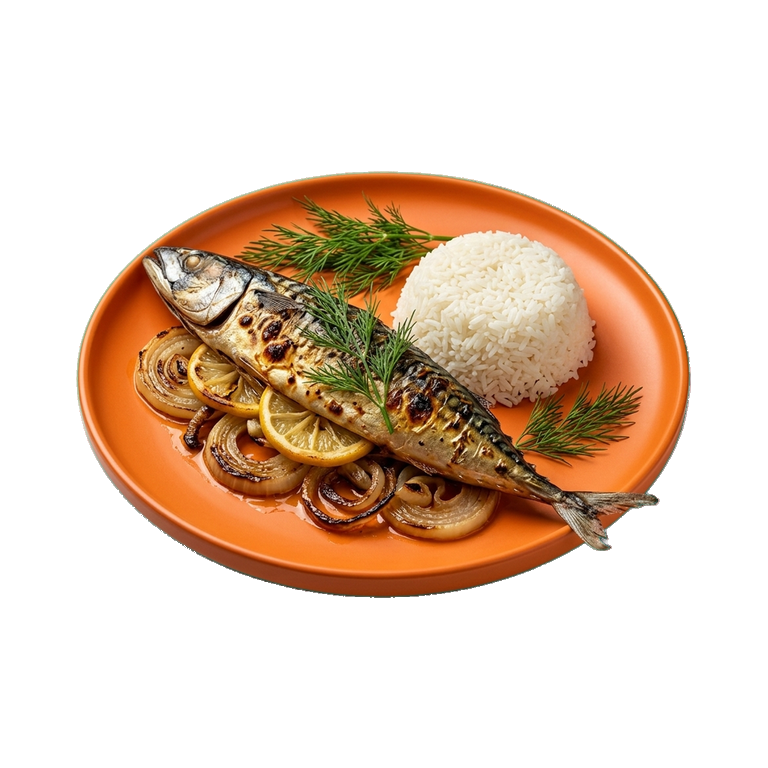
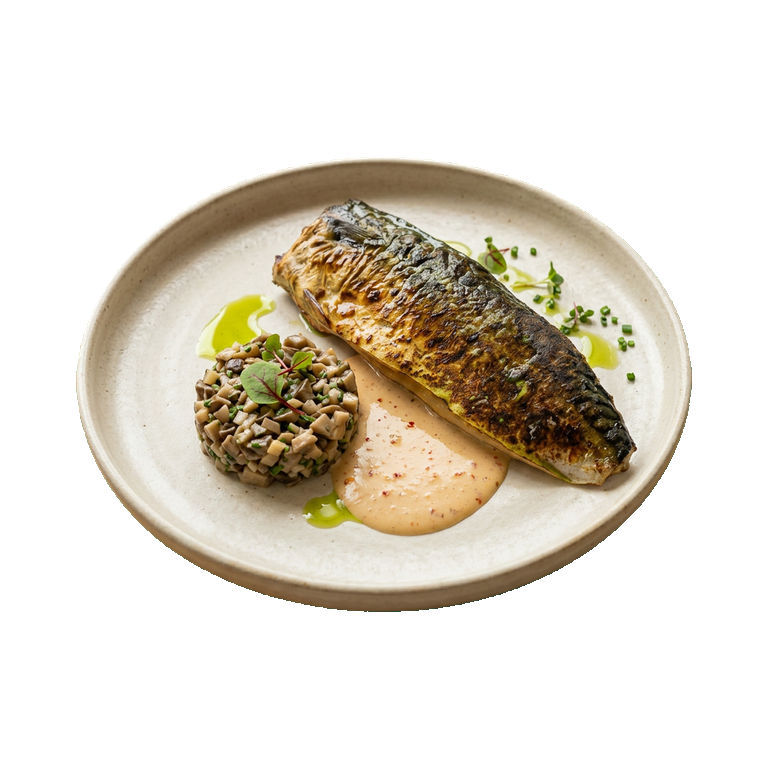
Mackerel does not require complex preparation and tolerates any cooking method well. It can be fried whole in a pan or on a grill, smoked hot or cold, baked in the oven, boiled for soups and fish stew, salted and marinated. Thanks to its fat content, it does not dry out even with prolonged cooking.
- On the grill or skillet: just salt, pepper and lemon — the fish won't spoil itself
- In marinade: absorbs acid, spices and herbs well, becomes even more interesting
- In soup: meat easily separates from bones, gives the broth a deep flavor
- Smoking: mackerel is a classic smoking candidate, turns out with crispy skin and tender meat
Pairings and Seasonings
Mackerel's rich flavor requires equally confident accompaniments. Lemon and lime are its best friends—they cut through the fat and add freshness. Black pepper, mustard, and sharp vinegar- or tomato-based sauces work wonderfully. Herbs with character—dill, parsley, basil—hold their own alongside the fish.
- Citrus and hot sauces highlight the taste
- Tomatoes and vinegar balance the richness
- Mustard and horseradish add contrast
- Garlic and ginger enhance the aroma
Selection and Storage
Fresh mackerel has shiny skin with an iridescent sheen, firm meat, and not too pungent smell. The eyes should be clear, the gills — pink. If the fish is lying on ice at the store, this is a good sign. When choosing frozen mackerel, it is better to select pieces without an ice crust — this is a sign of refreezing.
Fresh mackerel should be cooked on the day of purchase or at most the next day — store it in the refrigerator on the coldest shelf. Frozen mackerel can be kept for several months in the freezer, but it must be thawed slowly in the refrigerator, not at room temperature. Smoked mackerel keeps longer, especially if vacuum-sealed.
Mackerel is not a fish for experiments. Its strength lies in simplicity: minimal ingredients, maximum flavor. Even if you simply salt it and fry it in a pan, it will turn out delicious.
Nutrition
per 100 g
- Calories
- 205 kcal
- Protein
- 18.7 g
- Fat
- 13.7 g
- Carbs
- 0 g
Measures and weight
- 1 pcs
- 300 g
Measure calculator
- Weight
- 100 g
- Calories
- 205 kcal