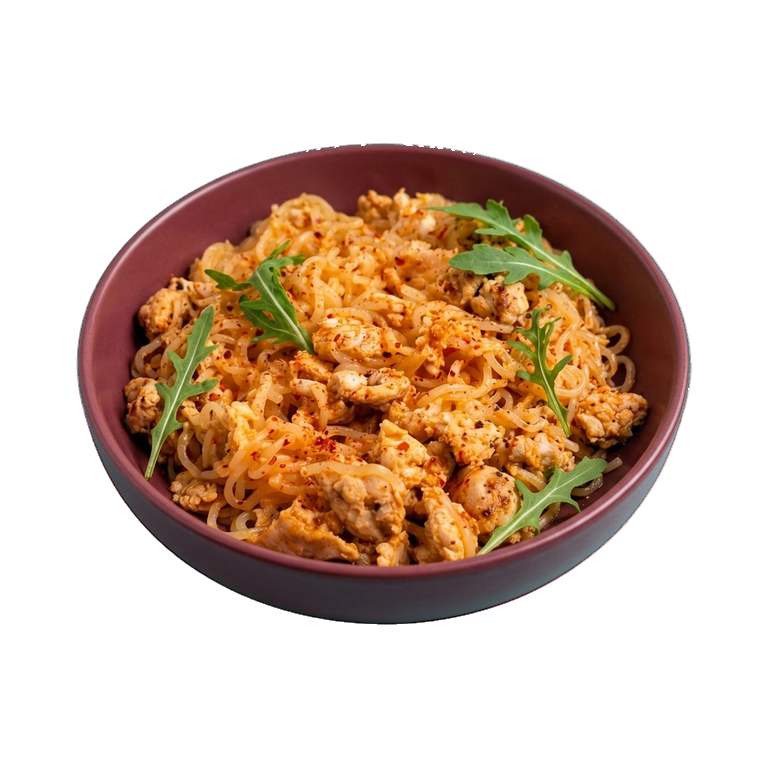
Usuba
Usuba
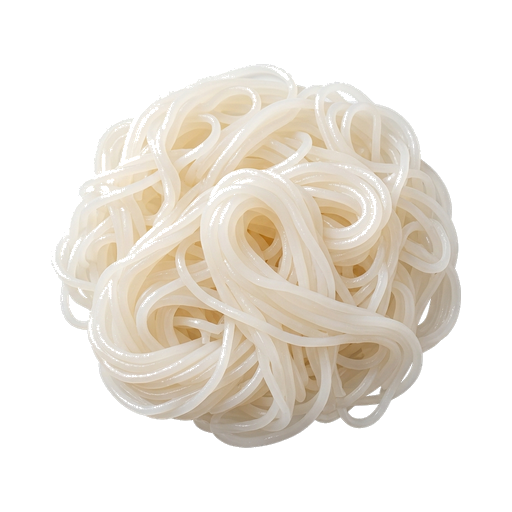
Shirataki noodles
Shirataki spaghetti is a noodle made from konjac flour (a root of the amorphophallus plant), consisting almost entirely of water and fiber. They have a neutral taste, elastic and slippery texture, and contain minimal calories, making them a popular alternative to regular pasta in diet food. When preparing shirataki, you need to rinse and dry them thoroughly to avoid a fishy smell, and avoid overcooking — just a few minutes in hot water or in a pan is sufficient, as they are already ready to eat.
About
Shirataki spaghetti are thin transparent noodles made from konjac starch, a Japanese plant. They contain almost no calories and carbohydrates, but are rich in fiber. In recent years, this pasta has become popular among those who monitor their diet or follow a low-carb diet. But it's not just a diet product — shirataki has an interesting texture and can be a useful addition to various dishes.
Texture and taste
Shirataki has a firm, slightly slippery texture — somewhat like soft pasta, but more delicate. The taste is almost neutral, nearly flavorless, making them a versatile canvas for any sauces and seasonings. Immediately after opening the package, you may notice a slight fishy or seafood smell — this is normal and disappears after rinsing.
Preparation and cooking
- Open the package and drain the liquid in which the pasta is stored
- Rinse shirataki thoroughly under cold running water several times — this removes the odor and improves the texture
- Boil in boiling water for 2–3 minutes or fry in a dry pan for 1–2 minutes for better texture and moisture removal
- Add to hot sauce or soup at the last moment so the pasta doesn't become too soft
Where to use
Shirataki noodles work well in Asian soups — miso, tom yum, ramen. They can be served with spicy sauce, creamy sauce, or light vegetable broth. The pasta pairs well with seafood, chicken, vegetables, and mushrooms. Thanks to its neutral flavor, it doesn't compete with the main ingredients but complements them.
Successful Pairings
- Spicy sauces based on chili and garlic
- Creamy sauces with herbs and lemon
- Asian seasonings: soy sauce, ginger, coconut milk
- Seafood: shrimp, squid, fish
- Vegetables: bell pepper, broccoli, zucchini, carrot
Selection and Storage
Shirataki noodles are sold in vacuum packaging with liquid or in dry form. Both options store well in a cool, dark place — check the date on the package. After opening, transfer unused pasta to a container with water and keep in the refrigerator for up to a week. Dry shirataki noodles last longer but require soaking before cooking.
Shirataki is not a substitute for regular pasta in terms of taste, but rather an alternative for those seeking a low-carb option. They work best in dishes with pronounced sauce flavors, where the pasta's neutrality becomes its advantage.
Nutrition
per 100 g
- Calories
- 9 kcal
- Protein
- 0.5 g
- Fat
- 0.1 g
- Carbs
- 3 g
Measure calculator
- Weight
- 100 g
- Calories
- 9 kcal