Usuba
Usuba
Spanish sauce
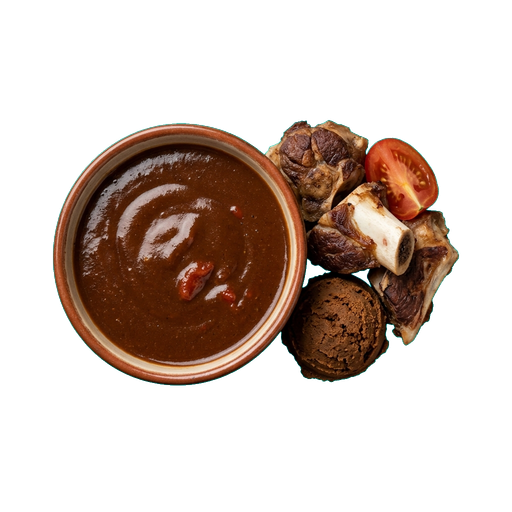
A classic brown sauce made from meat stock, tomato paste, and brown roux — a mixture of flour and fat browned to a dark color. Its deep, rich flavor with a subtle tanginess from tomatoes serves as the base for many derivative sauces and is perfectly suited for red meat, game, and braised dishes. When preparing, it is important to slowly develop the roux color without burning and to braise the sauce for an extended time to fully develop the flavor and achieve the desired consistency.
About
What is espagnole sauce and why is it needed
Espagnole is one of five classic French sauces that serves as the foundation for dozens of others. It is a dark, rich sauce based on beef broth and brown sauce (espagnole is made from a brown crumbly sauce obtained by frying flour in oil). Its main feature is that it works as a universal helper: you can use it independently or as a base for derived sauces.
The basic composition includes beef broth, brown roux, tomato paste, vegetables (carrots, celery, onions) and spices. It is this combination that gives the sauce its deep, slightly spicy flavor with a delicate tanginess and noble bitterness. The consistency is rich and coating, ideal for meat and vegetables.
Where and how to use
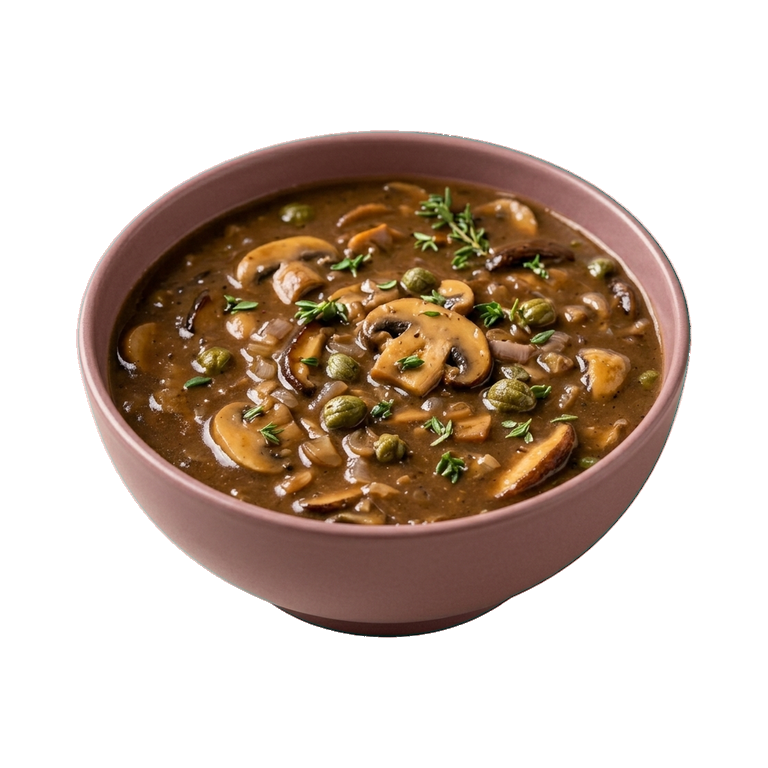
Espagnole goes well with red meat, game, and roasted vegetables. It is served hot, often poured over the finished dish on the plate. But its main value is its role in creating other sauces. Add wine to it, and you get Madeira sauce; with mushrooms — Champignon sauce; with béarnaise — Chateaubriand sauce.
- Madeira Sauce — espagnole with Madeira wine and beef marrow
- Chateaubriand Sauce — with bearnaise and beef extract
- Mushroom Sauce — with sautéed mushrooms and white wine
- Piquant Sauce — with cornichons, capers and hot spices
Ready-made sauce or make it yourself
If you make the sauce from scratch, it's a lengthy process: you need to simmer broth, prepare a brown crumbly sauce, then stew everything together for hours. That's why many chefs use ready-made concentrates or semi-finished products. They save time and provide predictable results, although, of course, homemade sauce will have a more delicate, individual flavor.
When choosing a ready-made sauce, pay attention to the ingredients: it should not contain unnecessary thickeners and preservatives, and the taste should be rich, without sour or burnt notes. Store the opened package in the refrigerator and use it within a few days. Before serving, the sauce can be slightly diluted with broth or water if it is too concentrated.
Practical Tips
- Heat the sauce over low heat so it doesn't burn and doesn't lose its flavor
- If the sauce turns out too thin, let it simmer on the heat or add a little cornstarch dissolved in cold water
- The finished sauce can be frozen in portion containers and stored for up to three months
- Serve the sauce separately in sauce boats or pour it over the dish immediately before serving
Nutrition
per 100 ml
- Calories
- 80 kcal
- Protein
- 3 g
- Fat
- 5 g
- Carbs
- 5 g
Measures and weight
- 1 tbsp
- 15.8 g
- 1 tsp
- 5.3 g
- 1 cup
- 262.5 g
Measure calculator
- Weight
- 100 g
- Calories
- 76 kcal