Usuba
Usuba
Sponge biscuits
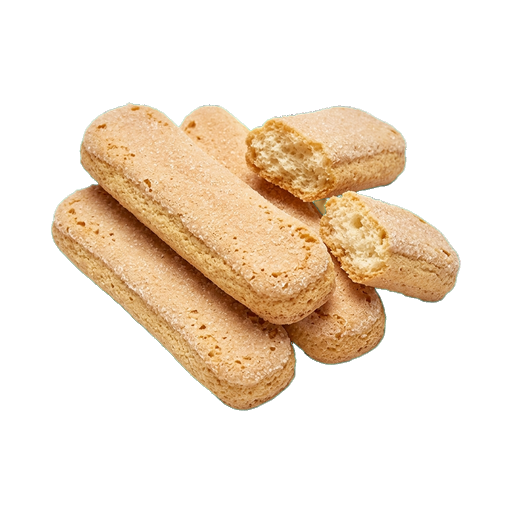
Light and airy sponge cake with delicate, slightly sweet crumb and crispy crust, made from whipped eggs and flour without the use of butter or leavening agents. Thanks to its porous structure, it absorbs syrups, creams, and fillings well, which is why it is often used as a base for cakes and pastries. When selecting, pay attention to color uniformity and the absence of cracks — quality sponge cake should be light and brittle, not dense or rubbery.
About
Sponge cookies are light and delicate cookies that result from whipped eggs and minimal fat. They are lighter and drier than butter cookies, with a characteristic porous structure and a gentle sweet flavor. Such cookies are perfect for those looking for a light snack or a base for desserts.
Structure and taste
The main characteristic of sponge biscuits is their porous, almost spongy structure. The biscuits are crispy when bitten, but melt on the tongue, leaving a delicate sweet taste without bright additives. This is achieved through the technique of beating eggs with sugar into a fluffy foam, which creates numerous air bubbles during baking.
The taste of sponge cake is simple and delicate — sweetness without being cloying, with a subtle vanilla or lemon note (if added). This allows the cookies to easily blend into different combinations and not overpower the flavor of other ingredients.
Role in dishes and desserts
Sponge biscuits are versatile: they are eaten plain with tea or coffee, used as a base for cakes and pastries, crumbled for cheesecake fillings and other cold desserts. Thanks to their light structure, they absorb syrups and creams well without falling apart.
Cookies pair perfectly with creams, jams, condensed milk, chocolate, and berries. You can dip them in hot beverages — they won't fall apart immediately, but will gradually soften, adding sweetness and tenderness.
Selection and Storage
When selecting, pay attention to the integrity of the cookies — they are fragile and break easily. Good sponge cookies should be light in color, without dark burnt spots, with a uniform porous structure. Check the production date and ingredients — in the classic recipe there are only eggs, sugar, flour, and vanilla.
Store cookies in an airtight container in a dry place — they quickly absorb moisture and lose their crispness. When stored properly, cookies remain fresh for 2–3 weeks. If cookies become soft, you can briefly place them in the oven at low temperature to restore their crispness.
Tip for use
- For cakes and cheesecakes, lightly moisten the cookies with syrup or juice before layering — they will adhere better to the cream
- Crumble the cookies directly in the mixer with butter for the dessert base — this will create an even consistency
- If you're making a multi-layered dessert, use slightly stale cookies rather than fresh ones — they will hold their shape better
Nutrition
per 100 g
- Calories
- 400 kcal
- Protein
- 6.5 g
- Fat
- 10 g
- Carbs
- 70 g
Measures and weight
- 1 tbsp
- 4.5 g
- 1 tsp
- 1.5 g
- 1 cup
- 75 g
- 1 pcs
- 15 g
Measure calculator
- Weight
- 100 g
- Calories
- 400 kcal