Usuba
Usuba
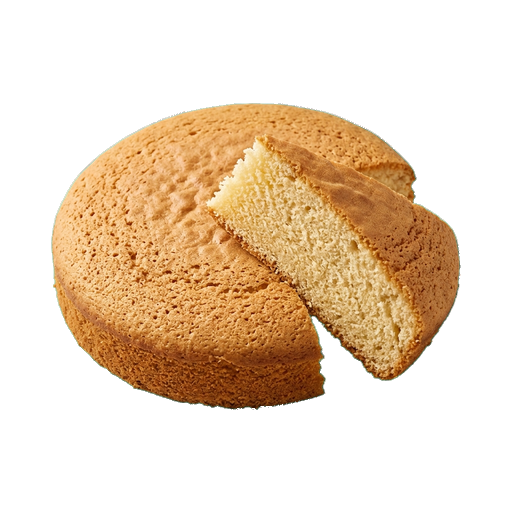
Sponge cake
Sponge cake is a porous, airy dough that is created by whipping eggs with sugar and adding flour. After baking, it acquires a light, tender structure with fine air cells and a neutral, slightly sweet taste. Sponge cake serves as the base for cakes, pastries, and rolls, absorbs syrups and creams well, so it is often soaked before assembling the finished product.
About
Sponge cake is the foundation of half of all cakes and pastries in a bakery. Light, porous, with a delicate structure, it absorbs syrups and creams, becoming the perfect base for any filling. It's prepared simply: eggs, sugar, flour, and a little baking powder. The result depends on technique — on how the eggs are whipped and how carefully the flour is incorporated.
Structure and Taste
You can recognize a good sponge cake from the first bite: it melts in your mouth without leaving crumbs on the plate. This is achieved thanks to numerous air bubbles that form when whisking. The taste is neutral, slightly sweet, with a barely noticeable vanilla aroma if vanilla is added. It is this very neutrality that makes sponge cake universal: it does not overpower the taste of creams, berries, and other components, but rather enhances them.
Role in confectionery products
- Layers in cakes: classic sponge cake is cut into 2–3 sheets, soaked with syrup and assembled with cream or ganache
- Base for pastries: rolls, eclairs, profiteroles — everywhere you need a light, elastic base that is easy to shape
- Standalone dessert: sponge cake with berries and whipped cream or with fruit compote
- Base for tiramisu and other layered desserts: absorbs liquid well, but does not fall apart
Choosing and Working with Sponge Cake
If you buy a ready-made sponge cake at the store, pay attention to the packaging: it should be intact, without any damage. The cake itself should not be dry or crumbly when pressed lightly. The best option is to bake it yourself: it will take 30–40 minutes, and the result will be much more tender and aromatic.
- Fresh sponge cake is stored in an airtight container at room temperature for 2–3 days
- In the refrigerator — up to a week, wrapped in plastic wrap
- Frozen sponge cake maintains quality for a month; thaw it at room temperature
- If the sponge cake has dried out, soak it with syrup before assembling the cake — this will save the structure
Successful Pairings
Sponge cake gets along with all creams: butter, whipped, and cottage cheese. It works well with berries — strawberries, raspberries, blueberries. Chocolate ganache, caramel, fruit purees, jam — all of these find their home on sponge cake. Soak it with orange syrup and add caramel cream — you get a classic. Or try coffee syrup with ganache — that's also a winning option.
Cooking Tips
- Eggs for sponge cake should be at room temperature — they whip better and give more volume
- Add flour carefully, folding the dough with a spatula to avoid losing air
- Bake at 180–200 degrees: too hot an oven will give black edges, too cold — a dense crumb
- Check doneness with a wooden stick: it should come out dry or with a few moist crumbs
- Cool the sponge cake in the pan for 10–15 minutes, then turn it out onto a rack — this way it won't get steamed from below
Nutrition
per 100 g
- Calories
- 310 kcal
- Protein
- 6.5 g
- Fat
- 8 g
- Carbs
- 52 g
Measures and weight
- 1 tbsp
- 4.5 g
- 1 tsp
- 1.5 g
- 1 cup
- 75 g
- 1 slice
- 25 g
Measure calculator
- Weight
- 100 g
- Calories
- 310 kcal