Usuba
Usuba
Parsley stems
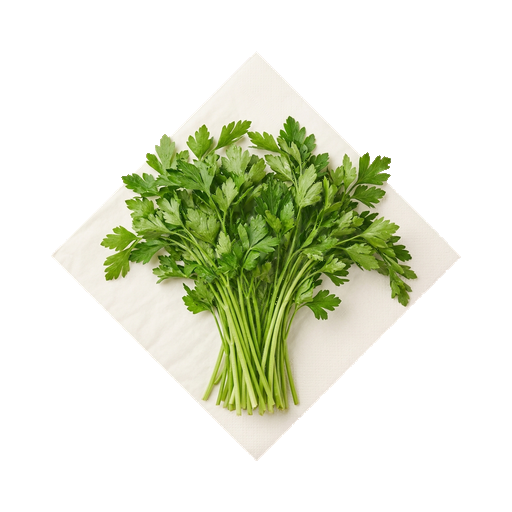
Parsley stems are a less aromatic but still useful part of the plant with a delicate herbal flavor and a light bitter note. They are added to broths, soups, and stews for a subtle aroma, and are also used in bouquets garni together with bay leaf and thyme. When choosing, look for fresh, firm stems without darkening, remembering that they cook faster than roots and can be removed from the dish before serving or left chopped as a garnish.
About
Parsley stems are part of the plant that is often thrown away, although they deserve a place in the kitchen. They concentrate the same aroma as the leaves, but deeper and more herbaceous. They are sturdier than leaves and hold their shape during heat treatment, making them ideal for boiling, stewing, and adding to broths.
Aroma and Taste
Parsley stems provide a softer and more rounded flavor than leaves. They lack that sharp green note — instead, they develop sweetness and a slight bitterness. When cooked, stems release their flavor into the liquid while maintaining their structure, making them work as a flavoring agent in soups and broths.
Where to use
- Broths and soups — stems are boiled together with vegetables and meat, then removed
- Marinades and brines — add flavor to canned vegetables
- Stews and braised dishes — stems don't overcook and remain recognizable pieces
- Sauces and gravies — boiled in liquid, then removed
- Filling for pies and cutlets — finely chopped stems add texture and flavor
Selection and Preparation
Choose firm stalks without soft spots or darkening. They should be light green or pale yellow, not brown. Before use, rinse under cold water and cut into pieces of desired size — for broth, it is enough to break in half, for minced preparation, chop finely.
Storage
Parsley stems are stored in the refrigerator in a plastic bag or container for about a week. If you need to extend the shelf life, you can freeze them whole or chopped — they freeze very well and don't lose their aroma. Frozen stems make excellent broth.
Pairings
Parsley stems work well with carrots, celery, and onions — a classic bouquet garni for flavoring. They pair nicely with chicken, fish, and beef in broths. With potatoes and grains, they create a delicate herbal background. They don't compete with sharp spices, so you can add black pepper, bay leaf, and thyme.
The main rule: don't discard the stems when cooking parsley. They are not waste, but an ingredient with its own character and benefits for the kitchen.
Nutrition
per 100 g
- Calories
- 49 kcal
- Protein
- 3.7 g
- Fat
- 0.4 g
- Carbs
- 7.6 g
Measures and weight
- 1 pcs
- 2 g
- 1 sprig
- 5 g
Measure calculator
- Weight
- 100 g
- Calories
- 49 kcal