Usuba
Usuba
Dill stems
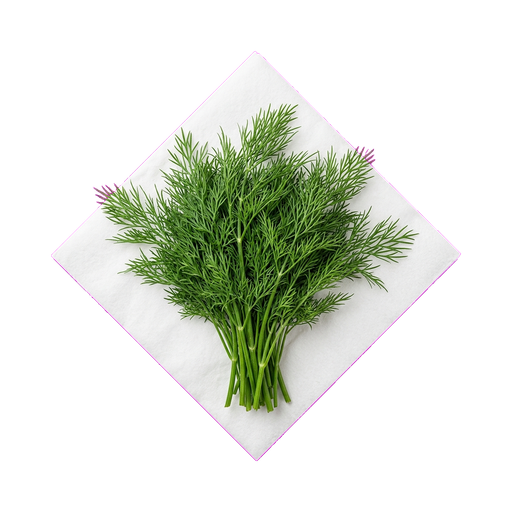
Dill stems are hollow green shoots with a characteristic spicy aroma, less intense than the leaves but more woody. They work well for flavoring broths, marinades, and fish dishes, where they hold their shape better than delicate leaves. When buying, choose fresh, firm stems without yellowing, and in recipes they can be replaced with whole dill sprigs or mixed with leaves for a milder flavor.
About
Dill stems are often an overlooked part of the plant that deserves attention in the kitchen. When you cut dill greens, dense, fibrous stems remain with a subtle but distinct aroma. These are not waste, but a full-fledged ingredient that works better in soups, marinades, and broths than it might seem at first glance.
Aroma and Flavor
Dill stems smell softer than thin leaves, but the aroma is more stable when heated. The taste has the same characteristic dill note, but without sharpness, with a slight bitterness and herbal sweetness. When cooked, the stems release their aroma gradually, without losing it as quickly as delicate greens.
Where to use
Dill stems are ideal for prolonged cooking. Add a few stems to a pot when cooking potatoes, fish, or vegetables — they will impart flavor but won't fall apart into mush. They are especially good in marinades for cucumbers, tomatoes, and other preserves: the stems hold their shape and evenly flavor the liquid.
- Fish broths and soups — a classic combination
- Marinades for preserving vegetables
- Boiled potatoes and root vegetables
- Meat broths for aspic or jellied meat
- Okroshka and other cold soups
Selection and Preparation
Choose young dill stems — they are more tender and aromatic. Old, thick stems can be too fibrous. Rinse them with cold water before use and pat dry lightly. If the stems are very long, cut them into pieces 5–7 centimeters long so they soak better in the liquid.
Fresh stems are stored in the refrigerator in a plastic bag or container for about a week. If you need to keep them longer, freeze them in the freezer — they will lose their crispness when thawed, but will still be suitable for cooking. Dried dill stems also work: they concentrate the aroma and take up less space in the kitchen.
Don't throw away dill stems after cutting the greens. They will add depth of flavor to soups and marinades, and their structure will hold up better than the leaves. This is a simple way to make a dish more aromatic without additional expense.
Nutrition
per 100 g
- Calories
- 38 kcal
- Protein
- 2.5 g
- Fat
- 0.5 g
- Carbs
- 6.3 g
Measures and weight
- 1 tbsp
- 4.5 g
- 1 tsp
- 1.5 g
- 1 cup
- 75 g
- 1 bunch
- 50 g
Measure calculator
- Weight
- 100 g
- Calories
- 38 kcal