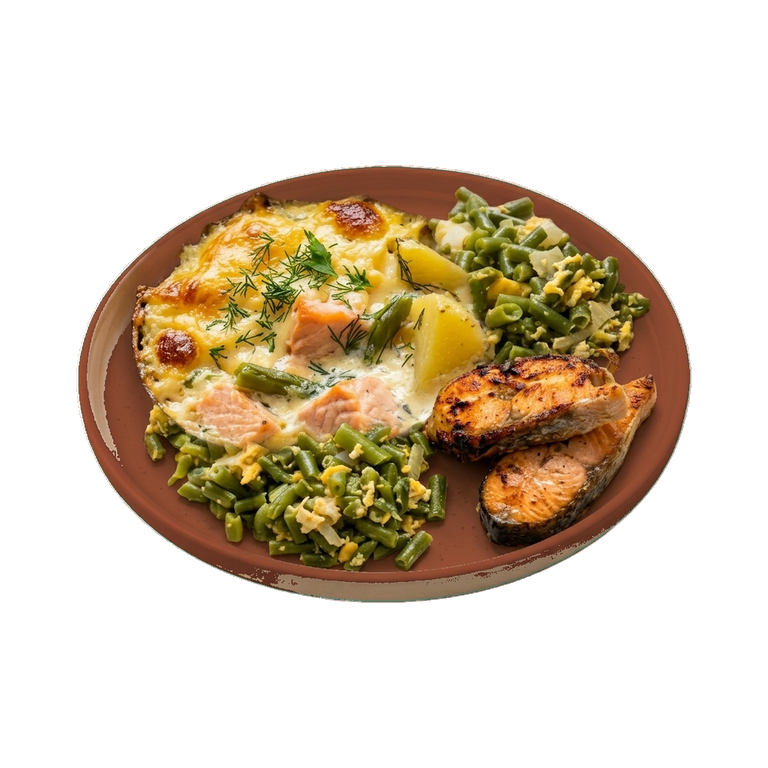
Usuba
Usuba
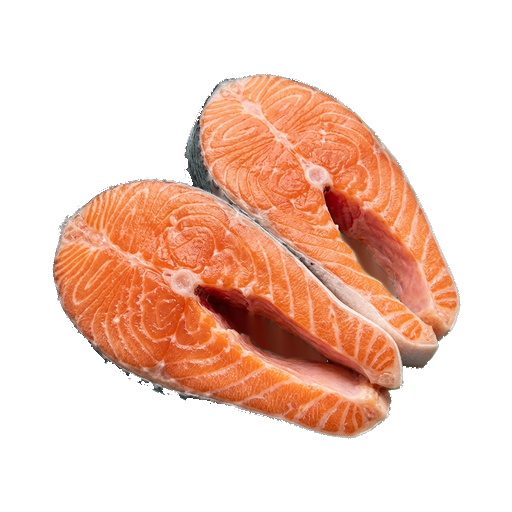
Salmon steak
A thick cross-section cut of salmon fillet with bone that retains its juiciness when fried or baked thanks to its fat layers. Salmon meat has a pronounced fish aroma, tender texture, and rich flavor with a subtle hint of sweetness. When choosing a steak, pay attention to the bright orange or pink color of the meat — this is a sign of freshness, and the meat should be firm and free from any unpleasant odor.
About
What is salmon steak
Salmon steak is a thick cross-section of fish, cut perpendicular to the spine. Unlike fillet, it retains the backbone, ribs, and skin, which gives the piece structure and helps it hold its shape during cooking. This format is ideal for pan-frying, grilling, or baking in the oven — the meat cooks evenly, and the skin becomes crispy.
The flesh of salmon in a steak is tender and buttery thanks to its high content of beneficial fats. When properly prepared, the fish remains juicy inside, and its natural flavor is fully revealed. The bone part during cooking releases broth into the meat, making it even more aromatic.
Taste and Aroma
Salmon has a pronounced fish flavor with a slight sweetness and mineral notes. It is not a delicate white fish — the taste is rich, recognizable, and capable of overpowering poorly chosen seasonings. This is why salmon works well with simple seasonings: salt, pepper, lemon, and fresh herbs.
When heated, salmon emits a characteristic sea aroma, which intensifies if the fish is fresh. The skin, when fried, smells pleasant — slightly smoky and buttery. If the fish has been sitting for several days, the smell becomes sharper, which signals the need for careful freshness checks before purchasing.
How to Cook Salmon Steak
Salmon steak is versatile — it withstands different cooking methods well. The main rule: don't dry it out. Salmon cooks quickly, so even 5–7 minutes over high heat can ruin the dish.
- In a pan: heat the oil, place the steak skin-side down for 3–4 minutes, then flip and fry for another 2–3 minutes until your desired doneness.
- On the grill: the steak gets beautiful grill marks and a smoky aroma. Cooking time — 3–4 minutes on each side over medium heat.
- In the oven: sear the steak in a pan, then transfer it to a preheated 180°C oven for 5–8 minutes.
- Steamed or in a pouch: a gentle method that preserves maximum moisture. Cooks for 10–12 minutes at 80–90°C.
Pairs well with
Salmon works well with acidity: lemon, lime, white wine, or vinegar balance the richness of the fish. Herbs — dill, parsley, basil — highlight freshness. If you want bolder combinations, add ginger, soy sauce, or mustard.
Light vegetables work well as a side dish: asparagus, broccoli, zucchini. Choose neutral carbohydrates — rice, potatoes, or quinoa. Heavy cream sauces overpower the taste of fish, so stick to olive oil or a light vinaigrette.
Selection and Storage
When selecting a steak, pay attention to the color: the meat should be bright orange or pink, without dark spots. The skin should be shiny and fit tightly against the meat. The smell should be clean, with a sea-like scent, without ammonia notes. If the fish smells sharp or unpleasant, it's better to skip it.
Fresh steak is stored in the refrigerator for a maximum of 2–3 days in the coldest part. If you don't plan to cook it in the coming day, freeze it immediately — in the freezer, fish maintains quality for up to three months. Thaw in the refrigerator, not at room temperature, to avoid losing juiciness.
Salmon steak is a reliable choice for dinner when you want something delicious and quick. Properly selected and carefully prepared fish will please even the most demanding eater. The main thing is not to overcomplicate it and not to dry it out.
Nutrition
per 100 g
- Calories
- 203 kcal
- Protein
- 20 g
- Fat
- 13 g
- Carbs
- 0 g
Measures and weight
- 1 pcs
- 150 g
Measure calculator
- Weight
- 100 g
- Calories
- 203 kcal