Usuba
Usuba
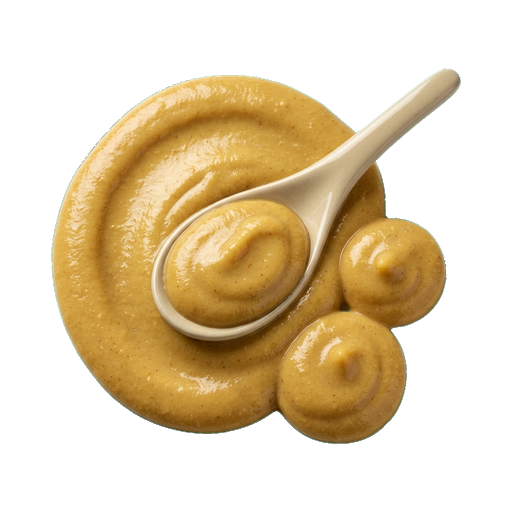
Table mustard
Table mustard is a ready-made sauce made from mustard powder, water, vinegar, and spices, characterized by a mild, not overly sharp taste and uniform consistency. It is used as a condiment for meat and sausage products, added to marinades, sauces, and dressings to add piquancy. When choosing, pay attention to the composition: quality mustard contains a minimum of preservatives and thickeners, and its color ranges from yellow to brown depending on the variety of seeds.
About
Table mustard is a ready-made sauce that long ago stopped being just a condiment for sausage. It's a universal kitchen helper that works equally well in meat marinades, salad dressings, and sandwich sauces. Its mild, rounded flavor with a subtle sharpness makes it accessible even for those who fear spicy food, and its consistency allows for easy dosing of the right amount.
Taste and aroma
Table mustard differs from mustard seeds in its delicacy. It has a sharp taste, but not an aggressive one — rather a pleasant tingling on the tongue that enhances the perception of other flavors in the dish. The aroma is mild, with barely noticeable spicy notes, without a sharp "blow" to the nose. Often the composition includes vinegar, salt, and spices, which create a balanced, slightly acidic profile.
Where to use it
- Marinades for pork, beef, and chicken — mustard softens meat fibers and adds depth of flavor
- Sauces and dressings — mix with mayonnaise, sour cream, or olive oil for salads and cold appetizers
- Sandwiches and hot dogs — a classic application that never goes out of style
- Pickles for vegetables — adds piquancy and helps preserve crispness
- Sauces for pasta and baked dishes — a small amount will enhance flavor without obvious heat
Successful Pairings
Dijon mustard pairs well with garlic, black pepper, thyme, and rosemary. It doesn't conflict with acidity — lemon juice or vinegar will only enhance its effect. It works excellently alongside honey (creating a sweet-spicy contrast), with hot spices, and even with fruity notes — try adding it to a sauce with orange juice.
How to Choose and Store
When choosing, pay attention to the consistency — it should be uniform, without lumps or separation. The color varies from light yellow to brown depending on the variety of mustard seeds. Check the production date: fresh mustard has a more vibrant taste. It keeps in the refrigerator in a tightly closed jar for months, even years, thanks to the preservative properties of vinegar and salt. If the mustard has thickened or an unpleasant smell has appeared — it's time to throw it away.
Table mustard works best when you don't overcomplicate it: add it at the end of cooking or to an already prepared dish to preserve its characteristic taste and aroma. With prolonged heating, the sharpness may fade.
Nutrition
per 100 g
- Calories
- 143 kcal
- Protein
- 5.7 g
- Fat
- 9.2 g
- Carbs
- 8.8 g
Measures and weight
- 1 tbsp
- 15.8 g
- 1 tsp
- 5.3 g
- 1 cup
- 262.5 g
Measure calculator
- Weight
- 100 g
- Calories
- 143 kcal