Usuba
Usuba
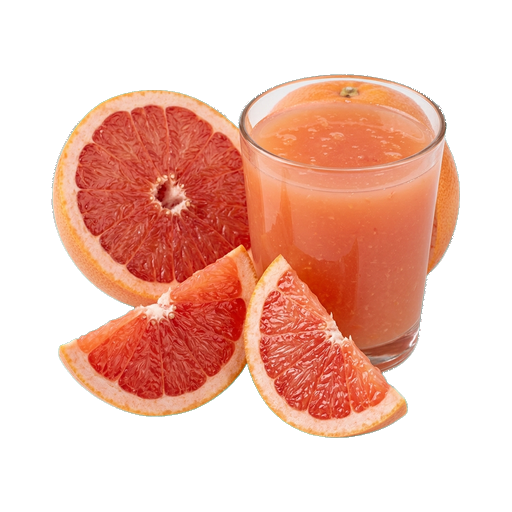
Freshly squeezed grapefruit juice
Freshly squeezed grapefruit juice has a bittersweet and sour taste with a light sweetness and pronounced citrus aroma that invigorates and refreshes. In cooking, it is used for making cocktails, marinades for meat and fish, added to sauces and desserts, as well as enjoyed as a standalone beverage. When choosing, prefer freshly squeezed juice without additives, as it contains more vitamins and has a brighter flavor than packaged alternatives.
About
Aroma and Taste
Fresh grapefruit juice is concentrated bitterness with bright acidity and barely perceptible sweetness. When you cut the fruit and immediately send it to the juicer, the juice retains a lively, piercing note that is lost in store-bought versions. The bitterness here is not a flaw, but a character that many appreciate precisely for its ability to awaken the taste buds.
The color depends on the grapefruit variety: pink juice provides sweeter notes and less pronounced bitterness, white is maximally acidic and bitter, red is in between. If you want a mild flavor, choose pink fruits; if you need sharpness for contrast in the dish — white ones.
Role in Cooking
Freshly squeezed grapefruit juice works in three ways: as a beverage on its own, as a component of sauces and marinades, and as an ingredient for cocktails. In hot dishes, it is added at the last moment to preserve the liveliness of the flavor — acidity helps emphasize other aromas and create depth.
- Marinades for seafish and seafood — the bitterness of the juice balances the richness, and the acidity helps soften the fibers
- Sauces for duck or pork — juice becomes the base for glaze together with honey or mustard
- Dressings for salads with avocado, shrimp or peppery greens — acidity prevents avocado from darkening and balances the richness
- Cocktails and long drinks — juice serves as a base or component along with alcohol and spices
Selection and Storage
Freshly squeezed juice is a product that should be used on the day it is made. If left in the refrigerator, the acid will begin to oxidize vitamins, and the aroma will dissipate. Therefore, squeeze the juice immediately before adding it to a dish or beverage.
Choose fruits with thin skin that yield slightly to pressure — they contain more juice. If the grapefruit is firm, roll it on the table with pressure before juicing to break down the internal membranes. For better juice yield, use a manual juicer or blender — they retain more nutrients than electric centrifuges.
Combinations with other ingredients
Grapefruit juice pairs well with ginger, which enhances its invigorating effect. With honey, it creates a sweet-bitter combination, ideal for marinades. Rosemary and thyme add a herbal undertone, which is especially good in sauces for poultry. Mustard, wasabi, and hot spices emphasize the bitterness and create contrasting flavor combinations.
Don't forget about sea salt — it enhances acidity and bitterness, so add it carefully. With alcohol (rum, vodka, gin) grapefruit juice creates refreshing cocktails, where acidity helps reveal the aromatic notes of the spirit.
Nutrition
per 100 ml
- Calories
- 38 kcal
- Protein
- 0.6 g
- Fat
- 0.1 g
- Carbs
- 8.2 g
Measures and weight
- 1 tbsp
- 15.5 g
- 1 tsp
- 5.2 g
- 1 cup
- 257.5 g
Measure calculator
- Weight
- 100 g
- Calories
- 37 kcal