Usuba
Usuba
Tagliatelle Pasta
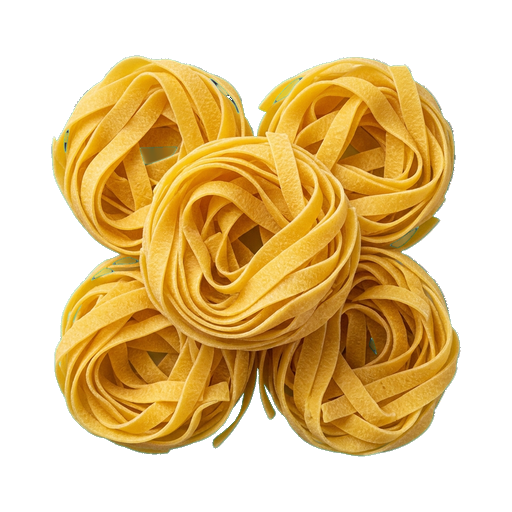
Tagliatelle is a flat ribbon-shaped pasta approximately 8 millimeters wide, traditionally made from wheat flour and eggs. Thanks to its shape, it perfectly holds thick sauces, creamy and meat-based gravies, allowing them to distribute evenly across the entire surface. When choosing, pay attention to the color — quality pasta has a rich yellow hue, and when cooked, it should not become overcooked or lose its shape.
About
Tagliatelle is a wide flat pasta that has become synonymous with Italian cuisine and an ideal canvas for thick sauces. Its ribbon, about a centimeter wide, holds sauce in a way that thin spaghetti never can: each piece receives abundant coating, and the flavor is distributed evenly. If you haven't cooked with tagliatelle yet, it's time to start — it's versatile, accessible, and gives any dish an authentic Italian character.
What makes tagliatelle special
The main virtue of tagliatelle is its structure. The flat shape creates a large surface area where the sauce can catch and hold on. During cooking, the pasta absorbs flavors, becoming part of the dish rather than just its base. The edges are slightly wavy, which adds texture and helps the sauce adhere better. Finished tagliatelle has a slightly elastic consistency — it doesn't fall apart, but it's not tough either.
Where to use tagliatelle
- Bolognese — a classic combination where the meat sauce requires exactly this wide ribbon
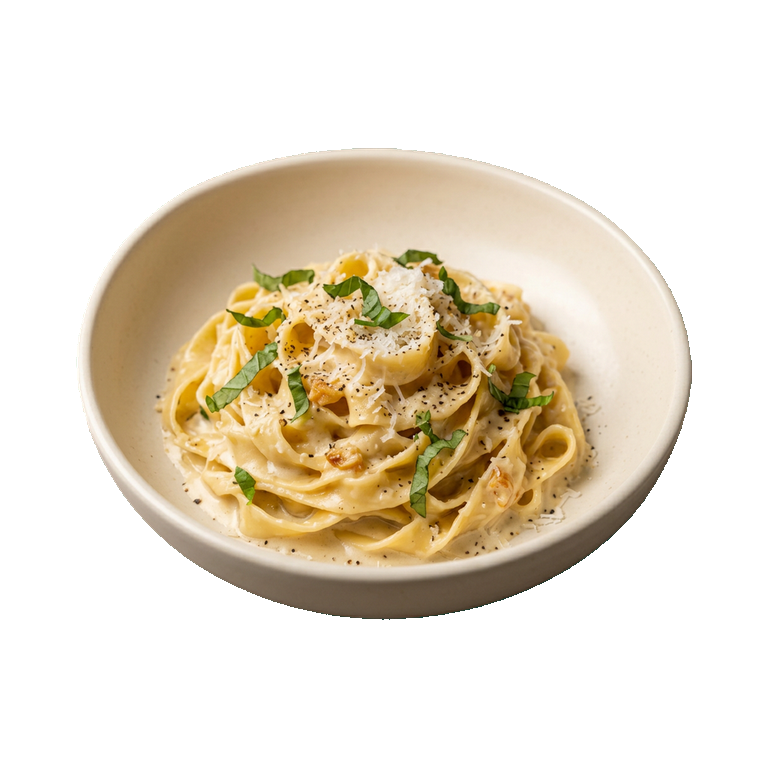
- Alfredo — creamy sauce coats the pasta evenly, creating the perfect dish
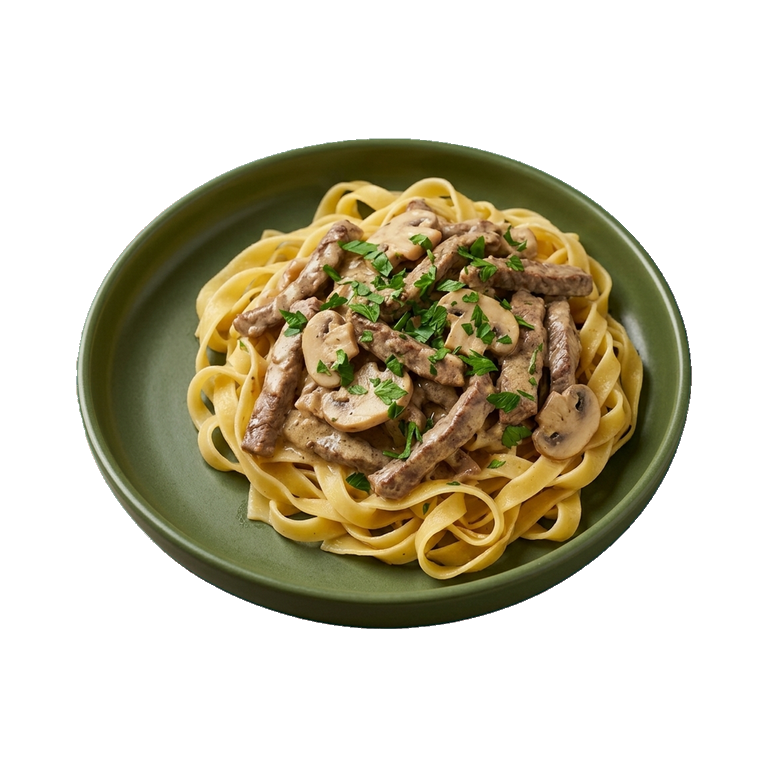
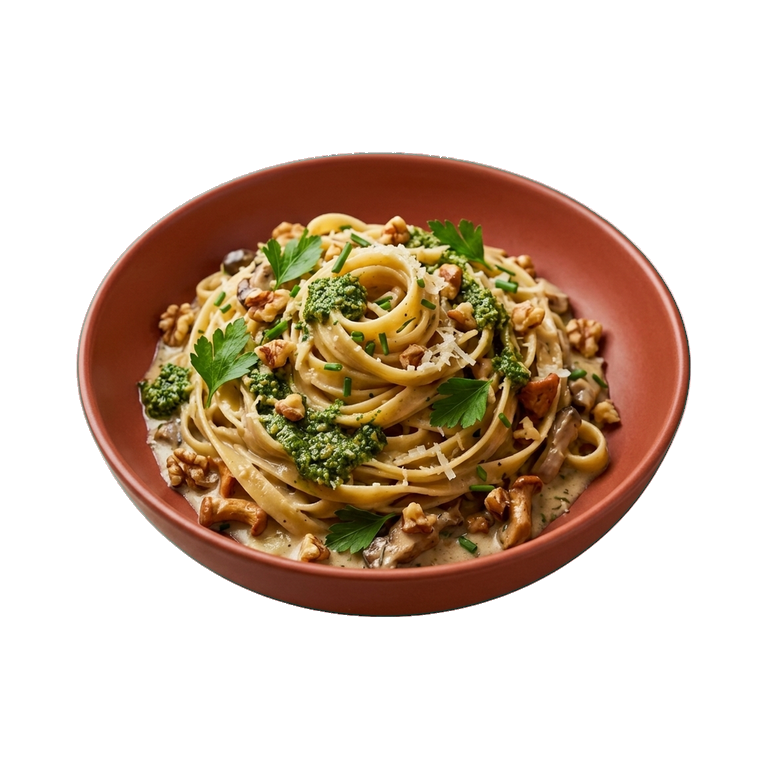
- Mushroom and cream sauces — rich, full-bodied sauces that get lost on thin pasta
- Light buttery sauces with herbs — even simplicity looks elegant against the backdrop of wide ribbon pasta
- Seafood in cream sauce — a delicate combination where pasta shouldn't distract
Avoid using tagliatelle with very thin or watery sauces — the pasta simply won't be able to hold them, and the dish will turn out bland. It's also not suitable for cold pasta salads, where a more compact shape is needed.
Selection and Preparation
There are two types on the shelves: dry pasta in boxes and fresh pasta in the refrigerator. Dry tagliatelle keeps for months, cooks in 8–10 minutes, and is ideal for everyday use. Fresh pasta cooks in 2–3 minutes, has a more delicate texture and eggy flavor, but requires quick use. Choose based on the time you're willing to spend and your desired result.
- Boil water with salt — pasta should cook in salted liquid to absorb the flavor
- Check for doneness a minute before the recommended time — overcooked pasta loses its shape and becomes sticky
- Save some water for diluting the sauce — starch from the pasta helps it adhere better
- Mix pasta with sauce in a pan over low heat, rather than simply placing it on a plate
Store dried tagliatelle in a cool, dry place in its original packaging — it will keep well for a year. Fresh pasta should be placed in the refrigerator and used within a few days, or freeze it at the bottom of the freezer if you plan to store it longer.
Tagliatelle is pasta that works. It doesn't require exotic sauces or complex techniques, but it elevates any dish to the next level. Try it with your favorite sauce, and you'll understand why this wide ribbon is beloved by chefs around the world.
Nutrition
per 100 g
- Calories
- 371 kcal
- Protein
- 13 g
- Fat
- 1.1 g
- Carbs
- 74.7 g
Measure calculator
- Weight
- 100 g
- Calories
- 371 kcal