Usuba
Usuba
Tatsoi
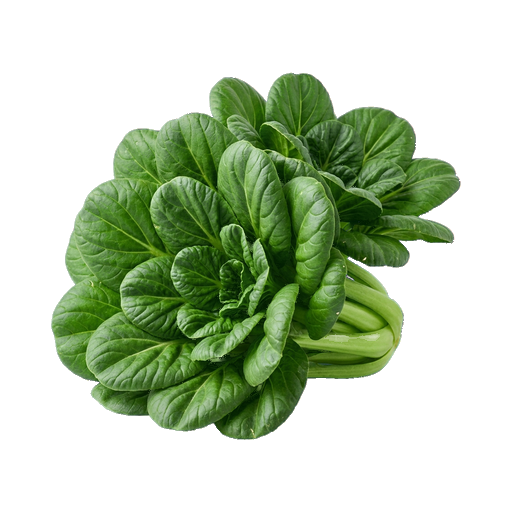
Tatsoi is an Asian leafy green with tender, slightly fleshy leaves and a mild, subtly cabbage-like flavor with barely noticeable bitterness. The leaves absorb marinades and sauces well, making this vegetable ideal for Asian soups, stir-frying in a wok, and salads. When selecting, look for tight rosettes with firm leaves free of blemishes; rinse thoroughly before use, as soil often gets trapped between the leaves.
About
Tatsoi is an Asian leafy green that looks like a miniature cabbage with black glossy leaves. It is often called black mustard, though this is not entirely accurate: tatsoi has its own character and taste. The leaves are dense, fleshy, with white veins, arranged in a compact rosette. This plant has quickly gained popularity in European cuisines thanks to its versatility and ease of cultivation.
Aroma and taste
Tatsoi has a milder flavor compared to other Asian mustards. The leaves offer a subtle bitterness with hints of sweetness — not sharp, but pleasant. Young leaves are more tender and sweeter; as the plant grows, the bitterness becomes more pronounced. The aroma is fresh and herbaceous, without harsh notes. This makes tatsoi ideal for those who want to try Asian greens but are wary of too intense a flavor.
Role in dishes and pairings
Tatsoi works well both raw and after heat treatment. In salads, its leaves add texture and a light peppery taste. When quickly stir-fried over high heat with garlic and oil, it opens up completely differently — it becomes softer and the flavor deepens. Whole rosettes can be braised, added to soups, or used as a side dish for fish and meat.
- Pairs well with ginger, garlic, and soy sauce in Asian dishes
- Complements spicy and sour sauces: lemon juice, vinegar, hot pepper
- Perfect pairing with seafood and white fish
- Suitable with nut butters and sesame
Selection and Storage
When shopping, look for tight rosettes with clean, shiny leaves without yellowing and signs of wilting. The leaves should be firm and crisp when bent. Tatsoi is stored in the refrigerator in the vegetable compartment for 5–7 days, wrapped in a damp towel or in a bag with ventilation holes. Rinse under running water and dry before using.
Cook tatsoi quickly: prolonged processing causes it to lose texture and become dull. If using in a salad, cut the leaves into large pieces — they look more impressive this way. When stir-frying, 2–3 minutes over high heat is sufficient. Young leaves can be left whole and served as entire rosettes as a side dish.
Tatsoi is an ingredient for experimentation. Try it in Asian stir-fry, add it to cream soup, put it in a salad with avocado, or use it as a base for green smoothie. Its mild character allows it to adapt to different culinary styles while remaining recognizable and interesting.
Nutrition
per 100 g
- Calories
- 20 kcal
- Protein
- 2.2 g
- Fat
- 0.3 g
- Carbs
- 2.8 g
Measures and weight
- 1 tbsp
- 3 g
- 1 tsp
- 1 g
- 1 cup
- 50 g
- 1 bunch
- 150 g
Measure calculator
- Weight
- 100 g
- Calories
- 20 kcal