Usuba
Usuba
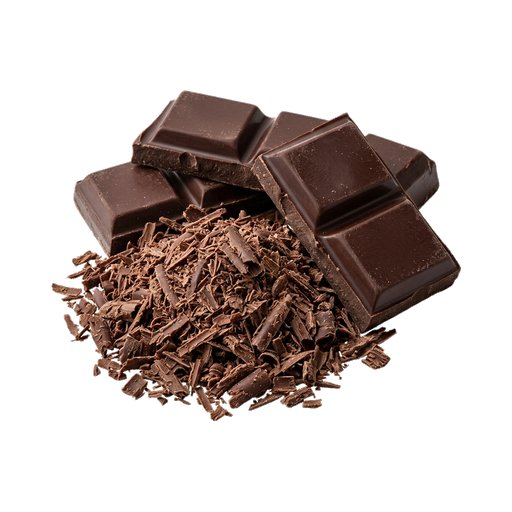
Grated chocolate
Grated chocolate is chocolate that has been finely shredded using a grater or special chocolate grater into thin flakes. This form is convenient for even distribution in dough, quick melting, and creating beautiful decoration on desserts and beverages. When using it, it is important to store grated chocolate in a cool place, as the flakes quickly absorb foreign odors and can clump together, and for best results it is better to grate the chocolate immediately before use.
About
Grated chocolate is not just a convenient form, but a completely different ingredient than a bar or chips. When cocoa mass is broken into small particles, it behaves differently: melts faster, distributes better in dough, absorbs moisture more easily. It's a working tool, not just a processed product.
Aroma and Taste
Grated chocolate retains all the intensity of flavor of the original product, but reveals it differently. Due to the increased surface area of each particle, bitterness and sweetness are felt more sharply, and aromatic notes become more noticeable. If you take dark chocolate, its earthy and fruity notes will sound louder. Milk chocolate in grated form seems more creamy, because its fats make better contact with other ingredients.
Where and how to use it
- In dough for cookies, cupcakes and pies — distributes evenly without lumps and does not require pre-melting
- For topping and decoration — holds its shape better than melted chocolate and creates a beautiful texture
- In hot drinks and porridges — dissolves quickly, but not as uniformly as cocoa powder, so requires stirring
- For tempering — convenient because you can add it gradually and control the consistency
- In cold desserts (mousse, panna cotta) — added to warm cream or milk, where it melts more slowly than a whole bar
Pairings with other ingredients
Grated chocolate works well with any fats: butter, cream, coconut oil. It's not afraid of acidity — lemon, orange, raspberry only emphasize its depth. Spices like cinnamon, pepper, and ginger in grated chocolate open up more vividly thanks to the greater surface area of contact. Nut butters, salt, vanilla — all of this works because chocolate particles better absorb the surrounding flavors.
Selection and Storage
Pay attention to the particle size: the finer it is, the faster it melts and the more evenly it distributes. Check if the chocolate has clumped together — this is a sign of improper storage or high humidity. Quality grated chocolate should be crumbly, not compressed.
- Store in an airtight container at a temperature of 15–20 degrees
- Keep away from fragrant products — chocolate absorbs odors
- Avoid sharp temperature fluctuations to prevent white film (fat bloom) from forming
- With proper storage, it maintains quality for 6–12 months depending on cocoa percentage and cocoa butter content
If you often bake and make beverages, keep several types of grated chocolate on hand: dark for depth, milk for smoothness, white for contrast. It's more economical than buying bars, and more convenient than grating it fresh each time.
Nutrition
per 100 g
- Calories
- 530 kcal
- Protein
- 6 g
- Fat
- 32 g
- Carbs
- 55 g
Measures and weight
- 1 tbsp
- 9 g
- 1 tsp
- 3 g
- 1 cup
- 150 g
Measure calculator
- Weight
- 100 g
- Calories
- 530 kcal