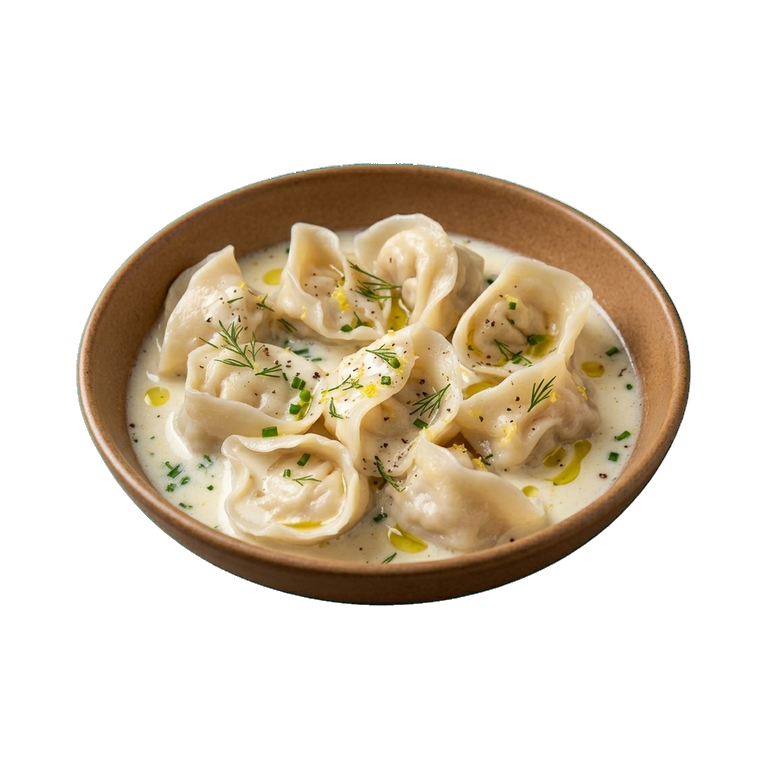
Usuba
Usuba
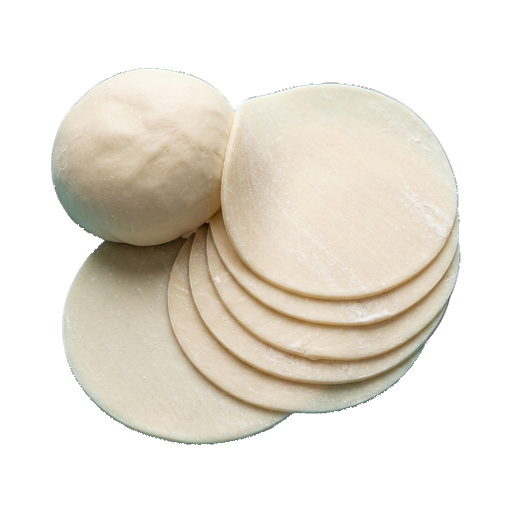
Gyoza dough
This is a thin elastic dough made from flour and water, distinguished by its low fat content and ability to stretch well during molding. The dough should be smooth and elastic, with minimal gluten content, so that dumplings turn out tender and don't fall apart during cooking. When working with it, it's important to maintain the correct consistency—slightly moist but not sticky—and let it rest before rolling out for better elasticity.
About
Gyoza dough is not just a base, but the main character that determines the success of the entire dish. It should be thin and elastic at the same time: strong enough to withstand the filling and boiling, but tender on the teeth. Such a balance is achieved through simple ingredients and proper kneading technique.
Composition and Consistency
Classic gyoza dough is made from flour, water, and salt — nothing extra. Some chefs add a pinch of oil, but this is optional. The key is finding the right ratio of moisture to flour. The dough should be softer than dumpling dough, but not sticky. It rolls out easily and doesn't tear when shaping.
Kneading and resting
Mix the flour with salt, gradually add water and knead until smooth. The dough should be smooth and elastic, without lumps. After kneading, wrap it in plastic film and let it rest for at least 30 minutes at room temperature — this step is critical. During the resting period, the gluten relaxes, and the dough becomes more plastic and easier to work with.
Working with dough
The rested dough is rolled out into a thin layer — approximately 2–3 millimeters thick. Circles with a diameter of 7–8 centimeters are cut from it, which are then filled with filling. The dough should be thin enough to become transparent when boiled, but not so thin that it tears under the weight of the filling.
Storage and Use
Ready-made dough is stored in the refrigerator, tightly wrapped in plastic wrap, for up to three days. If you need to prepare it in advance, you can freeze it — in the freezer it keeps for up to a month. Before using frozen dough, thaw it at room temperature for about an hour.
Practical Tips
- Use flour with gluten content no higher than 10–11% — this will help avoid excessive toughness.
- If the dough turns out dry, add water drop by drop; if sticky — dust with flour.
- Roll out the dough between two sheets of parchment paper — this way it won't stick and won't dry out.
- Finished gyoza can be placed on a board dusted with flour and frozen until completely hard, then transferred to a container.
Proper dough for gyoza is the result of simplicity and attention to detail. Don't rush the kneading, give the dough time to rest, and it will reward you with perfect texture and taste.
Nutrition
per 100 g
- Calories
- 280 kcal
- Protein
- 8 g
- Fat
- 1 g
- Carbs
- 60 g
Measure calculator
- Weight
- 100 g
- Calories
- 280 kcal