Usuba
Usuba
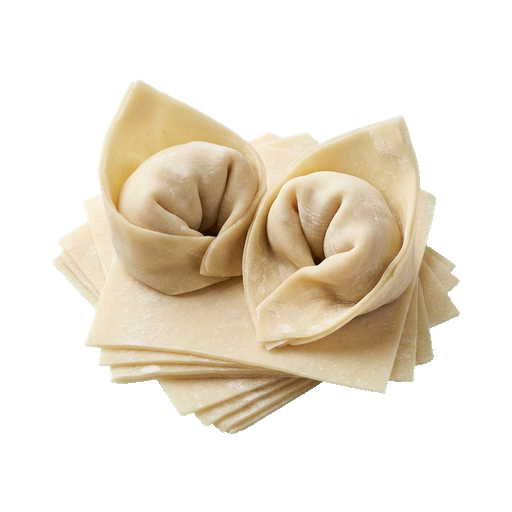
Wonton wrapper
Thin, elastic dough made from wheat flour, eggs, and water, used for preparing wontons — Asian dumplings. Characterized by a delicate consistency and the ability to seal well when edges are moistened, making it easy to form triangular or square envelopes. When cooked, the dough becomes semi-transparent and acquires a soft, slightly chewy texture that absorbs the flavor of the filling and broth well.
About
Wonton wrappers are thin square sheets made from wheat flour, water, and eggs that have become a universal tool in Asian cuisine. They fold easily into envelopes, triangles, or cylinders, hold their shape when boiling and frying, and are nearly neutral in taste on their own. This is why wonton works with any filling — from ground meat to shrimp and vegetables.
Texture and Consistency
The main property of wonton is its thinness and elasticity. The sheets are so delicate that they are translucent, yet strong and do not tear when folded. When wonton is boiled in broth, the dough becomes soft and slightly slippery, while maintaining a light springiness. When deep-fried, it becomes crispy and puffs up, creating a contrasting texture with the soft filling.
How to cook and use
- Boiled wontons in soup — place in boiling broth for 3–5 minutes, they float to the surface when ready
- Deep fried — immerse for 1–2 minutes until golden color, resulting in a crispy appetizer
- Pan-fried — place on an oiled pan, add a little water and cover, then cook uncovered until crispy
- Place the filling in the center of the sheet, wet the edges with water, fold and pinch — edges can be joined together for a classic shape
Fillings and pairings
Wonton is versatile when it comes to fillings. Fresh ground pork or beef with green onions and ginger is a classic. Shrimp with water chestnuts provide a sweet taste and crunch. A vegetable filling made from cabbage, mushrooms, and carrots works well for vegetarian options. The key is not to overfill: the filling should take up no more than a third of the wrapper, otherwise the dough will tear during cooking.
Selection and Storage
- Fresh dough is sold in the refrigerator section of Asian stores — it's softer and more delicate, keeps for 3–4 days
- Frozen dough is more convenient for home use — lasts for months without losing quality, no need to thaw
- Check that the sheets don't stick together and don't have frozen edges — this is a sign of improper storage
- If the sheets have dried out, cover them with a damp towel before working — they will become more elastic
Practical Tips
Ready wontons can be frozen on a plate before cooking — they won't stick together, and you'll be able to cook them straight from the freezer. If cooking in soup, add wontons at the end to keep the broth clear. For frying, make sure the oil is hot enough, otherwise the dough will absorb the fat and become greasy instead of crispy.
Nutrition
per 100 g
- Calories
- 280 kcal
- Protein
- 10 g
- Fat
- 2 g
- Carbs
- 55 g
Measures and weight
- 1 pcs
- 10 g
Measure calculator
- Weight
- 100 g
- Calories
- 280 kcal