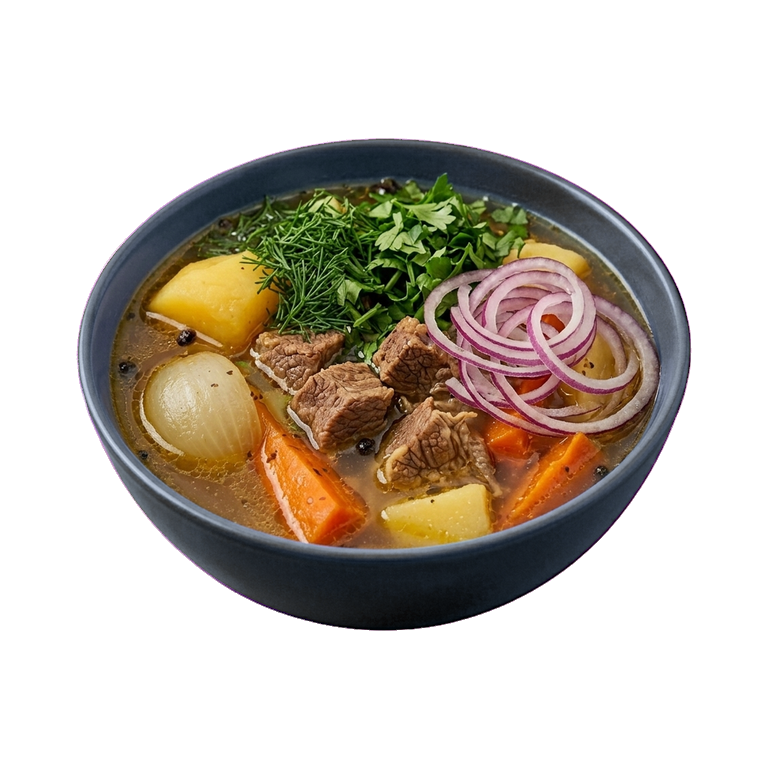
Usuba
Usuba
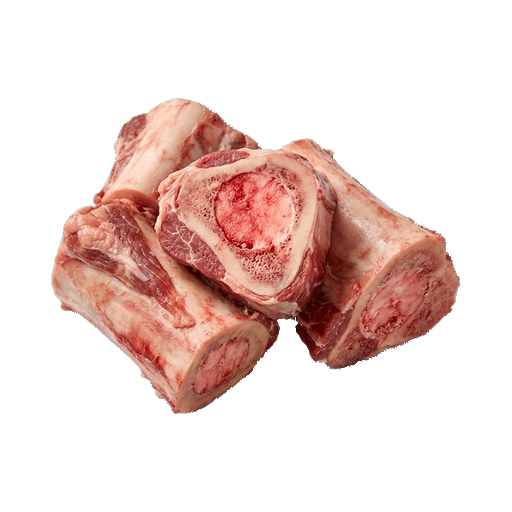
Tubular bones
Marrow bones are long hollow bones with bone marrow inside that are used in cooking to prepare broths, soups, and sauces. They contain collagen, gelatin, and minerals that transfer into the liquid during prolonged simmering, giving it a rich flavor and gelatinous consistency. When selecting, prefer fresh bones from young animals with red bone marrow — they produce a more aromatic and nutritious broth than older bones with white marrow.
About
What's inside
Tubular bones are not just a leftover from meat. Inside the hollow structure lies bone marrow, which when simmered releases a deep, rich flavor into the broth and gives it a gelatinous consistency. This is exactly what makes homemade broth so different from any store-bought version. When you see a recipe calling for bones for broth, it's specifically tubular bones — they work best.
When choosing, pay attention to the color of the brain — it should be light pink or cream-colored, not gray. Fresh bones have a pleasant meaty smell without any off-odors. If the bone is already cut, you can see that the brain fills the cavity densely — this is a sign of quality. Frozen bones are no worse than fresh ones if they were frozen correctly immediately after butchering.
How to prepare and use
For broth, bones are cooked for a long time — from 4 to 8 hours depending on the size and desired richness. Before cooking, they are often blanched: covered with cold water, brought to a boil, the water is drained and they are rinsed. This removes impurities and makes the broth clearer. Then the bones are placed in fresh water with vegetables and spices.
- Bone broth — the base for sauces, soups and risotto
- Roasted bones with salt and pepper — a standalone appetizer for beer or wine
- An additive to stews and braised dishes for depth of flavor
- The brain can be extracted after cooking and used in pâtés or spread on bread
Selection and Storage
Fresh bones should be stored in the refrigerator for no more than 2–3 days in the coldest part. For long-term storage, freeze them in the freezer — they will keep well for up to 3 months. Thaw slowly in the refrigerator, not at room temperature. Buy bones from a trusted butcher or in the refrigerated meat section of a supermarket where proper storage conditions are maintained.
Tip: if you're making broth for the first time, start with beef marrow bones — they give the most pronounced flavor and gelling effect. Chicken and pork bones cook faster, but the result is less rich. Combine different types if you want to achieve a complex flavor.
Nutrition
per 100 g
- Calories
- 200 kcal
- Protein
- 15 g
- Fat
- 15 g
- Carbs
- 0 g
Measure calculator
- Weight
- 100 g
- Calories
- 200 kcal