Usuba
Usuba
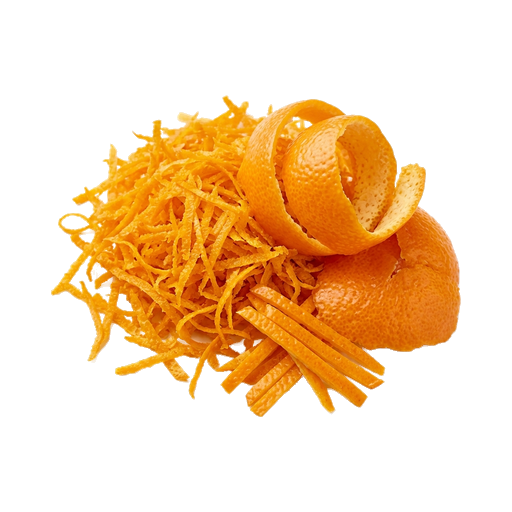
Mandarin zest
Mandarin zest is the thin upper layer of peel with a rich sweet-bitter aroma and floral notes. It is used in baking, desserts, beverages, and sauces to impart a bright citrus flavor and aroma. When selecting, prefer fruits with unblemished skin, and to obtain zest, scrape only the orange part, avoiding the white layer beneath it, which tastes bitter.
About
Mandarin zest is the upper layer of the peel where all essential oils and aromatic substances are concentrated. Unlike the white part, which is bitter, zest gives dishes a bright citrus character. It can be used fresh, dried, or as oil, and each option works in its own way.
Aroma and Flavor
Fresh mandarin zest smells of warm sweetness with a subtle spicy note. The taste is sweet, with a barely noticeable bitterness that adds depth. When you remove the zest, you immediately feel the oils releasing on your fingertips — this is a good sign of flavor concentration. Dried zest becomes more intense, its aroma almost honey-like, with woody notes.
Where and how to use
Mandarin zest is versatile. Add it to cookie dough, cupcakes, or panettone — it will give them a festive flavor. In sweet sauces and glazes, zest creates a bright contrast. It works well in marinades for duck or pork, especially with soy sauce and ginger. In beverages — hot chocolate, tea, cocktails — zest reveals itself fully.
- Desserts: cookies, cakes, creams, ice cream
- Main dishes: marinades for meat and poultry, sauces for fish
- Beverages: hot and cold, alcoholic and non-alcoholic
- Preservation: jam additive, compotes, syrups
Selection and Preparation
Choose mandarins with bright, firm skin without soft spots. Before zesting, wash the fruit under warm water. For fresh zest, use a microplane or fine grater — this will produce thin shavings with maximum oil. If you need strips, remove the peel with a vegetable peeler and slice thinly. Remove the white pith completely, otherwise the dish will taste bitter.
Storage
Use fresh zest on the day of preparation — this way it will retain maximum aroma. If you need to postpone, place it in an airtight container in the refrigerator for 2–3 days. For long-term storage, dry the zest: spread it on parchment paper at room temperature in a dry place for 5–7 days, then transfer it to a glass jar. Dried zest keeps for up to a year and becomes even more convenient to use — no need to look for a fresh mandarin each time.
Tip: if you're cooking something with mandarin zest, add it at the end or after heat treatment to preserve the brightness of the flavor. For hot dishes, you can add the zest during cooking if you want a softer, more integrated taste.
Nutrition
per 100 g
- Calories
- 97 kcal
- Protein
- 1.5 g
- Fat
- 0.3 g
- Carbs
- 25.2 g
Measures and weight
- 1 tbsp
- 4.5 g
- 1 tsp
- 1.5 g
- 1 cup
- 75 g
Measure calculator
- Weight
- 100 g
- Calories
- 97 kcal