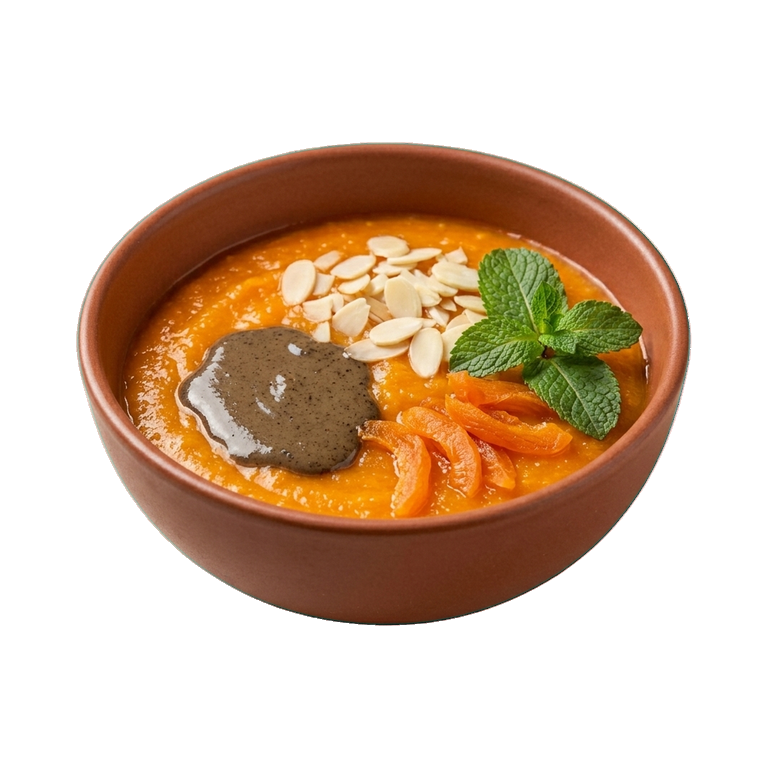
Usuba
Usuba
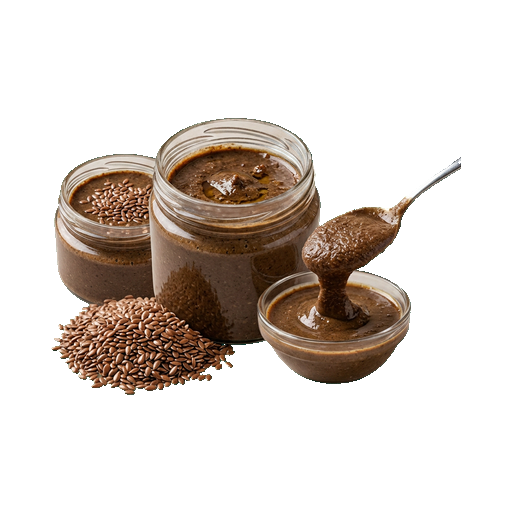
Flax urbech
Flax seed urbach is a paste made from ground flax seeds with a characteristic nutty flavor and a slight bitterness. It has a dense consistency and an earthy aroma, works well in smoothies, porridges, yogurts, and baked goods, adding nutritional value and nutty notes to dishes. When choosing, pay attention to the uniformity of the paste without separation and the absence of foreign odors — quality urbach is stored in the refrigerator and may separate due to oil, which is normal.
About
What is flax urbech and why you need it in your kitchen
Urbech is a paste made from ground seeds, and the flaxseed variant is produced by prolonged grinding of flaxseeds into a uniform consistency. During this process, the seeds release their oil, resulting in a thick, oily mass with a rich nutty aroma and a slight bitterness. Unlike flaxseed oil, which oxidizes quickly and requires refrigeration, urbech is more stable due to the seed's integrity — the oil is protected by the seed shell.
Taste and Aroma
The taste of flax urbech is an earthy, slightly bitter paste with a distinct nutty aftertaste. The aroma is intense and recognizable, reminiscent of the smell of raw flax seeds with notes of wood. The consistency is dense but soft, easily spread on bread or mixed into liquids. The bitterness, which may seem unusual at first, is a sign of quality and natural origin of the product.
How to use in cooking
Flax urbach works as a full-fledged ingredient, not just an additive. You can spread it on bread or crackers, add it to cereals and muesli, stir it into yogurt or kefir. The paste works well in smoothies — it will thicken the drink and add satiety. Try adding a spoonful to cookie or pancake batter to give your baked goods a nutty depth.
In salads, urbech works as part of the dressing: dilute it with water or lemon juice to make a sauce, or simply add a spoonful of paste on top of a vegetable bowl for texture and nutrition. It's important to remember that the product's properties change when heated, so it's best to add it to finished dishes or use it in cold recipes.
Flavor Combinations and Harmony
- With sweet: banana, honey, dates, berries — the earthy bitterness of urbech contrasts with sweetness
- With sour: lemon, vinegar, kefir — acidity softens the intensity of taste
- With salty: sea kale, avocado, tomatoes — creates a balanced, satisfying snack
- With spices: cinnamon, ginger, cardamom — emphasize nutty notes
Selection and Storage
When purchasing, check the ingredients — there should be only flax seeds, without additives or oils. The paste should be homogeneous, without lumps or stratification. If the urbach has separated into oil and dry parts, this is normal, just stir it before use. The color should be from grayish-brown to dark brown, without light spots.
It's best to storeUrbach in a cool place, but refrigeration is not necessary — thanks to the integrity of the seed, the product is more stable than oil. A dark glass jar will protect it from light. After opening, use within 2–3 months. If a sour smell or mold appears, the product has spoiled.
Flaxseed urbach is not a universal product; it's an ingredient for those ready for its character. Start with small portions and let the flavor unfold in familiar dishes.
Nutrition
per 100 g
- Calories
- 510 kcal
- Protein
- 18.3 g
- Fat
- 42.2 g
- Carbs
- 20.3 g
Measures and weight
- 1 tbsp
- 15.8 g
- 1 tsp
- 5.3 g
- 1 cup
- 262.5 g
Measure calculator
- Weight
- 100 g
- Calories
- 510 kcal