Usuba
Usuba
Red currant jam
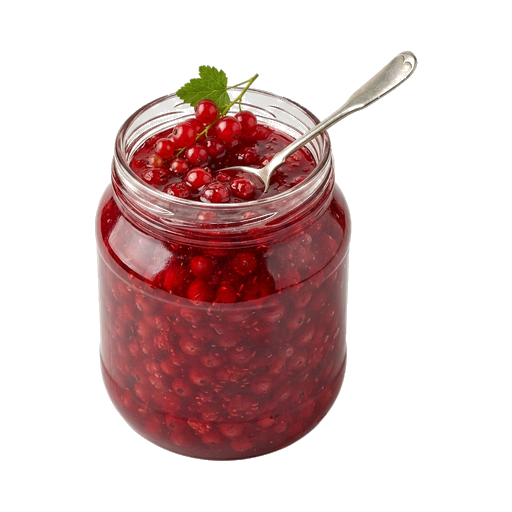
This is a thick, sweet jam made from small tart red currants, which release plenty of natural pectin during cooking and give the preserve a dense consistency. The jam has a bright sweet-tart flavor with a light astringency and a transparent ruby color that holds the shape of the berries well. It is used as a filling for baked goods, an addition to yogurts and cottage cheese, and also as a sauce for meat dishes — when substituting other berry jams, note that red currant is more acidic and requires more sugar for setting.
About
Red currant jam is one of the most rewarding preserves for a home kitchen. The berries contain so much natural pectin that the jam sets almost on its own, and the bright tart flavor doesn't require the addition of citric acid. The result is a preserve with a characteristic jelly-like texture and transparency through which you can see whole berries.
Aroma and Taste
Red currant gives jam a refreshing tartness with delicate berry sweetness. The aroma is subtle and unobtrusive — rather herbaceous with floral notes. During cooking, the berry loses the brightness of its flavor, so the jam turns out softer and more rounded than the fresh berry. It is this softness that makes it versatile: it does not overpower the palate, but rather complements it.
Where to use it
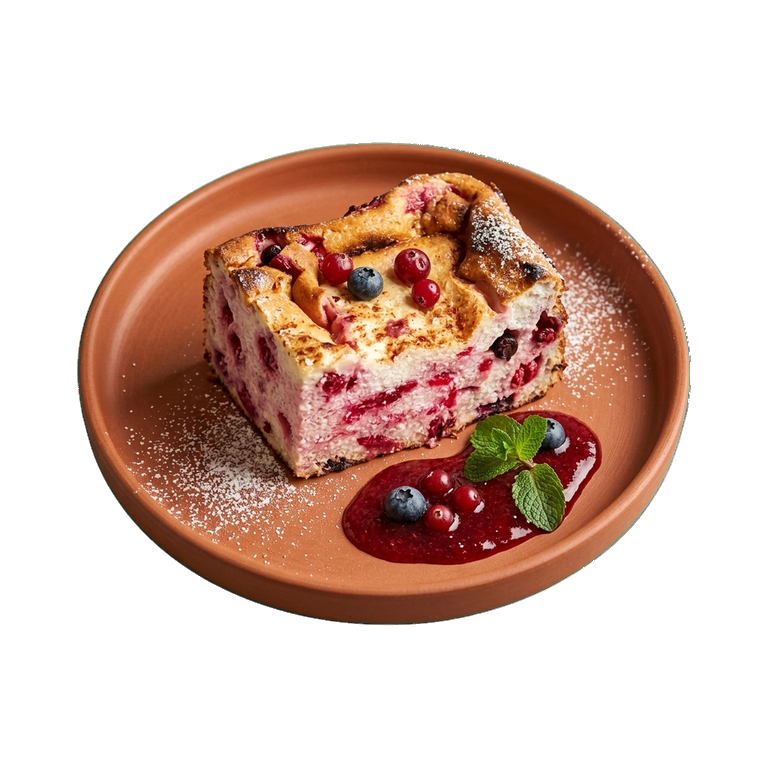
Red currant jam is a classic choice for the tea table, but its role in the kitchen is much broader. It works as a glaze for meat and poultry, giving the dish shine and a tart note. In baking, it is used in pie fillings, added to dough for buns, or used as a layer in sponge cakes.
- For breakfast with yogurt, cottage cheese or cheese
- In sauces for duck, goose, beef
- In fillings for pancakes and pies
- As a component in marinades for meat
- In cocktails and drinks for sour balance
Pairings with other ingredients
Red currant sounds great paired with spices: vanilla, cinnamon, and clove enhance its berry flavor. In savory dishes, the jam finds common ground with mustard, black pepper, and rosemary. On the dessert table, it pairs well with white chocolate, cream cheese, and almonds. If you add a little red wine or port to the jam during cooking, you'll get a more complex and sophisticated taste.
Selection and Storage
When purchasing, pay attention to the consistency: good jam should be dense and homogeneous, without separation. The color ranges from light ruby to dark red depending on the berry variety and cooking time. Homemade jam often looks more transparent than industrial jam, and this is a sign of quality, not a defect.
Store jam in a cool place — in a cupboard at room temperature or in the refrigerator after opening. In an airtight jar, it will keep for a year or more. If you notice mold on the surface — this is a sign of compromised sealing, and such jam is better not to use. If the jam has crystallized, simply warm it in a water bath, and it will return to its original consistency.
Nutrition
per 100 g
- Calories
- 270 kcal
- Protein
- 0.3 g
- Fat
- 0.1 g
- Carbs
- 67 g
Measures and weight
- 1 tbsp
- 19.5 g
- 1 tsp
- 6.5 g
- 1 cup
- 325 g
Measure calculator
- Weight
- 100 g
- Calories
- 270 kcal