Usuba
Usuba
Veal bones
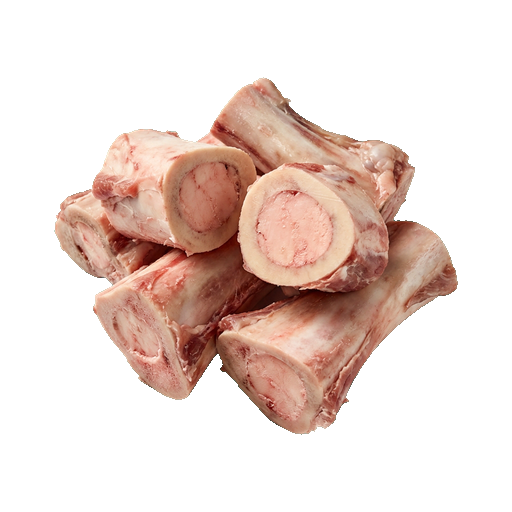
Veal bones are the foundation for preparing a light, delicate broth with a tender flavor and creamy consistency thanks to its high collagen content. They are ideal for classic French sauces, soups, and aspics, as they produce a clear result without excessive density. When simmering, it is important to skim the foam at the beginning of the process and cook for an extended period — from 4 to 8 hours — for maximum gelatin extraction and full flavor development.
About
Veal bones are one of the most valuable ingredients in the kitchen, often overshadowed. They are not just production waste, but a full-fledged product capable of transforming an ordinary broth into a deep, rich sauce or aspic. Young bones contain more collagen and bone marrow than beef bones, so the broth turns out more tender and cooks faster.
Taste and texture of the broth
The main difference with veal bones is that they provide a soft, delicate flavor without sharp meaty bitterness. The broth turns out light and transparent if you properly remove the foam at the beginning of cooking. With prolonged cooking (from 4 to 8 hours), the bones release the maximum amount of gelatin, which makes the cooled broth slightly gelatinous — this is a sign of quality.
The bone marrow inside adds richness and roundness to the broth. If you split the bone lengthwise, the marrow is easy to extract — it can become a separate ingredient for sauces or toast.
How to use in cooking
- White broth is the basis of classic soups. Bones are covered with cold water, brought to a boil, skimmed and simmered over low heat
- Sauces based on veal broth are more delicate than beef-based ones, ideal for delicate dishes
- Aspic and jellied meat — veal bones provide the necessary consistency without adding gelatin
- Risotto and risotto-like dishes require hot broth, and veal works best here
Selection and Storage
Look for bones that are light, almost white in color with a thin layer of meat. They should be free of dark spots and unpleasant odor. It's best to ask your butcher for joint bones and vertebrae — they contain more collagen than tubular bones.
Fresh bones should be stored in the refrigerator for no more than 2–3 days. For long-term storage, they can be easily frozen — they will keep in the freezer for up to three months. Before cooking, frozen bones do not need to be thawed; simply increase the cooking time by 30–40 minutes.
Veal bones — an investment in quality. Good broth made from them will become the foundation for many dishes, and the savings on price are justified by the depth of flavor and versatility.
Nutrition
per 100 g
- Calories
- 260 kcal
- Protein
- 25 g
- Fat
- 17 g
- Carbs
- 0 g
Measure calculator
- Weight
- 100 g
- Calories
- 260 kcal