Usuba
Usuba
Vietnamese spiced salt
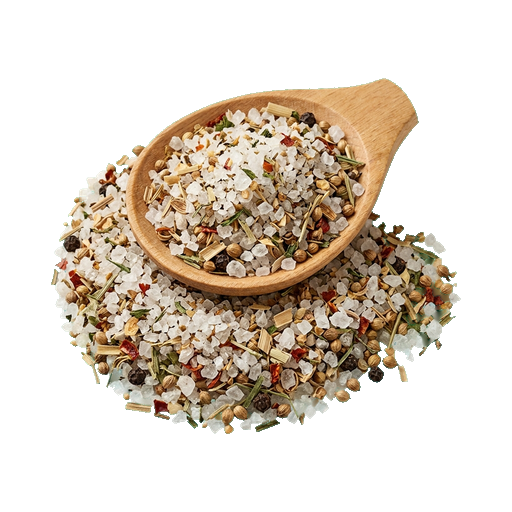
An aromatic blend of coarse sea salt with dried spices and herbs that imparts a deep, multifaceted flavor to dishes with notes of lemongrass, coriander, and black pepper. Used as a finishing seasoning for meat, fish, vegetables, and seafood, and also served separately for dipping. When selecting, pay attention to the uniformity of the mixture and the absence of moisture to preserve its crumbly texture and aroma intensity.
About
Vietnamese seasoned salt is not just a seasoning, but a ready-made mixture that saves time and adds depth of flavor in one motion. It typically contains sea salt, pepper, garlic, lemongrass, and sometimes lime or ginger. Each manufacturer keeps their recipe secret, so flavor profiles can vary, but the essence is the same — it's an aromatic, piquant mixture that works as a universal helper in the kitchen.
Aroma and Flavor
The first thing you feel is freshness. Lemongrass gives a light citrus note, pepper adds spice, and garlic and lime create a base that doesn't overpower but enhances. The aroma is bright but not aggressive, rather inviting. In taste, saltiness is balanced by spice and a subtle acidity — this is exactly what you need to enliven a simple dish without overloading it.
Where to use it
- Sprinkle on fried fish or seafood — salt enhances their natural flavor
- Add to soup a minute before serving for freshness
- Use when cooking chicken or grilled vegetables
- Sprinkle on avocado, tomatoes or fresh vegetables
- Season popcorn or roasted nuts instead of regular salt
- Add to a marinade for meat or vegetables
The main thing is to remember that this is already a finished seasoning with salt. You don't need to add regular salt to the same dish. Start with a quarter teaspoon, taste it, and adjust to your preference. If you overdo it, the dish will become too spicy and pungent.
Combinations and Compatibility
Vietnamese salt works well with coconut milk — its piquancy balances sweetness and richness. It pairs beautifully with dishes containing fish sauce, as it doesn't conflict with its umami. If you're cooking something with peanuts, this salt will add the needed contrast. It combines well with lemon and lime — their acidity highlights the freshness of the blend. Be more careful with hot sauces: if the dish already contains chili and garlic, taste it before adding.
Selection and Storage
When choosing, look at the composition — the fewer artificial additives, the better. A good mixture should be crumbly, without lumps. The color varies from light gray to brownish depending on the proportions of spices. Smell it (if possible) — it should smell fresh, without any mustiness.
Store in a tightly sealed jar or container in a cool, dark place away from moisture and sunlight. Spices lose their aroma over time, so use within a year. If the mixture has absorbed moisture and become clumpy, it's still usable, but the aroma will weaken. Don't store near the stove or sink — temperature fluctuations and humidity will compromise the quality.
Vietnamese spiced salt is one of those ingredients that will always come in handy when you need to quickly add flavor to a simple dish. Keep it on hand and experiment: each time you'll discover a new use for it.
Nutrition
per 100 g
- Calories
- 150 kcal
- Protein
- 5 g
- Fat
- 3 g
- Carbs
- 25 g
Measures and weight
- 1 tbsp
- 18 g
- 1 tsp
- 6 g
- 1 cup
- 300 g
Measure calculator
- Weight
- 100 g
- Calories
- 150 kcal