Usuba
Usuba
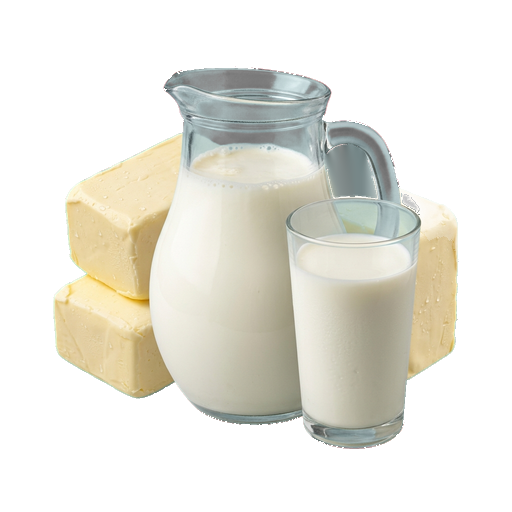
Whole milk
Whole milk is a natural product with a fat content of 3.2 to 3.6%, which contains all the components present in milk immediately after milking. Thanks to its balanced composition of fats, proteins, and lactose, it is ideal for baking, sauces, porridges, and beverages, giving dishes a creamy consistency and mild dairy flavor. When choosing, pay attention to the expiration date and storage conditions, as whole milk sours faster than skimmed milk and may become bitter with prolonged heating.
About
Whole milk is the foundation of half of all culinary techniques. When you see simply "milk" in a recipe without further clarification, this is what it refers to: a liquid with natural fat content that holds an emulsion, gives body to sauces, and creates the right consistency in baking. Unlike skimmed or reconstituted milk, whole milk works predictably and reliably.
Taste and role in dishes
Milk fat is its main weapon in the kitchen. Fat carries aroma, softens spiciness, and makes a dish creamier. In porridge, milk doesn't just cook the flakes, it coats them, creating a creamy texture. In sauces, fat helps the emulsion stay together without separating. In coffee, milk softens bitterness and adds a slightly sweet note.
Whole milk is versatile: it works in cream soups, creamy sauces, baking, milk drinks, and desserts. It can be boiled, heated slowly, or whipped into foam. The only limitation is that very high temperatures for a long time can cause burning, so careful attention is needed when cooking porridges and milk-based cereals.
Selection and Storage
When purchasing, pay attention to the production date and shelf life. Milk with a short shelf life (usually 7–10 days) is fresh milk that works best in beverages and porridge. Milk with a long shelf life (a month or more) is more heavily pasteurized, it's more stable, but may have a slight processing taste. Both options are suitable for cooking.
- Store in the refrigerator at a temperature of 2–6 degrees
- Do not leave at room temperature for more than 2 hours
- After opening the package, use within 3–5 days
- Do not pour milk into dirty dishes — it will sour quickly
- If the milk has started to sour but has not yet curdled, it can be used in baking or pancakes
Practical Tips
If you need to heat milk, don't wait for it to boil on the stove. The optimal temperature is when small bubbles start to appear around the edges and steam rises above the surface. Milk that has been brought to a boil loses its delicate flavor and may leave a sediment at the bottom of the pot.
For sauces, milk is often combined with cream — milk provides volume, cream adds richness. For porridges, milk is diluted with water in a 1:1 ratio so the grains don't cook in pure fat. For baking, milk can be replaced with kefir or yogurt of the same volume if a light tanginess is desired.
Whole milk is not just an ingredient, it is the foundation on which the consistency, taste, and texture of half of all classic dishes rest. Choose fresh milk, store it properly, and don't be afraid to experiment.
Nutrition
per 100 ml
- Calories
- 61 kcal
- Protein
- 3.2 g
- Fat
- 3.5 g
- Carbs
- 4.7 g
Measures and weight
- 1 tbsp
- 15.5 g
- 1 tsp
- 5.2 g
- 1 cup
- 257.5 g
Measure calculator
- Weight
- 100 g
- Calories
- 59 kcal