Usuba
Usuba
Za'atar
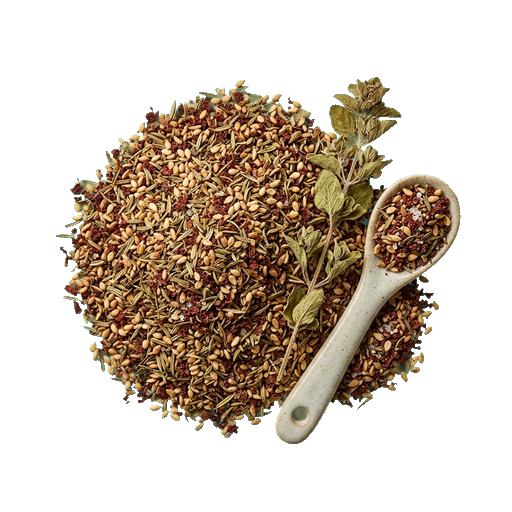
Za'atar is a Middle Eastern spice blend based on dried thyme, sumac, and sesame seeds with added salt. The spice has a tart, slightly acidic flavor with herbal notes and a nutty aftertaste from the sesame. It is used as a seasoning for bread, salads, meat, and vegetables, and is also an ingredient in olives and yogurt-based sauces — when substituting, note that sumac provides a distinctive sourness that is difficult to replace with other spices.
About
Za'atar is not a single ingredient, but an entire blend that has become synonymous with Middle Eastern cuisine. Its foundation consists of dried herbs, seeds, and spices that together create a sharp, slightly astringent, and aromatic profile. Each manufacturer mixes the components in their own way, so the taste can vary, but its recognizability remains.
Aroma and Flavor
Zaatar smells simultaneously herbaceous and spicy. Notes of thyme or oregano are detected first, followed by a slight tartness from sumac (if it's in the blend) and a nutty aftertaste from sesame. The taste is vibrant, slightly salty, with a barely noticeable bitterness.
The classic composition includes dried thyme, sumac, sesame seeds, and salt. However, there are variations with the addition of oregano, marjoram, fennel seeds, or even dried lemon. The more sumac in the mixture, the more pronounced the sourness will be.
Role in Dishes
- Topping for flatbreads and bread before baking — a classic way to use it. The mixture sticks to the oil and creates a crispy, aromatic crust.
- Seasoning for salads, especially vegetable and grain-based ones. Zaatar adds depth and piquancy without the need for additional acidic components.
- Coating for cheese, yogurt, or hummus. Often mixed with olive oil and served as an appetizer or sauce.
- Seasoning for fried or baked meat, especially chicken and lamb. Gives the dish an authentic Middle Eastern flavor.
- Addition to soups and stews in the final stage of cooking to preserve the aroma.
Combinations and Harmony
Za'atar works well with olive oil — they create a classic duo that can be spread on bread or used for dipping. The mixture pairs well with dairy products: yogurt, labneh, cottage cheese. Vegetables with neutral flavors (tomatoes, cucumbers, radishes) are enhanced by za'atar.
Zaatar already contains salt, so when using it, take this into account and don't oversalt the dish. Mix cautiously with hot spices (pepper, chili) — it's better to taste as you go. It pairs well with lemon and fresh herbs, which enhance the freshness.
Selection and Storage
When choosing zaatar, pay attention to the color: it should be dark green or brownish, without gray tones. The smell should be fresh and herbaceous, without mustiness. If the mixture looks like dust or clumped together, this is a sign of improper storage.
Store za'atar in an airtight container in a cool, dark place, away from moisture and sunlight. With proper storage, the mixture retains its aroma and flavor for 3–4 months. If you use za'atar frequently, it makes sense to buy it in small portions so that you open a fresh package each time.
Za'atar is easy to make at home by mixing dried thyme, ground sumac, sesame seeds, and a pinch of salt. This homemade version will be even more aromatic and allow you to control the proportions to suit your taste.
Nutrition
per 100 g
- Calories
- 450 kcal
- Protein
- 17 g
- Fat
- 30 g
- Carbs
- 25 g
Measures and weight
- 1 tbsp
- 9 g
- 1 tsp
- 3 g
- 1 cup
- 150 g
Measure calculator
- Weight
- 100 g
- Calories
- 450 kcal