Usuba
Usuba
Green beans
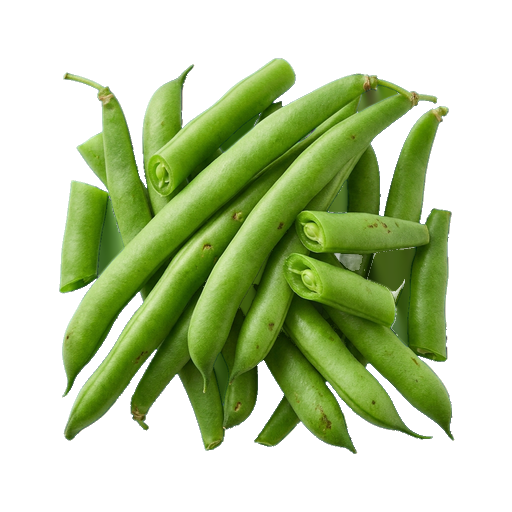
Green beans are immature bean pods harvested before seeds fully mature, with a tender texture and fresh herbaceous flavor. They hold their shape well during heat treatment and are versatile in cooking: suitable for side dishes, salads, soups, and Asian dishes. When selecting, prefer firm, bright green pods without spots. When cooking, keep in mind that beans soften quickly, so it's best to cook them briefly to preserve their crunch and vibrant color.
About
Green beans are young bean pods harvested before the seeds fully mature. Unlike ripe grains, everything here is edible: the tender pod, the thin skin, and the barely formed beans inside. This is a vegetable that works in practically any cuisine — from a simple side dish to complex combinations with meat and fish.
Taste and Texture
Fresh green beans have a light herbaceous taste with barely noticeable sweetness. Texture is what matters most: when cooked properly, they remain crispy with a slight resistance when bitten. They are easy to overcook, so cooking time should be measured in minutes, not tens of minutes.
The aroma develops during cooking — a fresh, slightly vegetable-like smell appears, which becomes more intense when frying or stewing. If the beans smell musty or moldy, this is a sign of spoilage.
How to cook and pair
- Boiling in salted water — a classic method. 3–5 minutes is enough for the beans to become tender while retaining their firmness.
- Frying over high heat with garlic and oil — creates a light caramel on the surface and enhances the flavor.
- Braising in butter or broth — softer and more aromatic than simple boiling.
- Adding to salads raw — if the beans are very young, they can be pleasantly crispy.
Green beans are versatile in combinations. They work well with garlic, lemon, olive oil and herbs — dill, parsley, basil. They complement meat dishes perfectly without competing with the flavour. They also pair well with seafood. In Asian cuisine, they are often prepared with soy sauce, ginger and sesame.
Selection and Storage
When shopping, look for bright green pods without spots, dents, or signs of wilting. The pod should break with a characteristic crunch rather than bend. Overly thick beans often contain large, tough seeds — choose thin and straight ones. The smell should be fresh, vegetable-like, without any mustiness.
- In the refrigerator in the vegetable compartment — up to 5 days in a plastic bag or container.
- Freezing — blanch for 2–3 minutes in boiling water, cool in ice water, dry, and pack. Stores for up to 8 months.
- Do not wash before storage — moisture speeds up spoilage. Wash immediately before cooking.
Green beans are one of the most rewarding vegetables in the kitchen. They cook quickly, rarely disappoint, and easily fit into any menu. The main thing is not to overcook them and remember that their strength lies in their crispy texture and freshness.
Nutrition
per 100 g
- Calories
- 31 kcal
- Protein
- 1.8 g
- Fat
- 0.2 g
- Carbs
- 3.1 g
Measures and weight
- 1 tbsp
- 9 g
- 1 tsp
- 3 g
- 1 cup
- 150 g
Measure calculator
- Weight
- 100 g
- Calories
- 31 kcal