Usuba
Usuba
Aquafaba
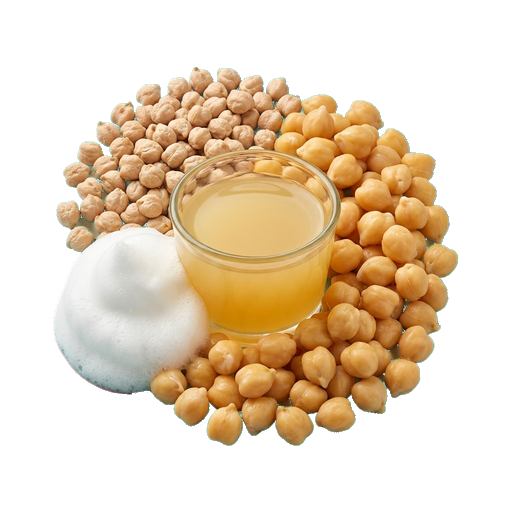
Aquafaba is the liquid remaining after cooking chickpeas or other legumes, rich in starch and proteins. Thanks to its consistency and structure, it whips well into foam, allowing it to be used as a vegan egg substitute in meringues, creams, and mousses. When choosing, it is important to use the liquid from canned or home-cooked chickpeas without additives, as its properties depend on the quality of the base product.
About
Aquafaba is the liquid that remains after cooking chickpeas or other legumes. It sounds simple, but this humble water contains starch, proteins, and emulsifiers that work like a magic binder in the kitchen. If you used to pour out this liquid, it's time to reconsider that habit.
What it gives to dishes
Aquafaba's superpower is its ability to whip up into foam and fluffy mass, just like egg white. Three tablespoons of aquafaba can replace one egg in baking, and when whipped to peaks, it serves as a base for meringue, mousse, or vegan cream. At the same time, the taste remains neutral, not overpowering the flavor of other ingredients.
Moreover, aquafaba works as a natural thickener and binding agent. Add it to sauces, gravies, or cream soups, and the texture will become smooth and velvety without lumps. In vegan cooking, it helps maintain the shape of cutlets, burgers, and pâtés.
Where to use it
- Cupcakes, cookies and cakes — egg replacement for dough leavening
- Meringues, pavlovas and cakes with protein cream — whipped aquafaba holds its shape for hours
- Mayonnaise and cold sauces — creates emulsion and creamy consistency
- Mousse, panna cotta and foam-based desserts
- Vegan omelets and frittatas — binds vegetables and spices
- Puree soups and creamy sauces — adds tenderness without cream
How to Choose and Store
It is best to prepare aquafaba yourself from dried chickpeas. Cook the chickpeas until soft, drain the liquid into a clean jar — this is your aquafaba. If you don't have time, use the liquid from canned chickpeas, but keep in mind that it may contain more salt and preservatives.
Store fresh aquafaba in the refrigerator for up to five days in an airtight container. For long-term storage, freeze it in ice cube trays — this makes it easier to measure the amount you need. Frozen aquafaba retains its properties for up to three months and works perfectly for whipping after thawing.
Practical Tips
- For whipping, use cold aquafaba and a cold bowl — this way the foam whips faster and holds up stronger
- Whip for 5–10 minutes on medium speed until soft peaks form, then another 2–3 minutes until stiff peaks — just like with egg white
- If aquafaba is too thin, cook the chickpeas longer or use a more concentrated broth
- For sauces and creams, whipping is not needed — just add aquafaba in the required amount and stir
- Salt dishes with aquafaba at the end of cooking, since salt interferes with whipping
Aquafaba is not a trend, but a practical ingredient that saves time and money. Try it in a simple recipe, such as cookies or sauce, and you'll understand why chefs around the world have come to love it.
Nutrition
per 100 ml
- Calories
- 20 kcal
- Protein
- 1 g
- Fat
- 0.1 g
- Carbs
- 3 g
Measures and weight
- 1 tbsp
- 15.5 g
- 1 tsp
- 5.2 g
- 1 cup
- 257.5 g
Measure calculator
- Weight
- 100 g
- Calories
- 19 kcal